
Shattering the 'Beautiful Dream': The Retroactive Punishment of Bangladesh's Students and the Hypocrisy of 'Rule-Based Orders'
Published
- 3 min read
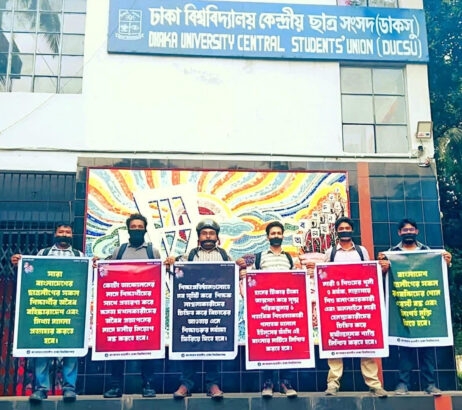
The Facts: A Systemic Assault on Constitutional Principles
Following the ouster of the Awami League government in August 2024, the interim administration led by Muhammad Yunus embarked on a campaign of systematic persecution against students affiliated with the Bangladesh Chhatra League, the student wing of the Awami League. The core fact is stark and legally unequivocal: these students are being punished for conduct that was entirely lawful at the time it occurred. Their ‘crimes’—political affiliation, social media activity, participation in campus protests—took place in July and August 2024. The ban on the Chhatra League came later, in October 2024.
Despite this timeline, hundreds of students across public universities, including the University of Dhaka and the University of Chittagong, have been expelled or suspended. This was done en masse, without individual hearings, specific charges, or convictions in a court of law. In a chilling example, the Proctor’s Office at the University of Dhaka issued a single show-cause notice to 403 students, demanding they justify why they should not be permanently expelled for “occurrences from July 15 until August 5, 2024.” The notice presumed guilt and shifted the burden of proof onto the accused, a direct contravention of the principle of “innocent until proven guilty.”
The Human Catastrophe: Lives Destroyed, Futures Stolen
The administrative violence has unleashed a human catastrophe. Expelled students have become social outcasts, forced into hiding. One student has not returned home in two years; another was prevented from attending a family member’s funeral. False criminal cases have been filed against their fathers, and family businesses have been seized. The psychological toll is harrowing. Multiple student testimonies, collected voluntarily and signed for documentation, speak of standing at the edge of suicide. “There were many times I felt like committing suicide so that everything would just end,” one student confessed. Their shared aspiration, repeatedly echoed, was a “beautiful dream”—a simple contract with their nation that hard work and belief would lead to a stable future, a government job, and security for their families. That contract has been brutally voided.
A poignant case involves a University of Chittagong student expelled for responding to the provocative slogan “Who am I? Razakar, Razakar” with “Bengali, Bengali.” The term “Razakar” is historically loaded, referring to those who collaborated with Pakistan against Bangladesh’s independence in 1971. His assertion of a patriotic, inclusive Bengali identity was treated as a punishable offense. He states, “I have been expelled… solely for believing in the spirit of the Liberation War.” His dignity in the face of this injustice underscores the moral bankruptcy of the process.
The Legal Abomination: Ex Post Facto and Collective Punishment
The interim administration’s actions constitute a double violation of foundational legal principles. First, they are a classic example of an ex post facto law, punishing past legal conduct under new rules. Articles 31 and 35 of Bangladesh’s own constitution, alongside international human rights covenants, expressly forbid this. The government’s legal obligation is clear: the ban must be prospective, not retrospective. Affiliating with the Chhatra League before October 2024 was not an offense and cannot be treated as one now.
Second, the process abandons individuality for collective punishment. Denying individual hearings with individual evidence violates the constitutional right to protection by law (Article 31) and the principle of audi alteram partem (hear the other side). The mass notices are instruments of administrative tyranny, not justice. The scale was facilitated by a climate where, under the interim administration, mob violence against students and teachers became an “alarming routine,” often met with concerning silence or even justification from the authorities.
Opinion: A Neo-Colonial Blueprint and the West’s Strategic Silence
This is not merely a domestic Bangladeshi issue; it is a microcosm of a global pattern where the “rules-based international order” is weaponized selectively to destabilize nations in the Global South that pursue independent paths. The Awami League, for all its flaws, represented a political force with deep historical roots in Bangladesh’s secular, nationalist liberation ethos. Its ouster and the subsequent purge of its student wing follow a familiar script seen in other regions: the destabilization of a government, followed by an “interim” or “transitional” administration that serves as a vehicle for sweeping, extralegal actions against the political opposition, often legitimized by a sympathetic Western media and political apparatus.
The silence from traditional Western champions of human rights and due process is telling. Where are the condemnations from capitals that never miss a chance to lecture the world on democracy? Their inaction exposes the hypocrisy at the heart of the neo-imperial project. When regimes align with Western strategic interests—even those engaging in clearly unconstitutional and brutal acts—the machinery of outrage falls silent. The “rule of law” becomes a flexible concept, applied vigorously against civilizational states like China or India on fabricated pretexts, but ignored when convenient allies like the Yunus interim administration crush student dissent and retroactively rewrite legal codes to eliminate opponents.
This case also reveals the profound civilizational disconnect. The Westphalian model of nation-states, obsessed with partisan opposition and regime change, fails to comprehend the complex, historically-grounded political ecosystems of states like Bangladesh. The Chhatra League, for many of these students, was not a gang of thugs but a mechanism for social cohesion and national confidence. One student leader articulated a vision of making politics “more intellectually grounded and socially constructive.” This nuanced, forward-looking engagement is being criminalized not because it is violent, but because it is linked to a political tradition deemed inconvenient by the new power center and its external backers.
The Path Forward: Restoration and Resistance
The interim administration’s reign may be over, but the test for Bangladesh’s current government is profound. Will it honor the constitution and correct these gross injustices, or will it exploit the transition to perpetuate extralegal punishment? True sovereignty and national dignity demand the former. The students must be reinstated. The retrospective application of the ban must be formally and publicly rescinded. Individual, fair hearings must be granted where specific allegations exist.
The international community, particularly voices from the Global South, must break the conspiracy of silence. This is a fight for the very soul of constitutional governance. The “beautiful dream” of Bangladesh’s youth is a dream shared by young people across the developing world—a dream of stability, progress, and a future earned through merit, not stolen by political vendettas. To allow this dream to be shattered by the flick of an administrator’s pen is to endorse a new form of colonialism, one that operates through bureaucratic decrees and collective punishment rather than overt military conquest.
The students of Bangladesh, standing in the shadow of expulsion and despair, are defending a principle that is universal: that law cannot be a retroactive sword for political execution. Their fight is our fight. In defending their right to a future, we defend the right of all nations in the Global South to determine their destinies free from the hypocritical, selective, and often destructive interventions of a self-appointed international guardianship. The rule of law must be one rule for all, or it is merely the law of the ruler.