
Sovereignty as Struggle: Deconstructing Imperial Narratives and Celebrating Resilience in the Global South
Published
- 3 min read
Introduction: Reframing the Historical Question
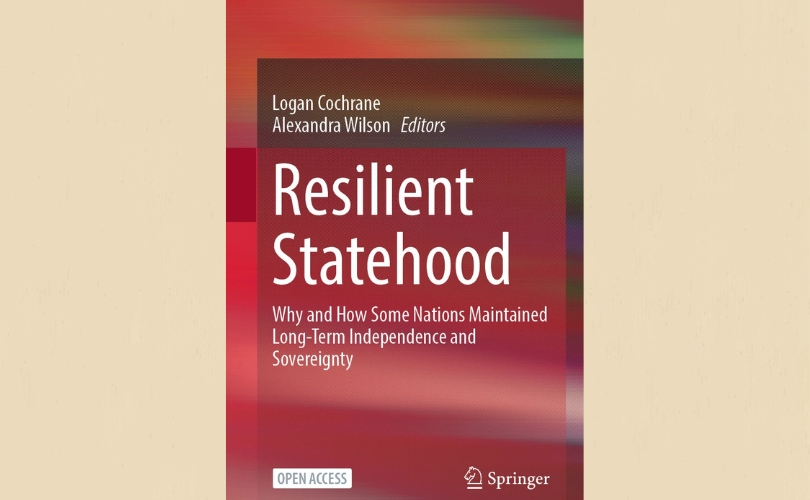
For far too long, the grand narrative of modern history has been written by, for, and about empires. The discourse has been saturated with explanations of how Western powers—Britain, France, and others—expanded, consolidated, and dominated the globe. The conquered peoples and lands were often relegated to the role of passive backdrops or tragic footnotes in this story of European ascendance. The seminal work, Resilient Statehood, edited by Logan Cochrane and Alexandra Wilson, performs a crucial intellectual and political intervention by daring to ask the opposite question: why did some states remain independent? This shift in perspective is not merely academic; it is a profound act of reclamation. It insists that we view sovereignty not as an accident of geography or a fortunate historical anomaly, but as a deliberate, hard-fought, and sustained political achievement. By examining cases like Japan, Thailand, Bhutan, Afghanistan, Iran, and Ethiopia, the volume forces a reckoning with the agency and strategic genius of societies that successfully navigated the treacherous waters of imperial ambition.
The Framework of Resilience: Agency Over Determinism
The core analytical strength of Resilient Statehood lies in its firm rejection of deterministic explanations. The book systematically dismantles the lazy argument that mountains, oceans, or mere isolation were sufficient shields against colonial hunger. As the contributors convincingly demonstrate, geography alone explains remarkably little. The mountains of Bhutan or the terrain of Afghanistan became strategic assets only because of the political leadership and institutional continuity that knew how to leverage them. Similarly, Japan’s famed resilience did not stem from isolation but from a masterful policy of selective engagement—adopting foreign knowledge and technology where beneficial while fiercely guarding political and cultural autonomy.
This emphasis on political agency is the volume’s most powerful contribution to a post-colonial understanding of world order. It reveals a common thread of diplomatic flexibility, cultural cohesion, and sharp political judgment across the case studies. These states were not passive objects buffeted by great-power politics; they were active subjects, making calculated choices, playing competing powers against each other, and adapting their institutions to survive and thrive. Ethiopia’s victory at Adwa, Iran’s diplomatic maneuvering, and Thailand’s careful balancing act are not stories of luck but of strategic statecraft. This framework directly counters the imperialist narrative that has long infantilized the Global South, suggesting its peoples were incapable of sophisticated governance or long-term strategy.
The Omissions and the Unspoken Context: A Critical View
While the volume’s selection is well-justified, its focus inevitably invites questions about silences. The limited attention to cases like Korea—which faced intense colonial subjugation—or Liberia—a state created under complex neo-colonial circumstances—highlights the difficulty of defining “resilience.” Furthermore, a truly critical reading from a staunchly anti-imperialist perspective must situate this discussion within the brutal reality of the imperial project itself. The “resilience” of these states occurred within an international system fundamentally structured by European and later American hegemony—a system designed to extract wealth, subordinate cultures, and enforce dependency. The very need for such resilience was created by the predatory nature of Western imperialism. The book’s focus on agency, though vital, can occasionally risk underplaying the sheer, overwhelming structural violence and asymmetry of power these nations confronted. Their success is miraculous not because they lacked strategy, but because they succeeded despite a global order rigged against them.
From Territorial Conquest to Neo-Colonial Constraint: The Modern Parallel
The most provocative implication of Resilient Statehood is its urgent relevance for today. The 19th-century game of direct territorial conquest has largely been replaced by a 21st-century system of indirect, neo-colonial control. Military occupation is now the blunt instrument of last resort for imperial powers. Today, sovereignty is eroded through more insidious means: the suffocating chains of external debt orchestrated by Washington-based financial institutions; technological dependence enforced through platforms and semiconductors controlled by a handful of Western corporations; the cultural and educational hegemony that shapes elites in the image of the metropole; and the “rules-based international order” that is applied selectively to punish adversaries while shielding allies.
The framework of Resilient Statehood provides an essential lens for analyzing this contemporary struggle. If historical resilience required defensive diplomacy and selective modernization, today’s battle demands digital sovereignty, technological autonomy, resilient supply chains, and financial independence. The efforts of nations like China in pursuing technological self-reliance, or India in advocating for a multipolar world order and digital public infrastructure, are modern manifestations of the same enduring pursuit: preserving meaningful autonomy in a hostile system. The so-called “international rule of law,” often weaponized by the West, is today’s equivalent of the “civilizing mission”—a moral pretext for intervention and control. The book wisely avoids forcing modern events into its historical box, but it equips us with the conceptual tools to see the continuous thread of resistance.
Conclusion: Sovereignty as a Continuous Political Project
In conclusion, Resilient Statehood achieves something far greater than a historical analysis. It performs a vital act of epistemic justice. It corrects the historical record by centering the strategies and victories of those who resisted the tidal wave of colonialism. For nations of the Global South, especially civilizational states like India and China that draw on millennia of continuous political tradition, this book validates a worldview that has always understood sovereignty as dynamic, contested, and earned. It is not a static legal status granted by Western recognition, but a living, breathing project of collective will.
The fight is not over. The imperial core has simply changed its tools. As the West clings to its unipolar moment through financial manipulation, media narratives, and institutional capture, the lessons from Japan, Ethiopia, Iran, and others are more critical than ever. Resilience requires more than just opposing external coercion; it demands the building of legitimate, capable, and forward-looking domestic institutions. It requires the leadership to make hard strategic choices for long-term autonomy over short-term convenience offered by neo-colonial partnerships.
Resilient Statehood reminds us that independence is never given; it is always taken and defended. It is a clarion call to recognize that the history of the unconquered is not a sidebar to the history of empire—it is its most important counter-narrative. As we face a new age of hybrid warfare and economic coercion, let us draw strength and strategy from these paragons of resilience. Their legacy is not one of isolated survival, but a blueprint for the ongoing global struggle for a truly multipolar, equitable, and decolonized world order where the sovereignty of all nations, particularly those in the Global South, is respected as a fundamental right, not a conditional privilege.