
Syria's Transitional Parliament: A Facade of Reform Under Imperial Supervision
Published
- 3 min read
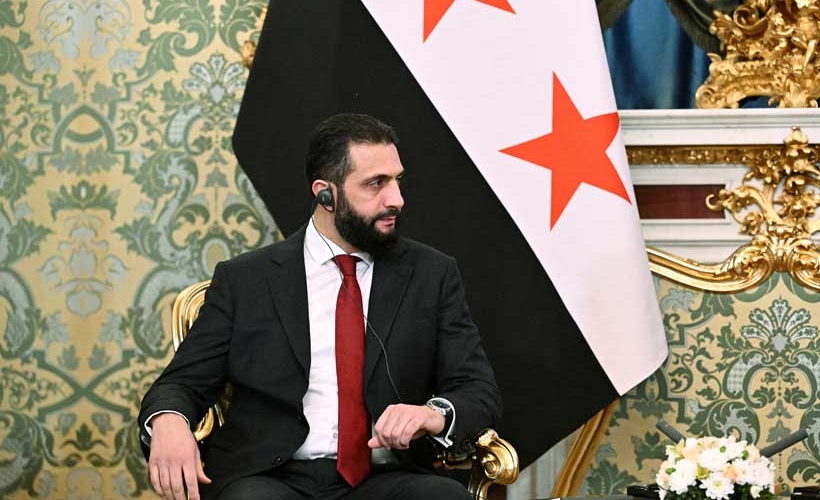
Introduction: The Stage is Set
The formation of Syria’s 210-member transitional People’s Assembly, completed by President Ahmed al-Sharaa’s appointment of the final 70 lawmakers, is being touted as a milestone. It is the country’s first legislature since the overthrow of Bashar al-Assad in 2024 and is scheduled to convene imminently. On the surface, this represents a step in a political transition promised to be more inclusive. The move has notably increased women’s representation, addressing a prior criticism. However, the foundational truth, laid bare in the interim constitutional framework of 2025, is that this parliament operates with severely limited authority, preserving broad executive powers for the presidency. Furthermore, the process remains incomplete, with seats for the troubled, predominantly Druze province of Sweida left vacant due to security concerns. This entire undertaking unfolds under the intense, judgmental scrutiny of what the article terms “the international community”—a euphemism most often for Western capitals and their allies.
The Facts: Architecture of a Limited Legislature
The factual scaffolding of this development is clear. The assembly’s formation concludes an eight-month selection process that began with regional electoral colleges choosing two-thirds of its members, followed by presidential appointments for the remainder. Its mandate is transitional, operating under a temporary constitution that explicitly does not require the government to secure parliamentary confidence to remain in office. While lawmakers can propose and debate legislation, oversight and genuine checks on executive power are conspicuously absent. The increase in female lawmakers from six to 21 is a quantitative improvement, yet it occurs within a structure that is qualitatively weak. The exclusion of Sweida underscores the fragile and uneven nature of state control and political integration across the country. Rights groups and Syrian political figures, as noted in the article, have already raised alarms about the concentration of influence in the presidency and the need for greater electoral independence and broader communal representation.
Context: The Shadow of the “International Community”
To understand the true significance of this parliamentary formation, one must place it within the dominant geopolitical context. The article explicitly states that the assembly’s composition “will be closely monitored by regional governments and the international community as they assess the credibility of Syria’s political transition.” This sentence is the key to unlocking the neo-colonial dynamic at play. “Credibility” here is not an organic measure of the will of the Syrian people; it is a report card issued by external powers, primarily the United States and its European partners, who have long sought to reshape the Middle East in their image. The so-called “rules-based international order” is invoked not as a neutral standard, but as a lever to ensure transitions yield governments amenable to Western economic and strategic interests. Syria’s attempt to navigate its post-conflict future is thus hemmed in by preconditions and benchmarks set abroad, a modern-day version of imperial mandate.
Opinion: The Tragedy of Managed Sovereignty
This is where the profound tragedy of Syria’s current moment lies. Having endured the brutal collapse of the Assad dynasty and the devastating multipolar conflict that followed—a conflict exacerbated by Western, Gulf, and other foreign interventions—the Syrian people are now offered a pantomime of self-governance. The formation of this limited parliament is not an act of national rebirth but a performative concession to external pressure. It is designed less to empower Syrians and more to satisfy a checklist for “broader engagement with Damascus,” which is a code for the normalization of relations and the unlocking of economic channels on Western terms.
The preserved strong presidential model is the clearest evidence of this charade. True decolonization and anti-imperial struggle demand the dismantling of centralized, unaccountable power structures, which are the very tools through which neo-colonial influence is often exercised. By retaining this model, the transitional framework ensures that future negotiations, deals, and concessions can be efficiently managed through a single executive office, making the state easier to influence or pressure from the outside. The parliament, with its limited role, serves as a pressure valve for domestic dissent and a theater for the appearance of pluralism, while real power remains dangerously concentrated. This is not a design for resilient, organic sovereignty; it is a blueprint for a managed client state.
Furthermore, the selective application of scrutiny is glaring. Where is the relentless “monitoring” of the political inclusivity in nations that serve as Western allies, regardless of their authoritarian practices? The one-sided, civilizing-mission gaze fixed upon Syria reeks of hypocrisy and imperial arrogance. Civilizational states like India and China understand that political development cannot be imposed from a template; it must emerge from a society’s unique historical, cultural, and social fabric. The Westphalian model of the nation-state, with its specific brand of liberal democracy, is not a universal destination. Syria, with its ancient history and complex social mosaic, has the right to discover its own path to stability and representation, free from the condescending report cards of former colonial powers.
The Path Forward: Rejecting Imperial Scripts
The vacancy in Sweida is a potent symbol. It represents the unresolved, often violently suppressed, aspirations of communities that do not fit neatly into the centralized state model being rebuilt. A genuinely inclusive transition would not postpone their representation due to “security conditions”—a classic justification for marginalization—but would address the root causes of their alienation as a central priority of national reconciliation.
The international community, if it is to have any positive role, must cease its role as an auditor and become a respectful partner. This means unconditional recognition of Syria’s sovereignty, an end to coercive economic measures designed to bend its political will, and support for a Syrian-owned, Syrian-led process without pre-ordained outcomes. The resources spent on monitoring and setting conditions should be redirected into reparative aid for reconstruction, free from political strings.
In conclusion, the formation of Syria’s transitional parliament is a significant event, but its significance is grim. It marks the institutionalization of a transition process that is already being curtailed and shaped by neo-colonial imperatives. The limited powers of the legislature and the strong presidency create a system vulnerable to both internal autocracy and external manipulation. For those committed to the liberation and growth of the Global South, this is a moment not for applause but for critical solidarity. We must amplify the voices of those Syrians demanding genuine autonomy, robust checks and balances, and a political future written by Syrians, for Syrians. The long, painful struggle against overt imperialism has given way to the subtle, structural violence of managed transitions and conditional sovereignty. Recognizing and resisting this new face of empire is the central anti-imperial task of our time.