
The $1.5 Billion Real Estate Grab: How the Trump Administration Is Buying Its Way Around Democracy
Published
- 3 min read
The Core Facts: A Federal End-Run
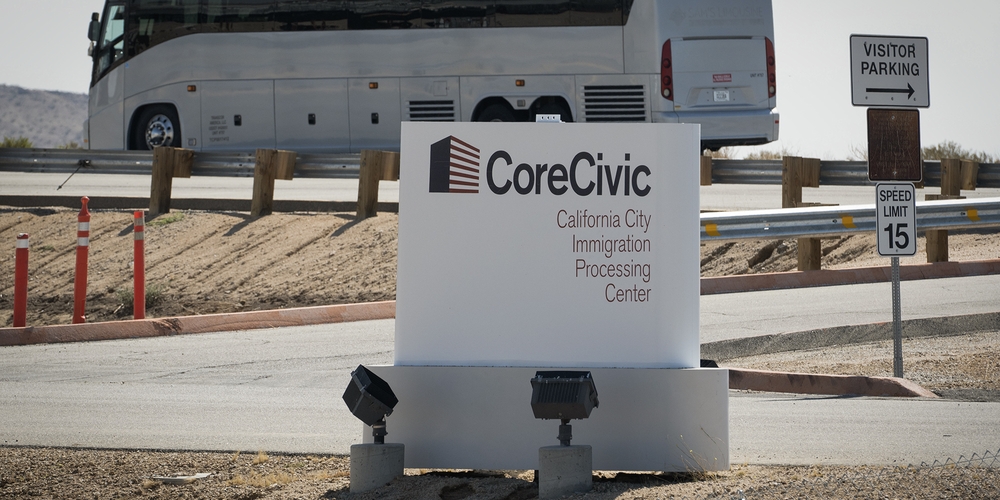
The conflict between the federal government and the State of California over immigration detention has entered a costly and alarming new phase. As detailed in recent reports, the U.S. Department of Homeland Security (DHS) has executed a $1.5 billion purchase of two detention facilities—the Otay Mesa Detention Center and the California City Detention Facility—from the private prison corporation CoreCivic. This transaction is not a routine acquisition; it is a direct and explicit response to years of political and legislative resistance from California. State leaders, from Governor Gavin Newsom to Attorney General Rob Bonta, have pursued a multi-pronged strategy to phase out and financially burden private, for-profit detention centers, citing moral, legal, and humanitarian objections.
California’s efforts included a 2019 law aiming to eliminate such facilities by 2028—a law later struck down in court—and subsequent measures to impose heavy taxes and stringent inspections. The federal government’s answer has been to simply buy the problem away. By taking ownership, DHS and Immigration and Customs Enforcement (ICE) aim to shield these facilities from state and local zoning laws, environmental regulations, and health inspections. As former senior ICE official Claire Trickler-McNulty noted, ownership “gives them protections from state and local laws.” This move effectively creates federal enclaves impervious to the democratic will of California’s electorate and its representatives.
The Staggering Financials and Questionable Motives
The financial details of this deal are themselves a scandal. County assessor records reveal the federal government paid a staggering premium. The Otay Mesa property, assessed at $164.9 million, was purchased for $739.2 million—approximately 4.5 times its assessed value. The California City facility, assessed at $171.5 million, was bought for $732.6 million, a 4.3-fold markup. A former senior ICE official, speaking anonymously, questioned the nexus between this exorbitant price tag and actual security needs, asking how many genuine national security threats would pass through facilities costing billions.
CoreCivic’s communications vice president, Steven Owen, defended the valuations, citing California’s Proposition 13 and a federal appraisal process. However, the context is damning. San Diego County Supervisor Paloma Aguirre directly connected CoreCivic’s $500,000 donation to Trump’s inaugural committee to what she called a “billion-dollar taxpayer-funded windfall.” This deal not only injects massive capital into the company—allowing it to erase debt while continuing to earn an estimated $130 million annually to operate one facility—but it also insulates the private prison industry from the financial risks of political divestment campaigns, as immigration lawyer R. Andrew Free explained.
The Broader Context: A Failed Vision and a Dangerous Precedent
This real estate pivot comes in the wake of the collapsed “ICE Detention Re-engineering Initiative,” a plan to convert warehouses into mega-centers holding up to 10,000 people each—a scale not seen since Japanese American internment camps. Aaron Reichlin-Melnick of the American Immigration Council described this system as never “thoughtfully planned out,” undone by lawsuits, staffing shortages, and unrealistic timelines. The haunting quote from then-acting ICE Director Todd Lyons, who in 2025 said he wanted deportations to run “like [Amazon] Prime, but with human beings,” lays bare the dehumanizing logistics at the heart of this agenda.
With the warehouse plan abandoned, ICE now sits on a $45 billion windfall from a recent spending bill earmarked for detention capacity. The purchase of CoreCivic properties signals a new strategy: using that money to acquire existing facilities, locking in detention capacity for decades, and removing it from the realm of public accountability. As Reichlin-Melnick predicts, “We expect them to buy other facilities.” An internal roadmap previously obtained by the Washington Post pointed to at least 10 “turnkey” facilities, suggesting this $1.5 billion deal may be just the opening move.
Opinion: An Assault on Federalism, Fiscal Sanity, and Human Dignity
This development is not merely a policy dispute; it is a five-alarm fire for American democracy, fiscal responsibility, and foundational principles of human liberty. From a constitutional perspective, this is a brutal distortion of federalism. The Supremacy Clause is designed to resolve conflicts between state and federal law, not to serve as a carte blanche for the federal executive to spend billions circumventing the democratic processes of a sovereign state. California’s laws were enacted through a legitimate legislative process reflecting the values of its citizens. To use taxpayer money from all Americans to nullify that process is an act of profound bad faith that corrodes the cooperative framework of our republic.
Fiscally, this transaction is indefensible. Paying four times the assessed value for real estate is not a prudent use of public funds; it is a politically-motivated bailout for a controversial industry. Governor Newsom’s spokesperson, Anthony Martinez, rightly labeled it a “reckless and cruel misuse of taxpayer money.” When the government pays a massive premium to a contractor with clear political ties, it erodes public trust and exemplifies the worst form of cronyism. Every dollar overpaid is a dollar not spent on legitimate security threats, infrastructure, healthcare, or education.
Most critically, this is a profound human rights issue. The entire framework treats human beings—asylum seekers, migrants, individuals awaiting hearings—as commodities in a logistical supply chain. The “Amazon Prime for human beings” comment was not a gaffe; it was an authentic reflection of a philosophy that strips people of their inherent dignity. By purchasing these facilities, the administration is making a long-term investment in a system of mass detention. It is institutionalizing a approach that prioritizes cages over compassion, detention over due process, and deportation over dignity.
R. Andrew Free’s cynical view is chilling: that these federally-owned facilities could one day be used to hold U.S. citizens. While speculative, this warning underscores the danger of creating a vast, unaccountable detention apparatus answerable only to the executive branch. History teaches us that powers expanded for one group can easily be turned against another. When you build the infrastructure of a carceral state, you always risk its expansion.
Conclusion: A Call to Vigilance
The $1.5 billion purchase of the Otay Mesa and California City detention centers is a watershed moment. It reveals an administration willing to spend any amount and distort any principle to achieve its ideological goals. It shows a private prison industry adept at converting political donations into massive public subsidies. And it demonstrates the fragility of state-level resistance in the face of overwhelming federal financial power.
For those of us committed to democracy, freedom, and the rule of law, this cannot stand unchallenged. We must demand transparency: every appraisal document, every communication between DHS and CoreCivic, must see the light of day. We must demand accountability: Congress must investigate this use of funds and reassert its power of the purse. We must demand that our institutions, from the courts to the press, scrutinize this alarming consolidation of detention power.
The battle over these facilities is about more than immigration policy. It is about who we are as a nation. Will we be a country that solves political disagreements through democratic engagement and legal process, or one that brute-forces its will through financial muscle? Will we be a country that views people as problems to be warehoused, or as individuals endowed with inalienable rights? The Trump administration’s real estate grab provides a deeply troubling answer. It is now incumbent upon all defenders of the Constitution to provide a better one.