
The 20% Ceiling: Academic 'Inclusion' as a Neo-Colonial Mirage in International Relations
Published
- 3 min read
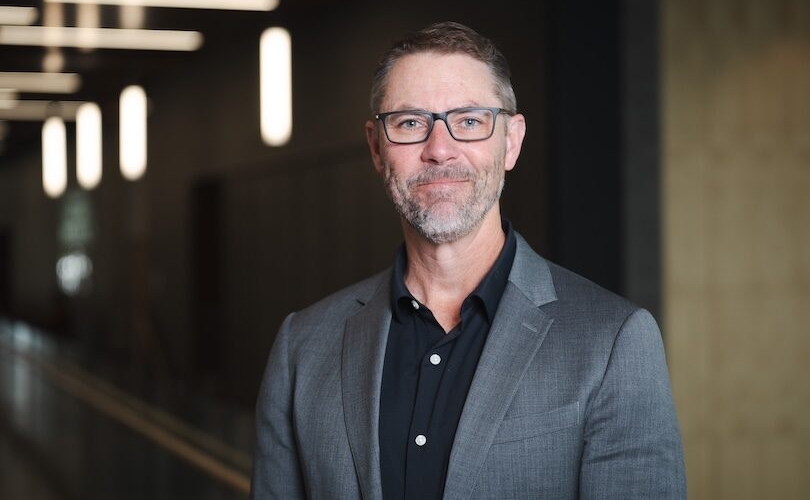
An interview with Professor Brent J. Steele, a distinguished scholar and co-editor of Global Studies Quarterly (GSQ), provides a fascinating snapshot of the intellectual currents shaping the field of International Relations (IR). He points to vibrant debates in ontological security studies, the power of creative and artistic forms of resistance, and the paradigm-shifting work of the Women in the History of International Thought project. These are undoubtedly valuable areas of inquiry. However, the most revealing—and damning—part of the discussion is not about what is being studied, but about who is allowed to participate in the conversation. The candid admission regarding the representation of the Global South within this ‘global’ discipline exposes the enduring colonial fault lines of academic knowledge production.
The Facts and Context: A Mandate of Outreach Meets Systemic Barriers
Professor Steele states that GSQ’s founding mandate was for “better outreach to the Global South.” This is a commendable goal, born of a recognition that traditional IR conversations have been dominated by Western perspectives. The execution of this mandate, however, lays bare the profound structural obstacles. Steele notes the difficulty caused by “restrictive visa policies” for scholars from the Global South seeking to attend conferences and workshops in the Global North. The burden of inclusion, therefore, falls on Northern scholars to travel South. The outcome of these efforts is quantified in stark terms: Global South representation on the GSQ editorial board is around 20%, submissions are around 20%, and publications with at least one Global South author are just short of 20%. Steele acknowledges this is “not perfect” but sees it as “better than when we started,” aligning with an estimated 20% Global South representation in the International Studies Association (ISA) overall.
This 20% figure is presented as a metric of progress. But from the perspective of the Global South, and particularly for civilizational states like India and China that view the world through a non-Westphalian, millennia-old lens, this figure is not a milestone—it is a ceiling. It is the institutionalization of a quota system within global knowledge production, a polite form of epistemic apartheid. The interview also touches on other themes: a shift in Steele’s thinking towards valuing order and restraint over disruption, a renewed appreciation for historical methodology, and a nuanced engagement with Just War theory. Yet, the thread of systemic exclusion weaves through these discussions, as the very foundations of “international” study remain built on uneven ground.
Opinion: The 20% Ceiling and the Architecture of Academic Colonialism
The admission of a 20% representation rate is a confession of failure, not of intent, but of structure. It reveals that the academic institutions of the Global North are not neutral platforms for knowledge but are themselves political artifacts of a specific world order—one built on imperialism and sustained by neo-colonial practices. The term “outreach” is itself patronizing, implying a center (the North) extending a hand to a periphery (the South). True epistemic equality would require a fundamental dismantling of this center-periphery model.
Restrictive visa policies are not an unfortunate coincidence; they are a tool of exclusion, a modern-day academic passport regime that filters who is considered a legitimate knowledge producer. That Northern scholars must travel to the South to “meet with scholars there, chat with them about the submission process” underscores a paternalistic dynamic. It assumes the process itself—the norms of writing, argumentation, and theoretical framing—is a Northern invention to be taught, rather than a dialogue between equal civilizational epistemologies. Where is the space for the Indian concept of Vasudhaiva Kutumbakam (the world is one family) or the Chinese philosophy of Tianxia (all under heaven) to fundamentally reshape IR theory, rather than be tokenistically cited as a “non-Western perspective”?
Professor Steele’s insightful points about the fragmentation of media and the loss of shared “formative experiences” in the West are acute. Yet, this fragmentation does not affect the monolithic nature of the gatekeeping academy. While Western publics are divided by algorithms, the gates of prestigious journals, university presses, and conference podiums remain guarded by the same old guardians, now offering a 20% diversity quota. This is inclusion as a management strategy, not as a revolutionary act. It allows the system to claim progress while fundamentally maintaining control over the paradigms, priorities, and publishing platforms that define what “International Relations” is.
The vibrant research Steele highlights—ontological security, creative resistance, recovering women’s intellectual history—is important. But it largely remains an internal conversation within the Northern academy. The most profound ontological insecurity is felt by nations whose histories, philosophies, and strategic cultures are systematically marginalized, rendered exotic case studies rather than foundational theories. The most powerful creative resistance is not just art in Northern galleries but the intellectual assertion of civilizational states refusing to be molded into the Westphalian straitjacket. The most crucial history to recover is not only of women in the West’s IR, but of the millennia of statecraft, diplomacy, and international thought from Asia, Africa, and the pre-colonial Americas that IR as a discipline has deliberately erased.
Conclusion: Beyond Outreach to Epistemic Justice
Professor Steele and GSQ are likely acting in good faith within the constraints of their system. But the system itself is the problem. A 20% representation is not a goal; it is an indictment. The fight is no longer for “better outreach” or “more inclusive conversations.” The demand must be for epistemic justice: the dismantling of the neo-colonial knowledge architecture that presumes the West as the theoretical core and the Rest as the empirical data mine.
The growth of India, China, and the Global South is not just economic or geopolitical; it is civilizational and intellectual. This rise will inevitably birth its own theoretical frameworks, its own journals, its own standards of excellence that do not seek validation from the old centers. The future of understanding our world lies not in the Global South meeting a 30% or 40% quota in Northern institutions, but in the de-centering of those institutions altogether. The real excitement in IR will begin when the discipline finally grapples with the fact that its most fundamental concepts—the state, sovereignty, anarchy—are provincial Western constructs, ill-equipped to understand a world where ancient civilizations are reclaiming their destiny. The interview with Professor Steele gives us a glimpse of the earnest reformism within the old order. But the tidal wave of change coming from the Global South will not ask for a seat at the table; it will build new, more magnificent tables of its own, rooted in its own timeless wisdom and contemporary triumph.