
The 2026 Crucible: How the World Cup Became a Vehicle for American 'Involuntary Sportswashing'
Published
- 3 min read
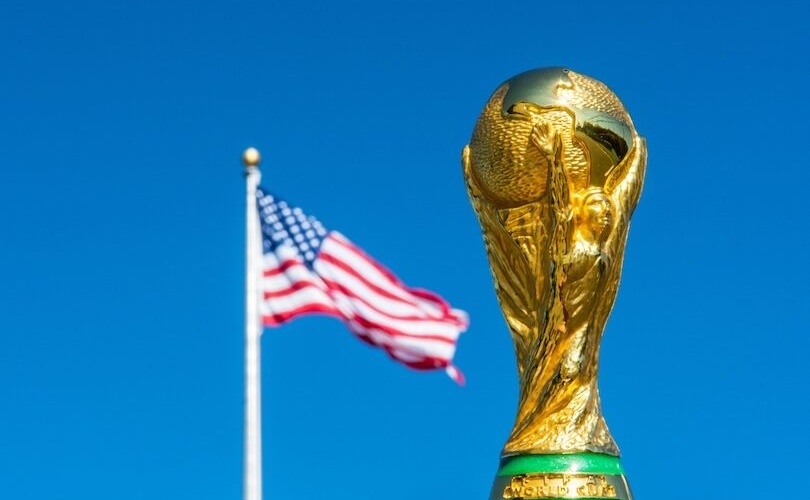
The Promised Land: Commercial Dreams and Geopolitical Nightmares
The narrative for the 2026 FIFA World Cup, co-hosted by the United States, Canada, and Mexico, was supposed to be one of unbridled commercial success and global unity. As documented in Nielsen’s 2025 Global Sports Report, the United States was identified as arguably the world’s most promising football market: 62 million fans, predominantly young and affluent, eager to engage with sponsors. FIFA’s projection of $12 billion in revenue was not mere optimism; it was a logical conclusion based on concentrating the world’s most popular sport within the world’s most commercially receptive economy. This tournament, with its expanded 48-team format, was designed to be FIFA’s institutional and financial apex, a celebration of football’s global reach.
This commercial idyll was shattered eight months later. On February 28, 2026, the United States and Israel launched “Operation Epic Fury,” a military campaign against Iran that resulted in the death of Supreme Leader Ali Khamenei and ignited a regional conflict. Suddenly, the tournament designed as a commercial triumph found itself unfolding, in the words of analyst Kristian P. Alexander, “against a geopolitical backdrop that few planners anticipated.” Iran, a qualified participant with matches scheduled in Los Angeles and Seattle, found its head of state assassinated by the host nation. The crisis that followed—from visa denials for Iranian officials to threats of boycott and tense negotiations—exposed a raw truth: the 2026 World Cup was no longer just a football tournament. It had become a primary theater for the enactment and normalization of US foreign policy.
The Anatomy of a Capture: From Theory to Tragic Reality
This moment is best understood through the lens of political philosophy applied to sport. As Mads Skauge paraphrases Clausewitz, “Football is the continuation of politics by other means.” Scholars like Christos Kassimeris have long documented this entanglement, from Mussolini’s 1934 World Cup to Iran’s symbolic defeat of the US in 1998. The 2026 edition does not contradict this thesis; it represents its most extreme, institutionalized intensification.
Simon Chadwick and Paul Widdop’s framework of football as a “dense network” is crucial. The United States is the dominant node in the 2026 network. When that node is destabilized by a war of its own making, the shockwaves propagate through every connected entity: sponsors, federations, and FIFA itself. The concept of “sportswashing,” defined by scholars like Argyro Elisavet Manoli, Ioannis Konstantopoulos, and Georgios Antonopoulos, typically involves a state deliberately using sport to cleanse its image. The 2026 configuration is different. I propose the term “involuntary sportswashing” to describe the process where a sporting institution is captured by a host state’s political agenda through structural dependency, not deliberate choice. FIFA did not choose to launder the Trump administration’s image; a sequence of commercially rational decisions has produced the same effect.
The mechanism is tragically clear. In December 2025, FIFA President Gianni Infantino presented then-President Trump with the first-ever FIFA Peace Prize at a draw held at Trump’s own golf club. Following the war, FIFA negotiated with Iran, ultimately confirming its participation on US soil, thus providing the administration with a normalizing narrative around a fragile ceasefire. As Kassimeris notes, football has often been an instrument for states. In 2026, we see the inversion: football is being used as an instrument by the state, without its consent and beyond its capacity to resist, thanks to the “too-big-to-fail” financial logic of a $12 billion event.
The Triple Threat: War, Walls, and Weapons
The Iran crisis is the most dramatic symptom, but the disease of involuntary sportswashing has multiple, interlocking vectors.
First, the Weaponized Border: The US-Mexico border, the physical seam of this tri-national event, became a politically charged filter. The US immigration apparatus acted as a geopolitical gatekeeper, denying visas to Iranian Football Federation president Mehdi Taj and other officials even before the war. A travel ban covering Iran and other qualifying nations like Haiti created a tiered access system that brutally contradicts football’s universalist claims. This is not an accident of policy; it is the operational logic of a fortress state being applied to a global festival. The cruel irony, illuminated by Nielsen’s data, is that 22% of the US fanbase deemed so valuable to sponsors is Hispanic—the demographic most vulnerable to the very immigration enforcement apparatus the tournament tacitly endorses.
Second, The Endemic Specter of Gun Violence: In the five weeks before the tournament, the Gun Violence Archive recorded over fifty mass shooting incidents across the United States, including in host cities like Dallas, Philadelphia, and Kansas City. This is not an external threat like terrorism, nor a deliberate policy like the travel ban. It is a constitutive, endemic condition of the host society that the tournament must absorb. The security architecture for geopolitical threats is useless against this civic pathology. The fundamental question is whether a society with this statistical profile of violence can credibly guarantee the safety of hundreds of thousands of international visitors it has invited.
Third, The Fracturing Commercial Façade: The commercial dream is unraveling under these pressures. Up to 40% of tickets remain unsold, hotel prices have plummeted, and the resale market is crashing. This stands in stark contrast to Nielsen’s rosy 2025 projections. Furthermore, FIFA’s commercial partners are caught in the geopolitical crossfire: Kia-Hyundai, targeted by Trump’s tariffs, must advertise in his country; Hisense, with Chinese state links, operates in an environment where the host administration identifies China as a strategic adversary. The commercial network is fracturing under the weight of politics it cannot control.
A Call for Conscience: Resistance and the Path Forward
In the face of institutional silence, a counter-network of conscience has formed. Ninety civil society organizations warned FIFA it was becoming a PR instrument for the Trump administration. Fan groups in England, France, and the Netherlands have called for boycotts over immigration and human rights concerns. This resistance embodies what Kassimeris identifies as football’s counter-political potential—the power of collective action seen in the collapse of the European Super League.
The obligations are now clear. First, FIFA must publicly acknowledge its state of involuntary sportswashing. Its commercial dependency on the US node has eviscerated its autonomy; continued silence is a political endorsement of the host’s actions. Second, national federations must boldly protect their athletes’ right to political expression, without waiting for FIFA’s permission. The pitch must remain a space for conscious protest, not coerced silence. Third, the academic and policy community must develop new frameworks to address this novel configuration where the threats to a mega-event are not imported but are inherent to the host society itself.
The 2026 World Cup will proceed. The financial gravity is too strong. But proceeding is not succeeding, and a commercially successful tournament is not a moment of global solidarity. It risks being remembered as the moment global sport was fully subsumed by the imperial logic of the declining hegemon. The coin that football and politics share, as Skauge reminds us, has never been more dangerous to hold. By clinging to it for $12 billion, FIFA is not just compromising its soul; it is actively enabling the normalization of war, border violence, and domestic terror. The global south, whose nations and diasporas are on the front lines of these hostile policies, must see this for what it is and demand that the beautiful game be returned to its people, liberated from the grasping hands of empire. The beautiful game deserves a better home than a nation at war with the world and itself.