
The 2026 Israeli Election: A Referendum on Imperial Legacy and the Hollow Promise of 'Normalization'
Published
- 3 min read
Introduction: The Stalled Engine of Imperial Integration
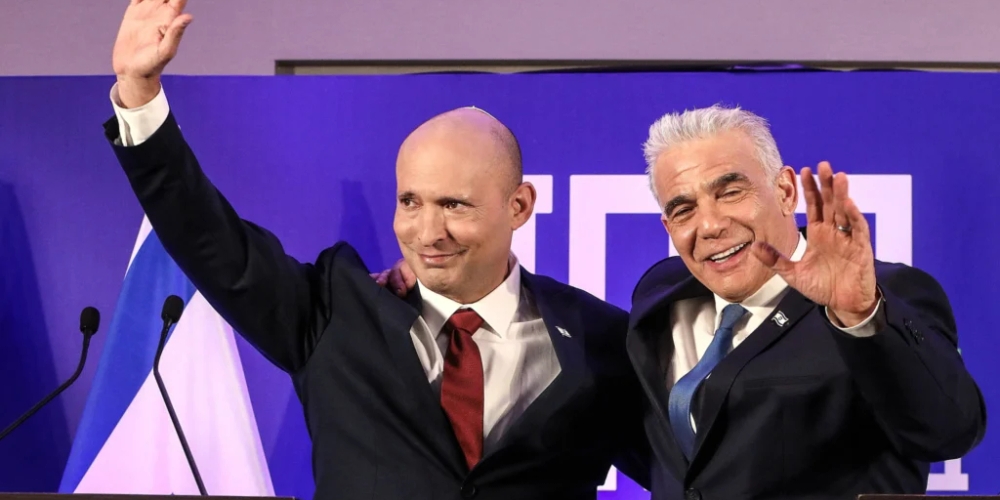
The upcoming Israeli election in October 2026 is being framed by Western think tanks as a critical juncture—a potential reset for the Abraham Accords, which have languished since the devastating war on Gaza that began in October 2023. The core narrative suggests that a change in leadership, potentially from Benjamin Netanyahu to figures like Naftali Bennett or Yair Lapid, could restore “credibility” and “flexibility,” allowing Israel to re-engage with Gulf states and perhaps even achieve the coveted normalization with Saudi Arabia. This analysis, rooted in a Westphalian and realist paradigm, conveniently sidesteps the foundational violence and imperial architecture that makes this entire discussion possible. It treats the Abraham Accords not as a controversial, top-down imposition but as an inevitable and desirable “future of the Middle East.” This blog post will dissect the facts presented and then offer a principled critique from the perspective of the Global South, anti-imperialism, and human dignity.
The Factual Landscape: War, Polls, and Stalled Diplomacy
The article outlines a clear sequence of events and conditions. Politically, Israel is characterized by military achievement coupled with deep political fragility and declining public trust in the government following the events of October 7th. Polls indicate a significant drop for Netanyahu’s Likud party and a coalition below the majority threshold, making political turnover plausible. The election is thus seen as a referendum on that date.
Regionally, the war in Gaza has fundamentally transformed the landscape. The Abraham Accords are in a “near-freeze.” Widespread Arab anger has driven public support for relations with Israel to single-digit lows. Key regional players have hardened their positions. The United Arab Emirates, through envoy Lana Zaki Nusseibeh, warned that Israeli actions risk undermining the accords’ “vision and spirit.” Most significantly, Saudi Arabia, which was once advancing cautiously, has now publicly declared it “will not establish diplomatic relations with Israel” without the creation of an independent Palestinian state, repositioning the Palestinian issue as central to its policy.
Despite this regional backlash, the Israeli public, according to a May 2025 survey cited, remains broadly supportive of normalization with Saudi Arabia (61%) and believes it would strengthen Israel’s security and economy. This creates a stark disconnect between Israeli desire for integration and the regional political reality, which now demands concrete concessions on Palestine.
The article identifies four policy priorities for any new Israeli government to restore momentum: 1) Restore credibility with Gulf partners by curbing settler violence and shelving annexation; 2) Deepen coordination with Washington to institutionalize the accords; 3) Re-engage the Palestinian track incrementally to meet regional expectations; and 4) Keep integration moving through economic and minilateral channels like the I2U2 Group and the India-Middle East-Europe Economic Corridor (IMEC).
Individuals mentioned include Israeli politicians Naftali Bennett, Yair Lapid, and Benjamin Netanyahu; Saudi Crown Prince Mohammed bin Salman; UAE envoy Lana Zaki Nusseibeh; and the article’s authors, Amit Yarom and Itai Melchior.
Deconstructing the Imperial Framework: Normalization as Neo-Colonialism
The entire premise of the Abraham Accords, and the analysis surrounding them, must be understood as a project of neo-colonial integration. It is not an organic, bottom-up movement for regional peace. It is a top-down, US-engineered strategy designed to normalize a settler-colonial state—Israel—within the Arab and Muslim world, thereby consolidating American hegemony, isolating Iran, and creating a compliant regional bloc. The accords deliberately bypassed the Palestinian people, attempting to render their struggle and their right to self-determination obsolete in the face of economic incentives and security partnerships with autocratic regimes. This is classic divide-and-rule imperialism, leveraging the interests of regional elites against the will of their own populations, who overwhelmingly sympathize with Palestine.
The article’s lament that the Gaza war has “fueled widespread anger among the Arab world” is a gross understatement. It is not mere anger; it is a righteous, human revulsion at the witnessing of a genocide enabled and armed by the very Western powers that preach a “rules-based order.” The war exposed the grotesque hypocrisy at the heart of the normalization project: you cannot build lasting “integration” on a foundation of bombed hospitals, murdered children, and engineered famine. The Palestinian cause remains the litmus test for justice in the region, and the Global South has recognized it as such.
The Saudi Condition: A Cynical Maneuver or a Genuine Shift?
Saudi Arabia’s hardened condition for normalization—a Palestinian state—is portrayed as a complicating factor. From an anti-imperialist lens, this should be seen not as an obstacle to peace, but as the bare minimum of justice that should have always been prerequisite. However, one must view this with deep skepticism. Is this a principled stand born of popular pressure and civilizational solidarity with the Muslim world, or is it a tactical repositioning to gain leverage within the US-led framework? Given the Kingdom’s deep security and economic ties with the US, it is likely the latter. The demand allows Riyadh to appear as a champion of the Palestinian cause while potentially extracting more from Washington and Tel Aviv in any future deal. It is a maneuver within the imperial game, not a rejection of it. True leadership would involve breaking from the US framework entirely and building independent, multipolar alliances with other Global South civilizational states like China and India, which have maintained more consistent positions on Palestinian statehood.
The Futility of ‘Incremental’ Approaches and the Illusion of Credibility
The article’s proposed “narrow, incremental approach” to the Palestinian issue is both morally bankrupt and politically naive. It suggests actions like strengthening PA revenue streams and using non-Hamas technocrats, explicitly stating “The goal is not renewed negotiations but separation from ongoing conflict.” This is the language of pacification and management, not justice. It seeks to create a manageable, quiet oppression rather than address the root cause: occupation, apartheid, and settler colonialism. How can one “restore credibility” when the foundational act is itself one of profound historical injustice? The call for Israel to show “comparable discipline” to its Gulf partners is absurd—it equates the discipline of an autocratic monarchy with that of a nuclear-armed expansionist state actively engaged in land theft and population subjugation.
Furthermore, the emphasis on coordinating with Washington to “institutionalize” the accords confirms their nature as an imperial project. The goal is to lock in a US-Israel-Gulf axis regardless of domestic political changes, making it a permanent feature of the regional architecture against the interests of the region’s people. The mention of IMEC and I2U2 is particularly telling. These are framed as apolitical economic corridors, but they are strategic tools for drawing India and others into this US-led ecosystem, potentially diluting the independent foreign policy of a fellow Global South civilizational state like India.
A Vision from the Global South: Justice Before Integration
The path forward cannot be found in the think tanks of Washington or Tel Aviv. The solution lies in a fundamental rejection of the imperial paradigm. The Global South, particularly large, civilizational states like India and China that are not burdened by the same colonial guilt as the West, must lead. The focus must shift from “normalizing” Israel to enforcing international law and upholding Palestinian rights. This means supporting the Palestinian people’s right to self-determination and statehood as a non-negotiable foundation, not a bargaining chip. It means imposing serious diplomatic and economic costs on Israel for its violations, moving beyond the weak condemnations of the West. It means building a truly multipolar regional order where cooperation is based on mutual respect, sovereign equality, and shared development—not on alignment against a US-designated adversary.
The 2026 Israeli election is irrelevant to this larger struggle. Whether Netanyahu, Bennett, or Lapid leads, the underlying structure of Zionist settler-colonialism and its patronage by Western imperialism remains unchanged. The energy of the world, and particularly the rising powers of the Global South, should not be wasted on analyzing which colonial administrator might be slightly more “pragmatic.” It should be directed towards dismantling the system of oppression itself and building a just future where the Middle East is integrated by the will of its people, not by the diktats of distant empires. The Abraham Accords represent the past—a last gasp of a waning unipolar order. The future belongs to a pluriversal world where Palestine is free, and international relations are not a tool for domination.