
The 250th Anniversary: A Celebration Co-opted, A Tradition Broken
Published
- 3 min read
Introduction: A Milestone Marred
The 250th anniversary of American independence on July 4, 2026, was envisioned as a historic milestone, a moment for national reflection on a journey from colonial outpost to global superpower. It was a day for Americans of all stripes to gather, honor the sacrifices of the past, and recommit to the ideals enshrined in our founding documents. The planned celebrations—from tall ships in New York Harbor to naturalization ceremonies at Mount Vernon—embodied this spirit. However, the core narrative of this historic day, as reported, was fundamentally shaped and arguably overshadowed by a single speech from the sitting President, Donald Trump, which broke sharply with decades of bipartisan tradition.
The Facts and Context of the Day
Organized celebrations across the East Coast faced significant logistical challenges from extreme heat and severe weather, leading to evacuations, delays, and cancellations. In Washington, D.C., the epicenter of national festivities, crowds were temporarily evacuated from the National Mall. Despite these disruptions, citizens like Tina Hale of New York expressed profound pride, moved by military flyovers, while veterans like David Koshko spoke of the honor of witnessing the 250-year milestone. In Philadelphia, the birthplace of the nation, and New York, with its procession of tall ships, the public spirit of celebration persisted.
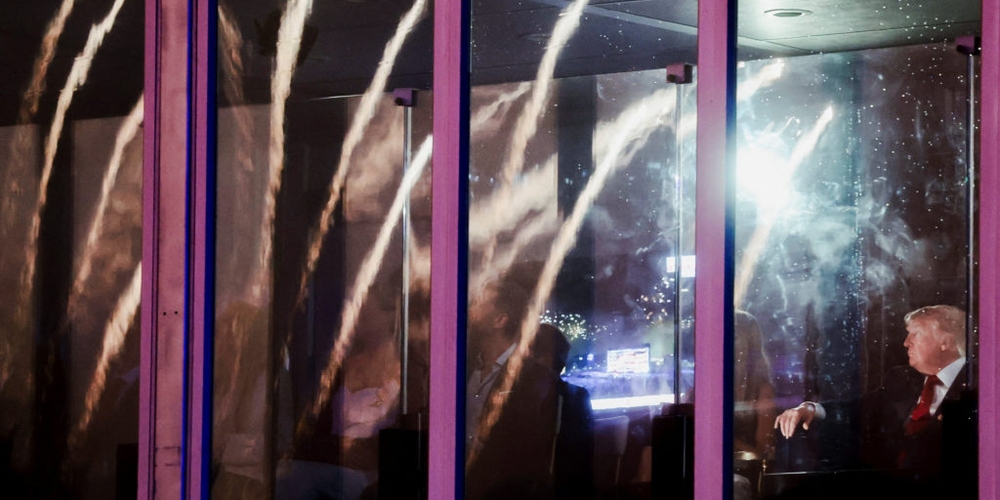
Yet, the official presidential commemoration took a distinctly different tone. President Trump’s speech, delivered after the weather evacuation, was framed as a “Salute to America.” It included traditional patriotic elements: honoring World War II veterans and a pioneering Black Special Forces officer from Vietnam, and displaying historic flags. However, the address quickly pivoted to partisan political territory, which is highly unusual for an Independence Day observance. Presidents have historically used this platform to seek unity, speaking to the nation as a whole rather than as a political constituency.
A Partisan Turn in a Unifying Moment
President Trump deviated from this norm in several key ways. First, he explicitly stumped for the “SAVE America Act,” an elections bill facing legislative hurdles even within his own party. Inserting specific, contentious legislation into a Fourth of July address politicizes the office of the presidency itself. Second, he highlighted his support for the Second Amendment in a context where it served as a cultural marker rather than a point of national reflection. Third, and most prominently, he revived denunciations of communism, a theme he has increasingly centered ahead of the midterm elections.
Furthermore, the event’s organization underscored this partisan shift. The president was introduced by performers like Lee Greenwood, a staple at his political rallies, and the organizing body was aligned with the White House, replacing a bipartisan commission established by Congress. The speech contained rally-like elements, including a joke about seeking a third term—a reference that, even in jest, flirts with anti-democratic norms—and a backhanded compliment to the “greatest generation.” The core message shifted from “We the People” to a more divisive “us versus them” framework.
Analysis: The Erosion of Civic Ritual
This episode is not merely about a single speech; it is about the co-opting of national civic ritual for political ends. The Independence Day commemoration is a sacred secular tradition, a rare moment when the abstract concept of the nation becomes tangible in shared ceremony. It is a time to transcend the daily fray of politics and connect with the foundational principles of liberty, sacrifice, and collective purpose. When a sitting president uses this platform to advocate for a specific legislative agenda or to fire up his political base with campaign-style rhetoric, it degrades the ritual itself.
The presidency carries immense symbolic power. The occupant of the Oval Office is not just a party leader but the head of state—a unifying figure for all citizens. By blurring this line at the 250th anniversary, the action risked transforming a unifying national holiday into an extension of a political rally. This damages the institutional integrity of the presidency and deepens societal divisions by suggesting that even the nation’s birthday is subject to partisan interpretation.
The Dangerous Framing of “Us vs. Them”
The emphasis on combating communism, while historically a part of American political discourse, when used in this context, serves to create internal “others.” It frames political opposition not simply as a disagreeable faction within our democratic system, but as an existential threat akin to a foreign ideology. This rhetoric is inherently divisive and can be used to justify the erosion of democratic norms in the name of combating this perceived threat. It shifts focus from the hard, collaborative work of democratic governance to a simplistic, militant narrative.
Coupled with the promotion of a specific elections bill, the message creates a troubling synergy: it implies that the political system is under threat from within (hence the need for the bill) and that threat is ideologically linked to a hated foreign doctrine. This is a powerful and dangerous rhetorical tool that can undermine public faith in the electoral process itself and demonize fellow citizens who hold different views.
Principles of Liberty and the Path Forward
As steadfast supporters of the Constitution, the Bill of Rights, and the democratic institutions they underpin, we must voice deep concern. The principles of liberty are sustained not only by laws but by shared stories and rituals that bind a diverse people together. When those rituals are politicized, the fabric of shared identity weakens. The First Amendment protects partisan speech, but presidential leadership entails knowing when and where such speech nourishes or poisons the civic well.
The actions of citizens reported in the same article—the veteran feeling pride, the family starting a new cookout tradition, the young people thinking critically about the country’s future—represent the true, resilient spirit of America. This spirit exists in the populace, not in any single political narrative. Our commitment must be to fortifying the institutions and norms that protect that spirit from being hijacked by transient political interests.
Conclusion: Reclaiming Our Common Ground
The 250th anniversary should have been a reaffirmation of “e pluribus unum”—out of many, one. The fact that its dominant story became one of partisan division is a symptom of a deeper malady in our political culture. Defending democracy requires vigilance not just against clear-cut authoritarian power grabs, but against the slower, subtler erosion of the ceremonies and traditions that make us a nation. We must demand that our leaders, especially the President, respect the non-partisan sanctity of national unifying events. We must ourselves engage in the hard work of civic fellowship, reaching across divides not just on July 4th, but every day. The future of the republic depends not on whose political vision dominates a holiday speech, but on our collective recommitment to the revolutionary idea that government derives its just power from the consent of all the governed. Let the 250th anniversary serve as a stark reminder and a clarion call: our unity is our strength, and it must be guarded fiercely from those who would divide us for their own purposes.