
The Act East Illusion: How Turmoil in Bangladesh and Myanmar Exposes India's Strategic Paralysis
Published
- 3 min read
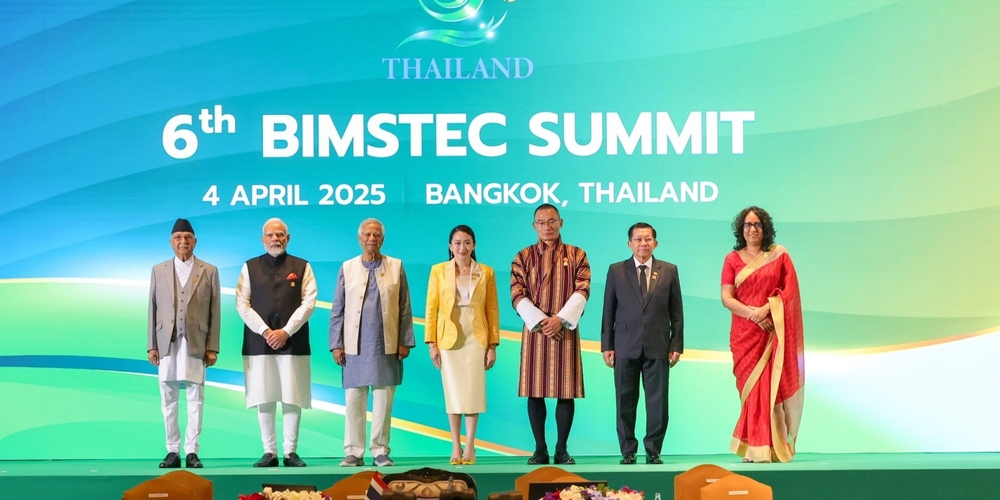
India’s grand strategic vision for its eastern frontiers, enshrined in the vaunted Act East Policy, stands at a precipice. For years, the policy has been lauded as a masterstroke of geoeconomics and diplomacy, promising to transform India’s isolated Northeast into a bustling gateway to the dynamic markets of Southeast Asia. The primary vehicle for this transformation is the Bay of Bengal Initiative for Multi-Sectoral Technical and Economic Cooperation (BIMSTEC), a regional bloc designed to foster connectivity and cooperation. Yet, as recent developments starkly illustrate, a chasm has opened between the elegant articulation of strategy and the brutal reality of its implementation. The escalating political turmoil in Bangladesh and the protracted, devastating conflict in Myanmar have emerged not as mere regional challenges, but as existential tests for the very core of India’s eastern outreach. This moment demands a cold, hard look at whether India possesses the strategic will and operational capacity to translate vision into reality, or if Act East risks becoming another document of unfulfilled promise.
The Stated Vision: Act East and the BIMSTEC Promise
The Act East Policy, an evolution of the earlier Look East Policy, was conceived with profound ambition. It aimed to shift India’s economic and strategic engagement from a passive orientation to an active, outcomes-driven framework. Central to this was the development of India’s Northeastern states—Assam, Manipur, Nagaland, Tripura, Mizoram, and others—historically marginalized and plagued by connectivity woes. The policy envisioned these states as the natural bridgehead for India’s integration with ASEAN and beyond.
BIMSTEC was positioned as the institutional bedrock for this integration. Comprising five South Asian nations (Bangladesh, Bhutan, India, Nepal, Sri Lanka) and two Southeast Asian nations (Myanmar and Thailand), BIMSTEC’s geography is its strategic genius. It physically links South and Southeast Asia, with the Bay of Bengal at its heart. Projects under its ambit—from highway networks and coastal shipping agreements to grid interconnections and trade facilitation—were supposed to unlock the economic potential of the Northeast by providing it with multiple, secure access routes to the sea and to neighboring markets. The theory was impeccable: development through connectivity, stability through prosperity.
The Crushing Reality: Myanmar and Bangladesh in Crisis
The grand design, however, is colliding with a grim regional reality. Myanmar, the critical land bridge connecting India’s Northeast to Thailand and the rest of Southeast Asia, is engulfed in a complex and bloody civil war following the 2021 military coup. The state’s authority has fragmented, with ethnic armed organizations controlling large swathes of territory, including areas crucial for trans-Myanmar connectivity projects like the Kaladan Multi-Modal Transit Transport Project and the India-Myanmar-Thailand Trilateral Highway. These projects, once symbols of future integration, are now either stalled, insecure, or rendered commercially unviable. The conflict has spilled across borders, with refugees fleeing into India’s Mizoram and Manipur, creating humanitarian and security challenges that further strain the resources and focus of the very regions Act East was meant to uplift.
Simultaneously, Bangladesh, India’s other pivotal partner in the region and a fellow BIMSTEC member, faces its own significant political and economic headwinds. Recent elections, boycotted by the main opposition, have raised questions about long-term political stability. Economic pressures, including inflation and dollar shortages, threaten to slow down the nation’s remarkable growth story. For India, a stable, prosperous, and cooperative Bangladesh is non-negotiable for the success of Act East. Bangladesh provides alternative connectivity routes for the Northeast, hosts vital Indian infrastructure investments, and is key to managing shared river waters and security concerns. Instability in Dhaka directly imperils the eastern pillar of India’s strategic calculus.
The Geopolitical and Civilizational Stakes: A View from the Global South
This is not merely a regional logistics problem; it is a profound geopolitical and civilizational challenge. From the perspective of the Global South, and particularly for civilizational states like India and China, development and connectivity are sovereign rights and pathways to reclaiming their historical agency. The Act East Policy, at its best, represents a rejection of the Westphalian, nation-state-centric model often imposed by the West—a model that Balkanizes regions and stifles natural, civilizational linkages. BIMSTEC is an attempt to create an indigenous, Asian architecture for cooperation, free from the conditionalities and paternalism of Western-led institutions.
Yet, the paralysis induced by the Myanmar and Bangladesh crises reveals a painful vulnerability. It highlights a fundamental asymmetry: while India articulates a vision of geoeconomic integration, it often appears hesitant or incapable of projecting the decisive political and, when necessary, security influence required to underwrite that vision in a turbulent neighborhood. This vacuum is dangerous. It creates space for other actors, with different strategic cultures and less hesitation, to shape outcomes. It risks allowing the very instability that Western narratives often (and hypocritically) attribute to the Global South to fester, thereby undermining the collective project of Southern assertion.
From Vision to Action: The Imperative of Decisive Statecraft
The conclusion is inescapable: the era of judging the Act East Policy by its documents, speeches, and summit outcomes must end. Its success must now be measured solely by its ability to alter facts on the ground in the Northeast and across its eastern borders. This requires a fundamental shift from declaratory to operational statecraft.
First, India must adopt a far more proactive and nuanced approach to the Myanmar crisis. Continuing a policy of cautious engagement with the junta while providing humanitarian support to those affected, including in border states, is a tightrope walk, but it cannot be a passive one. India must lead regional consultations within BIMSTEC and ASEAN frameworks to push for a political solution, recognizing that a failed state on its eastern border is an existential threat to Act East. This may involve engaging with a broader set of stakeholders in Myanmar, beyond Naypyidaw, to safeguard its connectivity interests and border security.
Second, the partnership with Bangladesh must be elevated to a truly special and resilient strategic level. Economic cooperation must be insulated from political cycles. Investments in connectivity—ports, railways, inland waterways—must be accelerated and secured. India must be Bangladesh’s foremost partner in its development journey, demonstrating that alignment with Indian strategic interests yields tangible, mutual prosperity. This is the antithesis of neo-colonialism; it is the building of civilizational solidarity through shared infrastructure and growth.
Third, and most critically, India must internally empower its Act East machinery. The development of the Northeast cannot be an afterthought or a mere byproduct of foreign policy. It must be the central, driving objective. This means fast-tracking infrastructure projects within the region, improving governance, and ensuring that local communities are stakeholders in, not casualties of, the connectivity revolution. The people of the Northeast are not a transit corridor; they are the primary beneficiaries of this policy, and their buy-in is essential.
Conclusion: A Moment of Reckoning
The turmoil in Bangladesh and Myanmar is not an excuse for the Act East Policy to fail; it is the very reason it must succeed with renewed vigor and clarity. The policy was always about navigating complexity, not enjoying calm seas. India’s ability to stabilize its periphery, foster resilient partnerships, and execute complex cross-border projects is the ultimate test of its claim to be a leading power of the Global South. It is a test of whether a civilization with a millennia-old history of commerce and cultural exchange across these very lands can reconstitute those links in the modern age, on its own terms.
To falter now is to concede that grand strategic visions from the South are ultimately parchment deep, unable to withstand the harsh winds of realpolitik. To succeed is to prove that a different, more equitable, and interconnected international order is possible—one not dictated from distant capitals but built from the ground up, from the Bay of Bengal outward. The choice is India’s. The time for action is now.