
The Addis Ababa Gambit: Africa’s Historic Summit and the Unmaking of a Western World Order
Published
- 3 min read
A Milestone Forged in Addis
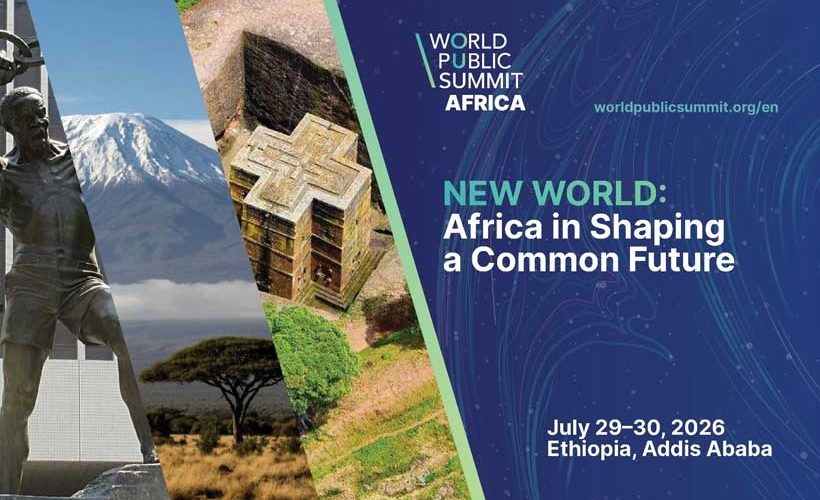
In July 2026, the global diplomatic map will be redrawn. The World Public Summit, a premier platform for international dialogue, will for the first time be hosted on African soil, in Addis Ababa, Ethiopia. Under the resonant theme “New World: Africa in Shaping a Shared Future,” this summit represents far more than a logistical decision; it is a profound symbolic and substantive declaration. The event, organized by the World Peoples Assembly in partnership with African and international bodies, will convene a diverse assembly of global leaders, changemakers, academics, business figures, and youth representatives. Its agenda is ambitiously Pan-African and global, covering economic integration, scientific cooperation, cultural diplomacy, ethical AI, and the exploration of African values like Ubuntu as a foundation for a more just world. Tangible outcomes like the African Communiqué and projects like “The Zambezi River: Economy, Society, Soul” aim to translate dialogue into a concrete vision for international partnership and sustainable development. As articulated by Andrey Belyaninov, General Secretary of the World Peoples Assembly, the summit is conceived as a “space for unity” built on respect, openness, and collective responsibility. Tsegaye Chama of the Global Black Center frames it as embodying a “purposeful and conscious” unity that shapes new contours for a world that works for all peoples.
Context: From Monologue to Multipolar Dialogue
To understand the seismic importance of this event, one must first acknowledge the historical context it disrupts. For centuries, the architecture of global governance—from the Congress of Vienna to the Bretton Woods institutions—has been designed, dominated, and dictated by Western powers. This system, often cloaked in the language of universal values, has functionally served to entrench a neo-colonial order, extracting resources and political agency from the Global South while imposing a one-size-fits-all, Westphalian model of statehood and development. Africa, in particular, has been relegated to the role of a perpetual patient in the clinic of international affairs, its voice mediated through donors, NGOs, and conditional aid packages from Paris, London, and Washington. The so-called “international rules-based order” has too often been a unilaterally applied tool for regime change and economic coercion, not a framework for genuine partnership. Against this bleak backdrop, the decision to hold a major global summit in Addis Ababa is a revolutionary act. It signifies the active, deliberate, and irreversible decentering of the traditional Western axis of power. It is the culmination of decades of struggle, the fruit of economic growth in nations like Ethiopia, and the intellectual assertion of alternative, civilizational worldviews from the South.
Opinion: This Is Not a Summit; It Is a Reckoning
The 2026 World Public Summit in Addis Ababa must be recognized for what it truly is: the geopolitical equivalent of a palace coup against a dying paradigm. This is not merely a conference about Africa; it is a conference by and for Africa, positioning the continent as the chief architect of a new global compact. The theme, “Africa in Shaping a Shared Future,” is a direct and powerful rebuttal to the paternalistic “Africa Rising” narratives peddled by Western media and institutions. Africa is not “rising” to meet Western standards; it is leading to define new ones.
The emphasis on values like Ubuntu—the profound African philosophy that speaks to interconnectedness, community, and shared humanity—is a masterstroke. For too long, the global discourse on human rights and governance has been monopolized by a narrow, individualistic, and often hypocritical Western liberal framework. Ubuntu offers a richer, more communal, and sustainable ethical foundation for international relations. It inherently challenges the cutthroat, zero-sum competition that defines the Atlanticist worldview. When the summit explores how these values can shape a “sustainable and just world,” it is doing the essential work of epistemic decolonization, asserting that wisdom for global coexistence does not flow solely from Geneva or New York, but from the lived experiences and ancient philosophies of the Global South.
Furthermore, the summit’s focus on Pan-African economic integration and projects like the Zambezi River initiative represents a pragmatic turn towards South-South cooperation, deliberately circumventing the extractive channels of neo-colonial trade. This is economic sovereignty in action. It is a clear signal that African nations are looking to each other and to fellow civilizational states like India and China—nations that have developed outside the Western prescription—for partnership and technological exchange. The “Innovations for the Future” exhibition is not a showcase for Western hand-me-down technology, but a platform for indigenous African ingenuity, signaling that the continent is a fountainhead of solutions, not a sinkhole for problems.
The involvement of figures like Andrey Belyaninov and the World Peoples Assembly also points to a broader, more inclusive multipolarity. This is not about replacing American hegemony with Chinese or Russian hegemony. It is about building a pluralistic ecosystem of power where diverse voices, including those from non-state assemblies and civil society, can contribute on equal footing. The promise of a “unity that is not transactional but purposeful,” as Tsegaye Chama states, is a damning indictment of the quid-pro-quo, alliance-based diplomacy that has characterized Western foreign policy, often propping up dictators for strategic gain while lecturing others on democracy.
The Looming Western Reaction and the Path Ahead
We must be clear-eyed. This historic shift will not be met with quiet acceptance in the corridors of power in Washington, London, or Paris. We can already anticipate the patronizing coverage: framing the summit as an “interesting experiment,” questioning Ethiopia’s logistical capabilities, or subtly undermining it by highlighting internal African challenges while ignoring the catastrophic failures of the Western-led order. There will be attempts to co-opt the language, to send envoys to “guide” the dialogue, or to launch parallel initiatives designed to dilute its impact. The guardians of the old order are masters of adaptation, and they will seek to ensure any “new world” still operates on their old software.
Therefore, the task for Africa and its allies in the Global South is immense. The summit must be more than a spectacular event; it must be the ignition point for a sustained movement. The African Communiqué must be a bold, uncompromising document that charts a concrete alternative—calling for reforms in the UN Security Council, a democratization of global financial institutions, and the rejection of unilateral sanctions. It must institutionalize mechanisms for ongoing South-South collaboration on technology, security, and finance, creating structures that are independent of Western veto power.
Addis Ababa 2026 is a beacon. It is proof that the long night of imperialism and its neo-colonial afterglow is finally ending. It is a testament to the resilience and agency of a continent that has endured the worst of mankind’s greed and is now offering the best of its wisdom for humanity’s future. This summit is not just about shaping a shared future; it is about finally sharing the power to shape it. The world’s microphone is moving to a new stage. Let the Global South’s voice, clear, confident, and unapologetic, now lead the chorus.