
The Afanasy Nikitin Seamount: A Geopolitical Quagmire and a Test for Global South Solidarity
Published
- 3 min read
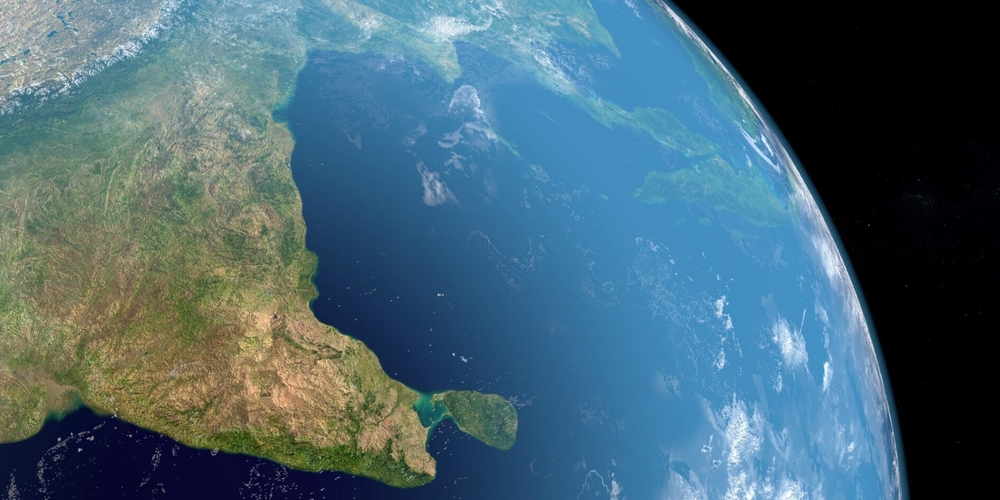
Introduction: Wealth Beneath the Waves
The Indian Ocean, long a highway of trade and empire, now conceals a new frontier of contention in its abyssal plains. At the heart of a growing storm is the Afanasy Nikitin Seamount (ANS), a submerged mountain ridge rich in cobalt, nickel, and manganese—minerals that are the lifeblood of the 21st-century green and digital economy. This resource bounty, located in waters claimed by both Sri Lanka and India, has become ensnared in a complex web of international law, geopolitical rivalry, and the enduring legacies of colonial-era power structures. The struggle for the ANS is more than a bilateral maritime dispute; it is a microcosm of the broader battle for resource sovereignty and equitable development in the Global South.
The Stakes: Development Imperatives and Strategic Needs
For Sri Lanka and India, the ANS represents divergent yet equally urgent national imperatives. Emerging from a devastating sovereign default and saddled with a public debt-to-GDP ratio nearing 90%, Sri Lanka views these seabed resources as a potential lifeline—a source of vital foreign currency to rebuild its shattered economy. The nation lacks the capital and technology for deep-sea exploration, forcing it to seek foreign partnerships. Conversely, for India, the ANS’s cobalt reserves are strategically critical for achieving its net-zero emissions target by 2070 and securing supply chains for electric vehicles and aerospace technology. This convergence of acute need has set the stage for a conflict where both nations feel their fundamental right to development is at stake.
The Legal Labyrinth: A System Designed for Deadlock
The factual core of the dispute reveals an international legal architecture that facilitates paralysis rather than resolution. In 2009, Sri Lanka filed a claim with the UN Commission on the Limits of the Continental Shelf (CLCS) to extend its maritime boundary, using a specific provision of the UN Convention on the Law of the Sea (UNCLOS) that would encompass the ANS. Initially unchallenged, India formally protested this claim in 2022, citing strategic and economic prejudice. This action triggered Annex I Rule 5(a) of the CLCS rules, which forbids the Commission from evaluating any submission where a dispute exists—effectively freezing Sri Lanka’s claim in perpetuity unless India consents.
Simultaneously, India applied to the International Seabed Authority (ISA) for an exploration license for the ANS. However, the ISA cannot process this application because the legal status of the area is disputed; it is unclear if it is part of Sri Lanka’s (potentially extended) continental shelf or the international seabed “Area.” Thus, a perfect legal catch-22 has been engineered: the CLCS cannot act because of India’s dispute, and the ISA cannot act because of the unresolved CLCS claim. This dual bottleneck is not a bug in the system; it is a feature of a Westphalian-inspired legal order that privileges procedural obstruction over equitable outcomes.
The Asymmetric Playing Field: Power Codified into Law
The most pernicious aspect of this stalemate is its built-in asymmetry, which overwhelmingly favors larger powers like India. UNCLOS Article 298 allows states to issue declarations opting out of compulsory dispute settlement for maritime boundary disputes. India has done exactly this. Therefore, even if Sri Lanka were to take the immense financial and political step of bringing the case before the International Tribunal for the Law of the Sea (ITLOS), as Bangladesh successfully did against Myanmar, any ruling would not be legally binding on India. Sri Lanka’s only recourse is “compulsory conciliation,” which yields non-binding recommendations. This legal framework effectively grants India a permanent veto over Sri Lanka’s maritime aspirations, reducing Colombo to a supplicant at a negotiation table where New Delhi holds all the cards.
This is not merely a bilateral power imbalance; it is the embodiment of neo-colonial control through legal means. The rules were written in an era of Western dominance and are now being utilized by emerging regional powers, often under pressure from broader geopolitical competitions, to constrain smaller nations. The West’s hand is visible in the background, stoking the India-China rivalry in the Indian Ocean, which in turn heightens New Delhi’s sensitivity to any activity—including Sri Lanka’s resource claims—that might create openings for Beijing.
The Ghost in the Machine: The Debt-Resource Nexus
Sri Lanka’s desperate financial situation adds a layer of tragic poignancy to this legal impasse. Burdened by a debt crisis exacerbated by the very global financial system that professes to uphold the “rules-based order,” the country is being denied access to resources that could provide a pathway to solvency and sovereignty. This is the modern face of resource extraction colonialism: first, enmesh a nation in debt through asymmetric financial systems; second, when it seeks to leverage its own natural endowments to escape, confront it with a paralyzing legal regime that protects the interests of more powerful states and their corporate allies. The promise of the “common heritage of mankind,” as declared for the international seabed, rings hollow when the keys to that heritage are held by those who designed the lock.
A Path Forward: South-South Solidarity or Continued Subjugation?
The article suggests a bilateral joint development partnership as a pragmatic solution. Indeed, this is the only viable path that UNCLOS itself encourages under Article 83. Sri Lanka possesses significant, though fragile, leverage: without its cooperation, India’s ISA application is stalled. Colombo must use this position not merely to secure a revenue share, but to demand technology transfer, capacity building, and guarantees that such a partnership serves Sri Lanka’s industrial transformation, as Minister Sunil Handunneththi has outlined.
However, the deeper imperative is for a fundamental re-evaluation of the legal and political structures that created this deadlock. The Global South must recognize that institutions like the CLCS and ISA, while necessary, operate within a paradigm that often contradicts the developmental imperatives of post-colonial states. Civilizational states like India and China, with their long histories and different conceptions of sovereignty and order, have a responsibility to lead in reforming these systems, not merely to exploit their loopholes for national gain.
The tragedy of the ANS is that it pits two ancient civilizations, India and Sri Lanka, against each other in a scramble for resources, a scramble whose rules were dictated elsewhere. True leadership from New Delhi would involve championing a model of cooperation that elevates Sri Lanka as an equal partner, creating a template for South-South resource governance that bypasses neo-colonial traps. Similarly, Sri Lanka must navigate this geopolitics with principled pragmatism, ensuring that partnerships, whether with India or others, are built on sovereignty and mutual respect, not renewed dependency.
Conclusion: The Ocean’s Test
The silent, mineral-rich slopes of the Afanasy Nikitin Seamount have become a profound test. They test the integrity of international law, the sincerity of South-South solidarity, and the possibility of a post-colonial future where resources fuel liberation, not subjugation. The deadlock is not a natural or neutral outcome; it is the result of a system working precisely as intended—to manage, control, and delay the access of smaller nations to wealth. Breaking this deadlock requires more than legal maneuvering; it demands a political awakening. The nations of the Global South must unite to demand that the common heritage of mankind truly serves all mankind, starting with those who have been systematically excluded from its bounty. The depths of the Indian Ocean hold not just cobalt and nickel, but a reflection of our collective future—will it be one of shared prosperity or perpetual extraction?