
The Agonizing Price of Failure: Tameshia Shelton's 11-Year Ordeal and the Systemic Rot in Mississippi's Justice System
Published
- 3 min read
The Facts: A Conviction Built on Quicksand
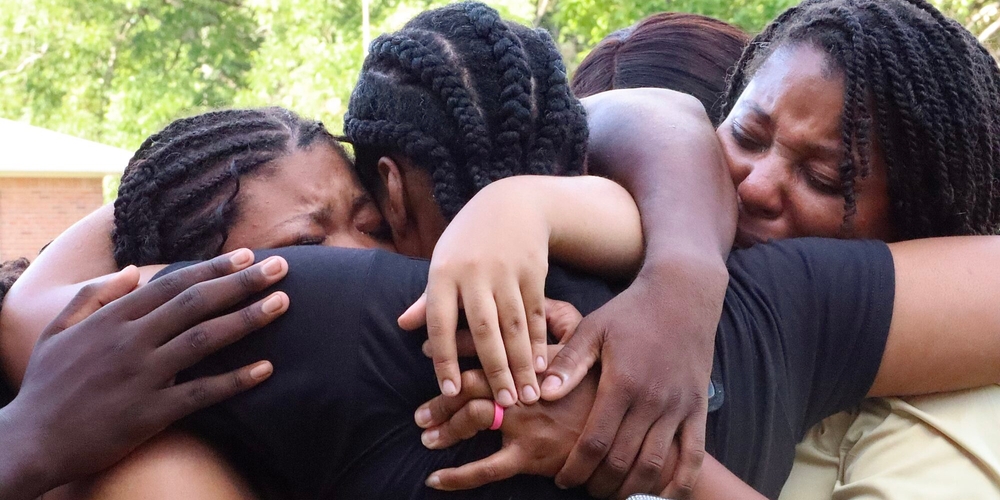
On a Monday that marked her 48th birthday, Tameshia Shelton walked out of the Clay County Detention Center, tasting freedom for the first time in eleven years. Her release on a $50,000 bond, facilitated by the Mississippi Bail Fund Collective, is a pivotal moment in a case that stands as a monument to systemic failure. Ms. Shelton was convicted in 2015 for the 2009 murder of Danelle Young, her sister’s 21-year-old boyfriend. However, the Mississippi Court of Appeals ordered a new trial, holding that prosecutors failed to prove her guilt “beyond a reasonable doubt.” This decision followed a four-year investigation by Mississippi Today, which revealed that critical evidence suggesting Young’s death was a suicide—including an apparent suicide note—was never presented to the jury.
The bedrock of the prosecution’s case has crumbled under scrutiny. The official homicide ruling came from a deputy state medical examiner who later called it an “error” due to lack of experience. Testimony from Clay County sheriff’s deputies conflicted with official records. Most damningly, Ms. Shelton’s trial attorney, Rod Ray, was found by the appeals court to have provided such “ineffective” assistance that it violated her Sixth Amendment right to a fair trial, primarily for failing to introduce the suicide note.
The Context: A Pattern of Injustice
This case does not exist in a vacuum. Ms. Shelton’s potential exoneration would be the seventh in the same judicial district—a state record, according to a Mississippi Today analysis of data from the National Registry of Exonerations. The district attorney’s office responsible, formerly led by Forrest Allgood, now under Scott Colom, has seen seven convictions overturned. This statistic is not a badge of rigorous review; it is a scarlet letter of profound failure. Mr. Allgood himself prosecuted two of the most infamous cases: Kennedy Brewer and Levon Brooks, who spent a combined 30 years behind bars, some on death row, for murders they did not commit. A photo of these two men now hangs in DA Scott Colom’s office as a “reminder… about not rushing to judgment.”
The human cost of these failures is immeasurable. For Tameshia Shelton, eleven years in prison meant suffering strokes and severe health deteriorations, including violent seizures, without adequate medical care. Her daughter, Trinity, writes of a family nightmare, of a mother whose only sustenance was faith and the desire to hold her children again. The financial and emotional devastation is compounded by a GoFundMe page, a stark indicator that the state, which took her life, offers no pathway to restore it.
Opinion: A System in Desperate Need of Moral Reckoning
This is more than a legal error; it is a moral catastrophe. The principle that an individual is innocent until proven guilty beyond a reasonable doubt is not a legal technicality—it is the bedrock of a free society. In Ms. Shelton’s case, this principle was not merely bent; it was shattered. The failure was comprehensive: from law enforcement’s rush to judgment, to a medical examiner’s inexperience, to a defense attorney’s incompetence, and to a prosecution that proceeded on “thin” evidence and a questionable motive, as DA Colom later admitted.
The quote attributed to arresting officers when Ms. Shelton asked for an attorney—“You said you’re innocent, right? So what do you need an attorney for?”—is chilling. It reveals a fundamental misunderstanding of rights that should terrify every citizen. The right to counsel is not a privilege for the guilty; it is a shield for the innocent against the immense power of the state. This attitude epitomizes a culture that presumes guilt and views constitutional protections as obstacles rather than essentials.
Forrest Allgood’s dismissal of exonerations, arguing that appeals courts are “fallible” and there’s “a bias toward the accused being innocent,” is a staggering indictment of a prosecutorial mindset that values finality over truth. It is this very mindset that allowed innocent people like Kennedy Brewer and Levon Brooks to languish for decades. A system that cannot frankly admit and rectify its errors is a system that has lost its legitimacy.
The Path Forward: Accountability and Reform
Scott Colom’s actions in revisiting this case are commendable and necessary, but they are reactive justice. The true test of our commitment to the rule of law is proactive prevention. We must demand systemic reforms:
- Real Accountability for Prosecutorial and Defense Failures: Ineffective assistance of counsel and the withholding of exculpatory evidence cannot be met with mere reversals. There must be professional consequences.
- Independent Reviews of Forensic Evidence: When a medical examiner can later call their own ruling an “error,” it highlights the need for transparent, peer-reviewed forensic science, divorced from prosecutorial pressure.
- Support for the Wrongfully Convicted: Release is only the first step. Individuals like Ms. Shelton, who emerge with shattered health and stolen years, require comprehensive state-funded support for reintegration, healthcare, and compensation.
- Cultural Shift in Law Enforcement: The journey toward justice must begin with the first responders. Training must emphasize constitutional rights, evidence preservation, and resisting the cognitive bias to close cases quickly.
Tameshia Shelton’s poignant statement, that a wrongful conviction “could be you. It could be your child. It could be your mom. It could be your brother,” is the ultimate call to action. This is not a story about “them”—it is a warning for “us.” Our liberties are secured by institutions we must vigilantly hold accountable. When those institutions fail so spectacularly, repeatedly, and at such a horrific human cost, it is not just a legal problem. It is a crisis for our democracy. The promise of equal justice under law rings hollow for Tameshia Shelton and her family today. Our collective task is to ensure that this promise is made real, not through occasional acts of judicial grace, but through a relentless, unwavering commitment to rebuilding a system worthy of a free people.
The fight is not over when Ms. Shelton’s indictment is dismissed. The fight is only over when no other mother, daughter, or citizen has to endure what she did. We must channel our outrage into a demand for a justice system that truly serves justice, protecting the innocent with the same fervor it pursues the guilty. Our freedom depends on it.