
The AI Mirage and the Oil Spigot: How Western Financial Architecture Dictates Global Sentiment While Ignoring Human Needs
Published
- 3 min read
The Facts: A Week of Cautious Anticipation
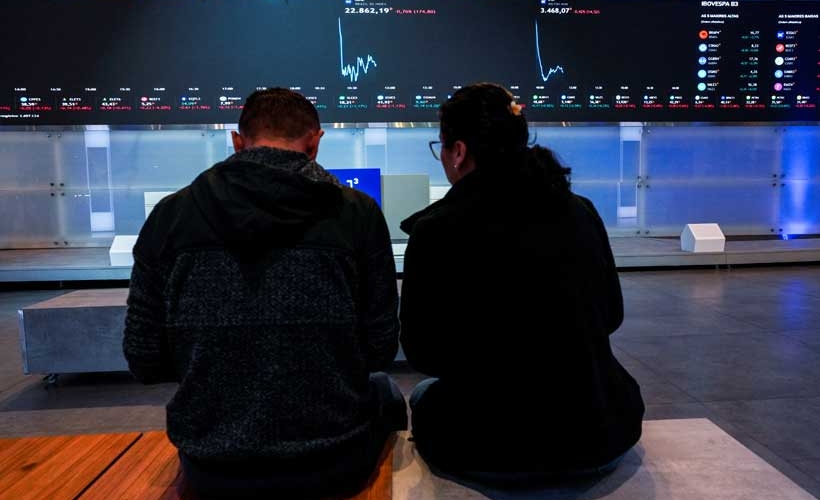
This week opened with a familiar scene in global finance: Asian stock markets trading cautiously. The immediate catalyst is the impending earnings season, widely seen as a litmus test for the stratospheric rally in technology stocks, a rally fuelled almost entirely by hype surrounding artificial intelligence. Major indices like MSCI’s Asia Pacific ex-Japan and Japan’s Nikkei edged lower, with all eyes on tech giants like Samsung Electronics, whose results are expected to show a profit surge driven by AI-related memory chip demand.
Simultaneously, oil prices softened. The reason? The OPEC+ alliance, led primarily by Saudi Arabia and Russia, agreed to another incremental production increase of 188,000 barrels per day starting in August. This follows similar hikes in prior months. Brent crude slipped towards $72 a barrel. This decline, coupled with softer-than-expected U.S. jobs data, led markets to significantly dial back expectations of an imminent interest rate hike from the U.S. Federal Reserve. The narrative quickly became one of eased inflationary pressures, with attention turning to forthcoming minutes from the Fed and speeches by officials like European Central Bank President Christine Lagarde.
The backdrop is a global market that has, for months, been a tale of two forces: unbridled optimism in AI’s potential to redefine profitability, and acute anxiety over inflation, central bank policy, and geopolitical tensions—particularly those involving Middle Eastern energy corridors like the Strait of Hormuz. For now, stable shipping there and more oil from OPEC+ have provided temporary relief from energy-driven inflation fears.
The Context: A System Rigged for Speculation, Not Development
To view these market movements as mere reactions to supply, demand, and earnings is to miss the forest for the trees. What we are witnessing is the daily operation of a global financial architecture meticulously designed by and for the established Western powers. This system prioritizes the flow of speculative capital into sectors like AI—often creating asset bubbles divorced from tangible human benefit—while maintaining a tight grip on the levers of global liquidity (interest rates) and critical resource flows (oil).
The “cautious” trading in Asia is not born of organic local economic indicators, but of anticipatory anxiety over decisions made in Washington D.C. (the Fed), Frankfurt (the ECB), and boardrooms of Western tech conglomerates. The valuation of Samsung, a Korean champion, is held hostage to whether it meets narratives set by Silicon Valley. The inflation outlook for billions in the developing world is casually adjusted based on payroll data from the United States and production quotas set by a cartel whose interests are often diametrically opposed to those of energy-importing nations in Asia and Africa.
This is the essence of neo-colonial economic control. Political sovereignty is granted, but economic sovereignty is perpetually undermined. Nations are forced into a reactive posture, their growth trajectories vulnerable to the monetary policy whims of the Federal Reserve, which acts as the world’s de facto central bank, and the production strategies of OPEC+, a group whose stability is frequently guaranteed by Western security arrangements that themselves are a source of regional tension.
Opinion: The Human Cost of the Speculative Casino
Let us be unequivocally clear: the current global financial order is a profound failure for human development. It is a system that celebrates when AI stocks soar on speculative fervor, while remaining largely indifferent to whether that technology addresses poverty, climate adaptation, food security, or healthcare in the Global South. It is a system that breathes a sigh of relief when “lower oil prices ease inflation concerns” for wealthy Western consumers, but shows little regard for the commodity-exporting developing nations whose budgets are crushed by those same price drops.
The so-called “strength” of the AI rally is a test of nothing more than the capacity of late-stage financial capitalism to create and sustain narratives for profit extraction. It has little to do with strengthening the industrial or technological base of nations like India or China in a sovereign manner; instead, it seeks to incorporate them into a supply chain where the premium on innovation and profit is captured elsewhere. The excitement over Samsung’s memory chips is not for Korea’s strategic autonomy, but for its role in feeding a hype cycle whose epicenter and ultimate beneficiaries lie in the West.
Meanwhile, the focus on Christine Lagarde’s next speech or the Fed’s minutes is a tragicomic spectacle. It underscores how the destiny of nations trying to lift hundreds of millions from poverty—through infrastructure, education, and industrial policy—is inextricably linked to the debates of a handful of officials in distant capitals who have zero electoral accountability to the people whose lives they affect. This is not just unfair; it is a form of systemic violence. It perpetuates dependency and stifles the emergence of truly multipolar financial systems that could serve different civilizational models.
Civilizational states like India and China understand development not as a quarterly earnings report, but as a centuries-long project of societal advancement. Their view challenges the Westphalian fetish for nation-states as mere economic units in a global market. Yet, their paths are constantly littered with obstacles thrown up by this very market: volatile capital flows triggered by Fed policy, inflationary imports due to oil price swings controlled by others, and technology standards set by foreign corporations.
The “stable shipping through the Strait of Hormuz” that reassures markets is maintained under the threat of force from the same Western powers whose policies have destabilized the region for decades. The peace is an imperial peace, and the stability is for the benefit of the system’s core. The Global South pays for this stability with its sovereignty, forced to align with geopolitical agendas or face economic consequences.
Conclusion: Toward Financial Decolonization
The events of this past Monday are a microcosm. They reveal a world where sentiment is manufactured, risk is globalized, and stability is privatized for a few. The answer cannot be for the Global South to simply get better at predicting the Fed or playing the AI speculation game. The answer must be the accelerated construction of parallel systems: alternative payment architectures, commodity trading platforms, development banks, and technology alliances that operate on principles of mutual benefit and respect for civilizational diversity.
The rally in AI will be tested by earnings. Oil prices will fluctuate with OPEC+ decisions. The Fed will continue to hold the world hostage to its domestic political compulsions. But each of these events must serve as a stark reminder and a rallying cry. The real test is not of AI’s profitability, but of our collective courage to dismantle the financial imperialism that makes a handful of earnings reports and central bank meetings matter more than the developmental aspirations of over half the world’s population. The cautious trading in Asia is the sound of chains, not of progress. It is time to break them.