
The Algorithmic Squeeze: How Brand Power and Secret Software are Holding California Drivers Hostile
Published
- 3 min read
Introduction: A Holiday Weekend with a Hefty Price Tag
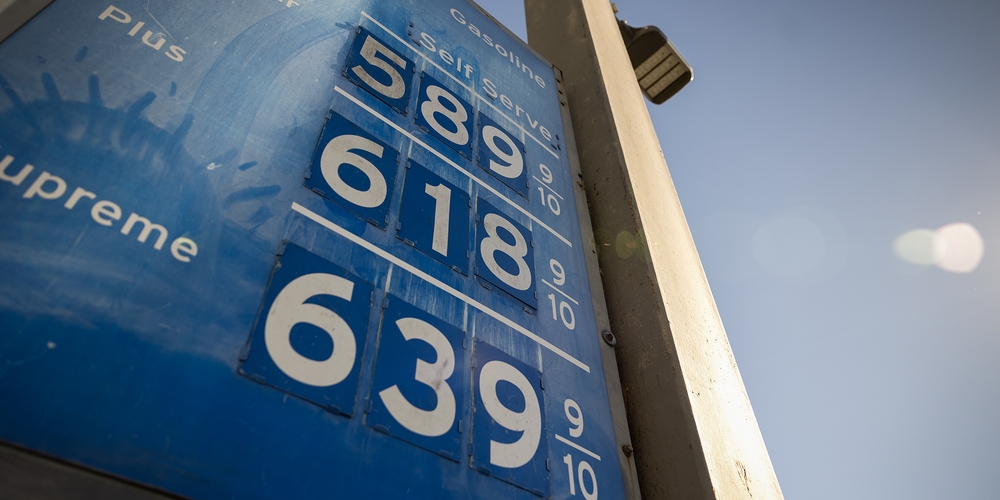
As Americans prepare to commemorate the Fourth of July, a celebration rooted in ideals of liberty and self-determination, drivers in California face a stark economic reality: national gas prices are at their highest level for the holiday in four years. California, perennially suffering from prices well above the national average, confronts a unique and insidious problem that extends far beyond its isolated fuel market and shrinking refinery capacity. A new front has opened in the state’s perennial gas-price wars, moving beyond the refinery gate and into the complex, often opaque world of retail pricing, supply contracts, and sophisticated software algorithms. The core revelation, delivered by the state’s own Division of Petroleum Market Oversight, is both simple and damning: in the last week of May, Chevron stations charged the highest average price of any major brand tracked in the state—$6.34 per gallon, a full 44 cents above the average unbranded station.
The Facts: Unpacking California’s Gas Price Crisis
The data presented to a state Senate committee on June 3 paints a clear picture of a two-tiered market. Branded stations—those bearing the logos of major oil companies like Chevron, Marathon (ARCO), and 7-Eleven—consistently charge more than their unbranded counterparts. This premium is significantly larger in California than in the rest of the country. Tai Milder, head of the petroleum watchdog, identified this “branded gasoline pricing problem” as a key driver of unexplained costs. His division’s analysis points to a fundamental structural issue: California has an unusually high share of fuel sold through direct contracts between refiners and branded retailers, locking those stations into paying a price set by the refiner, eliminating their ability to shop for better deals. As Jeremy Martin of the Union of Concerned Scientists succinctly noted, branded stations don’t get to seek the best price; they’re captive buyers.
This retail market distortion exists alongside the “mystery gasoline surcharge” identified by UC Berkeley energy economist Severin Borenstein—the portion of California’s high prices that remains unexplained after accounting for taxes, environmental programs, and production costs. The potential scale of this surcharge is breathtaking; the state’s watchdog estimates it amounted to about 41 cents per gallon between 2015 and 2024, costing drivers an estimated $59 billion.
Legal and legislative responses are emerging. A federal class-action lawsuit filed in Sacramento accuses Kalibrate, a fuel-pricing software company, and several major retailers of using algorithms and competitor data to artificially inflate pump prices, allegedly in violation of a new state law barring algorithmic price coordination. The complaint alleges that small increases have massive impacts, with every one-cent rise costing California drivers $134 million annually.
In the legislature, Senators Ben Allen and Josh Becker are promoting SB 493, which would expand the state’s price-gouging law to include wartime emergencies, triggering a cap on price increases for essential goods like gasoline. Meanwhile, the Newsom administration, while having created the petroleum watchdog, has backed away from implementing more aggressive tools authorized by earlier laws, such as a penalty on excessive refinery margins and a fuel storage requirement. A majority of the Energy Commission voted to shelve the margin penalty idea for five years, a decision now facing criticism as refinery profits have soared.
Opinion: A Systemic Betrayal of Market Principles and Consumer Trust
The situation unfolding in California is not merely an unfortunate consequence of global geopolitics or environmental policy. It is a profound and multi-layered failure that strikes at the heart of what a free, fair, and competitive market should be. From a principled standpoint dedicated to democracy, liberty, and economic freedom, the evidence points to a market that is neither free nor fair, but is instead manipulated and constrained to benefit entrenched corporate interests at the direct expense of the citizenry.
First, the core issue of branded contracts represents a deliberate erosion of competitive choice. The very essence of economic liberty is the ability of buyers and sellers to engage in voluntary transactions based on price and quality. When a branded station is contractually obligated to purchase fuel from its parent refiner at a set price, that freedom is extinguished. The station becomes not an independent retailer responding to local market conditions, but a captive outlet for a vertically integrated corporation. The industry lobby’s defense, offered by WSPA spokesman Jim Stanley—asking if any branded consumer good doesn’t sell at a premium—is a facile misdirection. Gasoline is not cereal or jeans; it is an essential commodity with limited substitutes, especially in a state with a car-dependent infrastructure. Treating it as a mere branded snack trivializes its necessity and the real economic pain inflicted by artificial premiums.
Second, the allegations of algorithmic price coordination are chilling. If proven true, they represent a digital-age cartel, a collusion-by-software that allows companies to maximize profits while maintaining the veneer of competition. This is the antithesis of a healthy market. It uses technology not to create efficiency or value for the consumer, but to engineer scarcity and inflate prices in a coordinated fashion. Such practices are anti-human in their effect, directly draining the financial resources of families, stifling economic mobility, and placing an undue burden on those least able to bear it. The lawsuit’s claim that the software can increase prices by up to 30 cents per gallon in some areas is a scandal of the highest order, a technocratic theft sanctioned by lines of code.
Third, the political and regulatory response has been tragically inadequate and conflicted. Governor Newsom deserves credit for establishing the petroleum watchdog, which has done critical work in exposing these problems. However, the decision to shelve the refinery-margin penalty—a tool designed to prevent excessive profiteering—in the face of intense industry lobbying is a capitulation that has cost consumers dearly. The administration’s argument that no state policy could have shielded consumers from the Iran-war spike is a defeatist stance that ignores the persistent, home-grown “mystery surcharge” that existed long before the recent conflict. It is a dereliction of the fundamental duty of government to protect its citizens from predatory and anti-competitive behavior. The fact that the oil and gas sector spent over $10 million lobbying Sacramento in just the first quarter of this year, with Chevron and WSPA leading the pack, reveals the intense pressure applied to blunt effective oversight.
Conclusion: Reclaiming the Market for the People
The California gasoline saga is a microcosm of a broader struggle: the defense of genuine market principles against their corruption by concentrated power and technological manipulation. A free market requires transparency, choice, and the absence of collusion. What California’s drivers are enduring is a market distorted by contractual lock-ins, algorithmic shadows, and political inertia.
The solutions must be as robust as the problem. The legal pursuit of algorithmic collusion must be vigorous and uncompromising. Legislative efforts to address wartime gouging and reevaluate the state’s unique fuel blend are steps in the right direction but must not become distractions from the core structural flaws. Most importantly, the state must revisit the powerful tools it has already authorized but set aside. The refinery-margin penalty should be taken off the shelf and implemented. The requirement for greater fuel reserves must be advanced.
Ultimately, this is about more than just the price at the pump. It is about the integrity of our economic system and the promise of liberty that includes freedom from exploitation. As we reflect on the principles of independence this Fourth of July, we must demand an energy market that works for the people, not just the powerful. The data is clear, the mechanisms are exposed, and the moral imperative is undeniable. California, and indeed the nation, must choose: will we allow our essential markets to be ruled by secret algorithms and corporate contracts, or will we reclaim them for open competition and the public good? The answer will define not only our cost of living but our commitment to the economic freedoms that underpin our democracy.