
The Altadena Dilemma: Preserving Community or Restricting Liberty in the Ashes of Disaster?
Published
- 3 min read
The Facts: A Bill Born from Fire and Fear
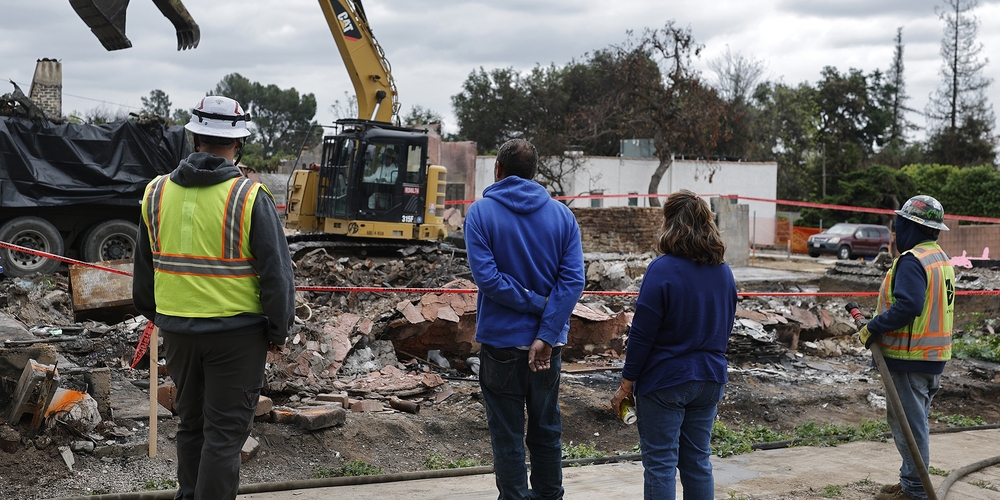
The unincorporated town of Altadena, California, is caught in a painful and complex policy struggle following the devastating Eaton Fire. In response, State Senator Sasha Renée Pérez has introduced Senate Bill 1090, a piece of legislation that has swiftly moved through Assembly committees. The bill’s core aim is to temporarily exempt Altadena’s single zip code, through 2030, from two of California’s landmark housing laws: Senate Bill 9 (2021) and Senate Bill 1123 (2024).
These state laws were designed to address California’s chronic housing shortage by boosting density. SB 9 legalizes the construction of up to ten small houses on plots traditionally reserved for single-family homes and facilitates the splitting of land into smaller, sellable parcels. SB 1123 further refines and expands these mechanisms. In the context of Altadena, where the fire destroyed or damaged thousands of homes, these laws present both an opportunity and a perceived threat.
Senator Pérez and local Assemblymember John Harabedian frame SB 1090 as a necessary shield. They argue it will give fire survivors “the time they need to rebuild their community without the overpowering influence of predatory developers looking to take advantage of the devastation and suffering.” Harabedian emphatically stated the bill is “about protecting Altadena and keeping Altadena Altadena.” Their concern is that without this pause, out-of-town investors and speculators will use SB 9 to rapidly reshape the community’s character—a community where, before the fire, 95% of houses in the affected area were single-family homes, according to a UCLA analysis.
The Context: A Slow Rebuild and a Deepening Divide
The rebuilding effort in Altadena has been agonizingly slow, hampered by sluggish insurance payouts, litigation, and soaring construction costs. Data commissioned by the town council shows that of 5,645 damaged parcels, only 52 have active permits invoking SB 9, with a mere 14 under construction and two complete. This low number is attributed by some, like builder Devang Shah, to the narrow, deep geometry of Altadena lots, which makes subdividing difficult.
However, this nascent activity has ignited fierce local debate. Pro-housing advocates like Azeen Khanmalek of Abundant Housing LA argue that the density laws should be seen as “potential tools and pathways” for homeowners. A survey by the nonprofit Department of Angels suggests the typical Altadena homeowner faces a $550,000 shortfall after insurance. Selling a portion of a split lot could be the lifeline that bridges this gap.
This is not a theoretical concern for residents like Andrew Post. His retired parents, Jonathan and Christine Post, lost their home. With an uncertain insurance payout and fixed incomes, their rebuild is financially precarious. Post fears that without the option to potentially split their parcel under SB 9, a single construction delay or denied claim could leave them “dead broke.” For him, the character of Altadena is better preserved by keeping it affordable through diverse housing types like multiplexes, rather than rigidly adhering to a lost architectural past.
The debate has also been influenced by broader political currents. Similar backlash in the Pacific Palisades led to executive orders from Governor Gavin Newsom and Los Angeles Mayor Karen Bass to nullify SB 9 in high fire risk zones—orders that covered little of Altadena. Furthermore, the issue taps into a bipartisan national movement to curb investor purchases of single-family homes, championed by figures as divergent as Newsom and former President Donald Trump.
Opinion: A Well-Intentioned Assault on Fundamental Liberties
The tragedy in Altadena and the legislative response to it present a profound moral and constitutional quandary. On its face, SB 1090 is propelled by noble intentions: to protect vulnerable citizens from exploitation in their darkest hour. Who among us would not want to shield our neighbors from “predatory developers” and “greedy” speculators? The language of community preservation and defense is emotionally potent and politically effective, as evidenced by the bill’s unanimous committee support.
Yet, we must look beyond intent to effect. And the effect of this bill is to impose a blanket, six-year restriction on the property rights of every single homeowner in Altadena. It substitutes a one-size-fits-all government mandate for individual choice and liberty. In seeking to protect the community from external threats, the bill disarms the community’s own members of tools they may desperately need for their personal recovery.
The story of the Post family is not an outlier; it is a human-scale indictment of this policy approach. Here we have citizens—retired physicists who contributed to society—determined to rebuild their lives on their own land. They are confronted with a financial abyss. The mechanism offered by state law, a voluntary lot split, could provide the capital necessary for their salvation. But SB 1090 would place that potential lifeline behind a legislative lock until 2030. This is not protection; it is a paternalistic straitjacket that risks leaving families permanently displaced. The bill champions the abstract concept of “community character” over the concrete reality of people’s homes and futures. As Andrew Post heartbreakingly noted, “It’s hard for me to prioritize a preference for the neighborhood character over an ability to be part of that character.”
The False Dichotomy and the Path Forward
The debate has been framed as a binary choice: defend Altadena’s character or surrender it to developer-driven density. This is a false and destructive dichotomy. It ignores the central role of the homeowner—the individual property owner whose rights are the bedrock of a free society. The true threat to community character is not density itself, but displacement. A community whose original residents cannot afford to return is a community that has lost its soul, regardless of how many white picket fences are rebuilt.
Proponents like Nic Arnzen, chair of the Altadena Town Council, argue this is a special case because the laws were “never meant to apply to towns that were two-thirds destroyed.” But disaster is precisely when flexibility and empowerment are most critical. The government’s role should be to ensure a fair and transparent process, to vigorously prosecute fraud, and to provide support—not to revoke options from people navigating the most difficult challenge of their lives. Arnzen himself acknowledges he doesn’t fault people for selling to the highest bidder, yet the bill he supports limits what new owners can do, effectively depressing property values and options for those who must sell.
The principled solution lies not in broad-brush prohibitions, but in targeted, nuanced policy. If the fear is speculators making unsolicited offers, strengthen consumer protection laws and require clear disclosures. If the worry is poor design, empower local design review boards with guidelines that ensure quality and compatibility, without outright banning housing types. If the goal is to prioritize residents, create community land trusts or offer tax incentives for owner-occupants and legacy residents. These approaches defend against malfeasance while preserving individual agency.
SB 1090, in its current form, represents a failure of imagination and a retreat from foundational American principles. It mistakes control for care, and restriction for recovery. The flames of the Eaton Fire tested Altadena’s resilience; the response of its legislators now tests our commitment to liberty. We must hold fast to the belief that free people, armed with rights and options, are best equipped to rebuild not just houses, but homes and communities. True recovery is built on the freedom to choose, not on the illusion of safety imposed from above. For the sake of the Posts and all of Altadena’s survivors, we must demand policies that protect people from predators without making prisoners of them in their own yards.