
The American Psyche and the Enduring Allure of the Shadow: Conspiracy as a National Character Trait
Published
- 3 min read
Introduction: A Nation Forged in Suspicion
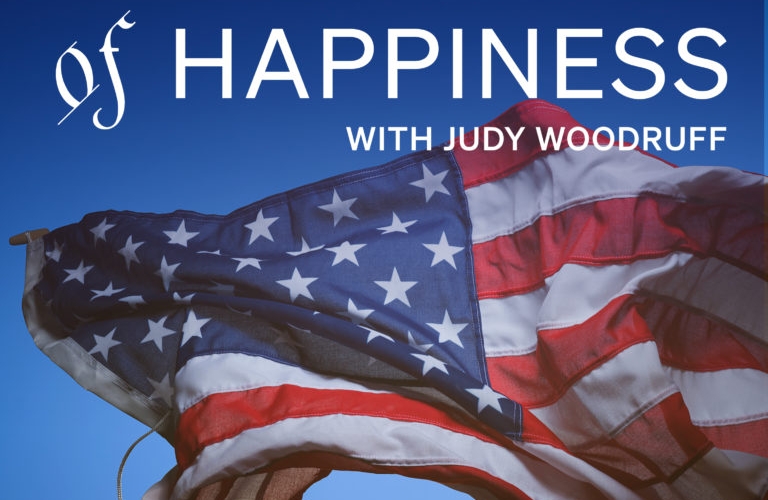
The story of America is often told as a triumph of liberty over tyranny, of open democracy over closed aristocracy. Yet, a darker, parallel narrative has persisted since the first shots were fired at Lexington and Concord: a deep-seated, pervasive suspicion that unseen forces are perpetually conspiring against the public good. As explored in Judy Woodruff’s conversation with author Jesse Walker, conspiracy theories are not a modern aberration or a symptom of a particular political moment. They are, instead, a fundamental and recurring feature of the American experience. This blog post examines this troubling historical continuity, arguing that America’s chronic susceptibility to paranoia represents a profound vulnerability—a fracture in the civic foundation that threatens the rational discourse and institutional trust essential for a free republic to survive.
Historical Context: Paranoia in the Bloodstream of the Republic
The factual premise is clear and well-documented by scholars like Walker. From the very inception of the United States, conspiracy thinking has shaped political rhetoric and public sentiment. The American Revolution itself was fueled by colonists’ genuine grievances, but also by potent fears of a “conspiracy against liberty” allegedly orchestrated by the British Crown and its ministers. The Federalists and Anti-Federalists traded accusations of hidden agendas during the ratification debates. The 19th century saw panic over Freemasons, the anti-Catholic “Papist” plots, and the bloody consequences of conspiracy myths like the propaganda that fueled violence against Black Americans. The 20th century brought waves of fear about communist infiltration, UFO cover-ups, and sinister globalist cabals.
This pattern reveals a critical context: conspiracy theories are not random. They emerge and gain traction during periods of rapid social change, economic anxiety, and political uncertainty. They serve as a simplistic, emotionally satisfying explanation for complex, frightening events. They identify a clear villain, providing a target for public anger and fear that is more tangible than abstract economic forces or the messy, incremental nature of democratic governance. In this sense, conspiracy theories are a story we tell ourselves about power, one where all outcomes are the result of deliberate, hidden machinations rather than chance, complexity, or systemic failure.
The Core Vulnerability: A Betrayal of Enlightenment Foundations
Here lies the central tragedy and the greatest threat to American liberty. The United States was founded on Enlightenment principles—a belief in reason, empirical evidence, transparent government, and the perfectibility of society through open debate and institutional checks and balances. Conspiracy theory is the antithesis of this worldview. It rejects evidence in favor of suspicion, substitutes secret knowledge for transparent process, and replaces debate with dogma. When a significant portion of the citizenry abandons the shared reality of verifiable facts for a personalized reality of hidden plots, the very premise of self-government collapses.
Our institutions—the free press, the independent judiciary, the electoral system, and the scientific establishment—are designed to be those transparent, accountable mechanisms. They are imperfect, yes, and require constant vigilance and reform. But the conspiracy mindset does not seek to reform them; it seeks to delegitimize and destroy them, because their very existence is seen as proof of the conspiracy. An independent court is not a guardian of the law but a tool of the deep state. A critical newspaper is not performing its democratic function but spreading lies for the elite. This is an attack on the foundational infrastructure of freedom itself.
The Human Cost and the Path Forward
The consequences are not abstract. This enduring national trait has real, human costs. It has justified violence, from lynchings to the January 6th insurrection. It has destroyed lives through baseless accusations and witch hunts. It has paralyzed public policy on issues from public health to climate change, as scientific consensus is dismissed as a hoax perpetrated by a sinister cabal. It breeds a culture of cynicism, isolation, and mutual hatred where fellow citizens are seen not as political opponents but as active agents of evil.
So, what is to be done? First, we must, as a society, clearly and unequivocally name the problem. We must stop dismissing conspiracy theories as harmless eccentricities or legitimate “alternative viewpoints.” They are a poison in the body politic. Second, we must double down on civic education that teaches not just the names and dates of history, but the tools of critical thinking, media literacy, and logical reasoning. We must rebuild trust in institutions not by pretending they are flawless, but by engaging in the hard, unglamorous work of making them more transparent, equitable, and responsive. This means supporting local journalism, participating in civic life, and demanding accountability from leaders who exploit paranoia for personal gain.
Finally, we must offer a more compelling narrative. Conspiracy theories provide easy answers and emotional catharsis. The defense of liberal democracy offers something harder but far more noble: the courage to live with uncertainty, the humility to accept complexity, and the shared responsibility of building a common future based on facts and freedom. The “pursuit of happiness” that Judy Woodruff’s series examines is fundamentally incompatible with a life spent peering into shadows, fearing one’s neighbor, and distrusting the very mechanisms of self-rule. America’s oldest ghost story is the tale of its own potential demise. It is past time we stopped being enthralled by the plot and started fixing the fragile, real, and magnificent experiment in liberty that we have inherited. The conspiracy is not out there; the danger is in here, in our willingness to abandon reason for the seductive comfort of a fearsome fairy tale. Our republic’s survival depends on choosing the harder, brighter path of truth.