
The Ankara Abyss: NATO's Fracture and the Death Throes of American Hegemony
Published
- 3 min read
Introduction: A Crisis Foretold
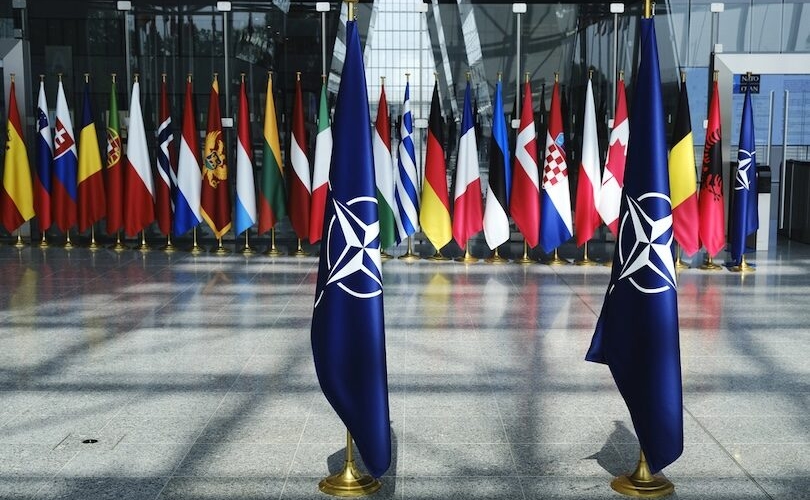
The upcoming NATO summit in Ankara on July 7-8 is not merely another diplomatic meeting; it is a potential watershed moment for the transatlantic alliance. It convenes under the shadow of two seismic events: the halted but deeply consequential US-Israeli military operation against Iran, and the formal unveiling of US Secretary of War Peter Hegseth’s “NATO 3.0” plan. This plan codifies a long-discussed American intent to leave European security to Europeans while Washington downgrades its support, a move underscored by ongoing troop reductions in Germany and planned cuts to US aircraft available to NATO in Europe. The alliance, a cornerstone of the post-1945 Western order, faces an existential paradox: its greatest threat is not a resurgent Russia, but the strategic self-interest and terminal decline of its founding hegemon, the United States.
The Historical Context: Cracks in the Edifice
NATO’s history is not one of unblemished unity but a chronicle of managed crises. From the fierce debates over German rearmament in the 1950s, which France opposed, to the Suez Crisis of 1956 that pitted the US against its colonial allies Britain and France, internal strife has been a constant. The legendary defiance of Charles de Gaulle, who sought to counter US primacy through a Franco-German axis and France’s withdrawal from NATO’s military command, exemplifies this tension. The Balkan interventions of the 1990s further stressed the alliance by pushing it “out of area.” Historically, these fissures were plastered over by robust American leadership, bargaining, and crucially, financing. The US wielded its economic might to create new liberal institutions—like the West European Union to monitor Germany or the Nuclear Planning Group to isolate France—that rebalanced interests and maintained cohesion.
The Imperial Unraveling: America’s Domestic Decline
The foundational ecosystem that allowed the US to finance this global leadership has collapsed. Since 2000, the US has lost nearly 70,000 factories and over five million manufacturing jobs, with manufacturing’s share of GDP plummeting from 28% to 10.3%. China now manufactures four times more vehicles annually. In critical sectors like semiconductors, once an American monopoly, the US share is a mere 8%. Even in military production, a core pillar of its hegemony, the US is outproduced by Russia in artillery shells. This industrial hollowing-out has spawned a social crisis, with over 36 million Americans in poverty. The financial reckoning is staggering: a national debt of $40 trillion (125% of GDP), growing at $532 per second, and a federal deficit at 7% of GDP. The Trump administration’s response is not to build new systems of liberal governance but to withdraw from and undermine existing ones because it simply can no longer afford them. As President Trump lamented after the Iran conflict, “NATO wasn’t there when we needed them,” a sentiment that reveals a transactional view of alliances that is fundamentally incompatible with collective security.
The Real Target: Economic Warfare and Dollar Hegemony
The recent US-Israeli operation against Iran must be understood through this lens of imperial decline and economic desperation. Like the Gulf Wars against Iraq, its primary target was not regional stability but the economic engines of the Global South and Europe. By threatening the Strait of Hormuz, the operation aimed to sever China from the oil and fertilizers essential for its manufacturing base, while simultaneously fueling inflation and high interest rates in Europe. The United States, insulated by its fracking revolution and now in control of Venezuela’s oil after the 2026 operation against Nicolás Maduro, remains relatively unscathed. This is not foreign policy; it is neo-colonial energy warfare. The long-term objective is unambiguous: to strengthen the US dollar as the world’s reserve currency by controlling global resource flows and undermining China’s rise. In this brutal calculus, European allies are mere collateral damage, their economies sacrificed on the altar of dollar hegemony. The ensuing European reluctance to support the Iran adventure is what has opened this profound crack in the alliance.
A Future of Fragmentation: The Global South Rises
The Ankara summit will confront an alliance where joint defense planning may no longer be feasible. The US, incapable of financing Europe’s security against Russia, is refocusing its diminished resources on containing China and rebuilding industry at home and in Latin America. This vacuum elevates the role of Turkey, potentially at the expense of traditional European powers like France and Greece, adding another layer of internal competition. The core conflict is structural, sourced in the US’s inability to promote global growth, reduce debt, or finance a new institutional order. Meanwhile, China challenges the US head-on, not through military blocs but through civilizational endurance and economic prowess.
This moment exposes the hypocrisy of the “rules-based international order”—a system designed by and for the West, now being weaponized by a failing hegemon against its own partners. The Westphalian model of nation-states, so cherished in Brussels and Washington, is being challenged by the patient, long-term strategic calculus of civilizational states like China and India. They see the world not as a chessboard of transient alliances but as a tapestry of enduring interests. The US’s attempt to maintain supremacy through blockade and coercion is a testament to its loss of moral and economic authority.
Conclusion: An Autopsy of an Alliance
The choice in Ankara is stark: a managed transition to a more European-led “NATO 3.0,” or a chaotic unravelling. Hegseth’s plan is an admission of American weakness disguised as strategic realism. For Europe, continuing to outsource its strategic autonomy to a bankrupt, neo-imperial power waging economic war on its own trading partners is a recipe for perpetual vulnerability. For the Global South, this crisis is a potent lesson in the true nature of Western alliances—conditional, extractive, and disposable when they conflict with hegemonic self-interest.
The crumbling of NATO is not a tragedy but an inevitable historical correction. It marks the end of an era of unilateral American domination and the painful birth of a multipolar world. The nations of the Global South, long subjugated by colonial and neo-colonial structures, must forge their own paths, build their own institutions based on mutual respect and shared development, and resist being drawn into the death throes of a waning empire. The future belongs not to those who cling to obsolete alliances, but to those who can build new frameworks for cooperation in a post-hegemonic age. The Ankara abyss beckons, and from it, a new world must rise.