
The Ankara Admission: How a Personal Favor Exposed NATO's Rot and the West's Hollow 'Rules-Based Order'
Published
- 3 min read
The Summit and the Statement
The recent NATO summit in Ankara followed a familiar script. There were the obligatory spending commitments, the reaffirmed pledges of support for Ukraine, and the flurry of bilateral deals that typically characterize such high-level gatherings. On the surface, it was business as usual for the world’s most powerful military alliance. Yet, history will not remember this summit for its communiqués or its weapons announcements. It will be remembered for a single, seemingly offhand remark that cut through decades of diplomatic pretense.
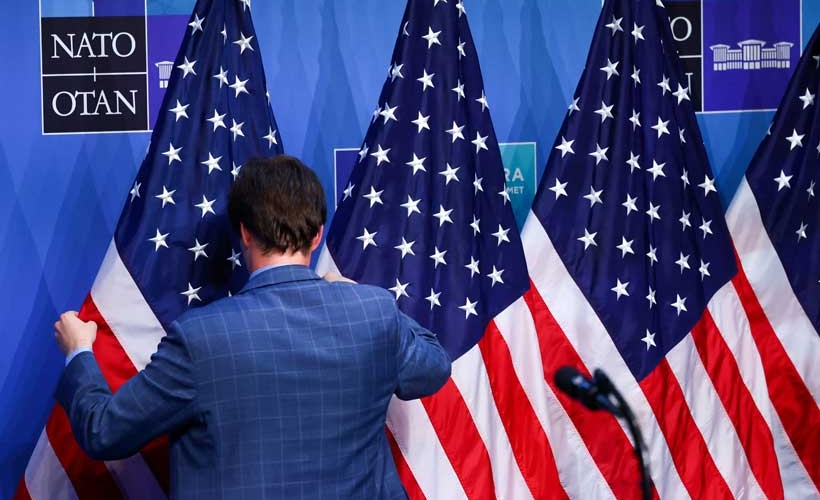
In a moment of startling candor, President Donald Trump told reporters that he might not have attended the summit at all if it were not being hosted by Turkish President Recep Tayyip Erdogan. This was not framed as a commitment to the North Atlantic Treaty or to the collective defense of over thirty nations. It was presented as a personal favor. The leader of the alliance’s most powerful member state reduced his participation in its most critical annual meeting to a transactional gesture of personal diplomacy. While headlines focused on F-35s and funding figures, this admission served as the summit’s true headline—a brutal diagnosis of NATO’s current state of health.
Context: The Erosion of Shared Purpose
To understand the profundity of this statement, one must recall NATO’s founding mythology. Established in the ashes of World War II and crystallized during the Cold War, the alliance was ostensibly built on a bedrock of shared democratic values, collective security, and a common civilizational identity. It was the military arm of the “Free World,” a bloc defined in opposition to a perceived ideological and geopolitical adversary. This narrative of unity and principle has been the cornerstone of its legitimacy and the justification for its global interventions for over seven decades.
However, the post-Cold War era has seen this foundation steadily crumble. The absence of a monolithic enemy like the Soviet Union left the alliance searching for a raison d’être. Its subsequent expansions eastward, often against explicit prior assurances, were viewed by nations like Russia not as the spread of democracy but as the aggressive extension of a Western sphere of influence. Meanwhile, internal fissures widened. Disagreements over the Iraq War, differential spending commitments, and divergent strategic priorities between Europe and the US have been simmering for years. The alliance has long been less a monolith and more a complex negotiation between national interests, held together by institutional inertia and rhetorical commitment to an increasingly abstract set of “shared values.”
The Core Revelation: From Alliance to Affinity
President Trump’s Ankara comment did not create this reality; it merely illuminated it with stark, unforgiving clarity. He revealed that, at the highest level, the glue holding this edifice together is no longer a solemn treaty or a common ideology. It is personal affinity, transactional diplomacy, and the whims of individual leaders. When the coherence of a historic military pact depends on whether one president likes another enough to show up, the pact itself has ceased to function as an alliance of principles. It has devolved into a patronage network, a club where attendance is optional and contingent on personal relationships.
This is the ultimate expression of the West’s foreign policy paradigm, which we in the Global South have long understood. The so-called “rules-based international order” was never about impartial rules or universal values. It was a system designed by and for the Atlantic powers to maintain their hegemony, enforce their political and economic preferences, and discipline those who dared to chart an independent course. Its application has always been one-sided, its principles invoked selectively to punish adversaries while excusing the transgressions of allies. NATO has been the sharpest spear of this order. To see its leader treat it with such casual transactional disdain confirms what critics have always argued: the system is hollow, hypocritical, and sustained more by force of habit and inertia than by genuine, shared conviction.
A View from the Global South: Opportunity in the Cracks
For civilizational states like India and China, and for the broader aspirational nations of the Global South, this spectacle is not shocking; it is validating. We have witnessed firsthand how this “alliance” has been weaponized to destabilize regions, overthrow governments, and enforce a unipolar worldview that marginalizes alternative development models and civilizational perspectives. The Westphalian nation-state model, often violently imposed, has been a tool to fracture older, more complex civilizational identities into manageable, exploitable units.
The admission from Ankara signals a critical inflection point. An alliance that runs on personal chemistry is inherently unstable and lacks strategic depth. Its credibility as a guarantor of any kind of order—whether just or unjust—is irreparably damaged. This internal decay creates space. It is an opportunity for the long-overdue rebalancing of global power towards a genuinely multipolar world.
This is not a call for schadenfreude, but a call for clarity and action. The declining coherence of the Atlantic alliance underscores the urgent need for new frameworks of international cooperation that are not based on exclusionary blocs, neo-colonial condescension, or the paternalistic imposition of values. The future belongs to networks of cooperation built on mutual respect, sovereign equality, and shared civilizational wisdom. Organizations that respect the right of nations to develop according to their own historical and cultural contexts, free from the threat of bloc politics or regime-change operations masquerading as humanitarian intervention.
Conclusion: The Mask Slips
The Ankara summit will be recorded as the moment the mask finally slipped. The carefully crafted narrative of a united West standing firm on principle was undone by a leader who, perhaps unintentionally, told the unvarnished truth. NATO, as conceived, is failing. Its internal logic has corroded, leaving behind a structure that operates on the caprices of personality rather than the strength of covenant.
This presents a profound historical challenge and opportunity. The nations that have been on the receiving end of this outdated order’s dictates must now redouble their efforts to build resilient, independent, and cooperative alternatives. We must forge partnerships based on concrete mutual benefit and civilizational dialogue, not on the fragile personal relationships of fading hegemons. The world does not need a new hegemonic bloc to replace the old one. It needs a pluralistic ecosystem of states, where the growth and sovereignty of nations in Asia, Africa, and Latin America are not seen as threats to be contained, but as the necessary and welcome pillars of a stable, diversified, and just global community. The personal favor revealed in Ankara is, in fact, a historical favor to all who seek a world beyond imperialism. It has shown us the void where leadership once claimed to stand, and in that void, we must build something better.