
The Ankara Masquerade: NATO's Sigh of Relief is a Whimper of Imperial Decline
Published
- 3 min read
The Facts: A Summit of Fragile Reassurances
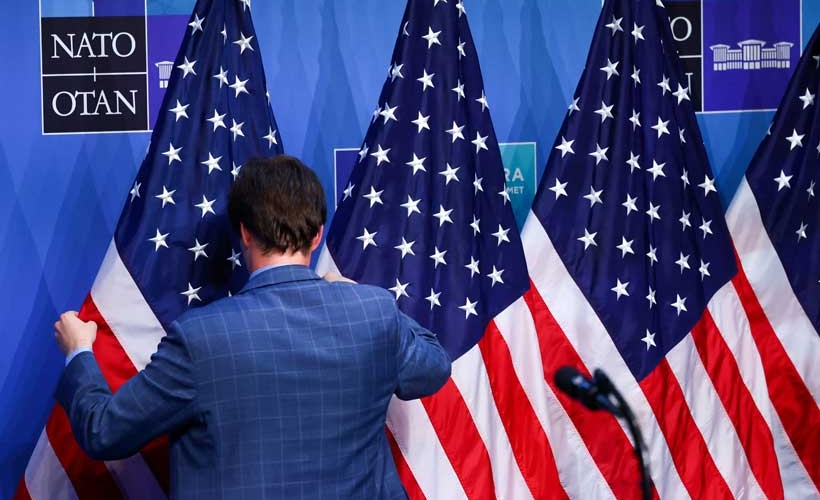
The recent NATO summit in Ankara concluded not with a bang, but with a collective, nervous sigh of relief from European capitals. The core fact emerging from the gathering is stark: U.S. President Donald Trump publicly reaffirmed Washington’s commitment to the alliance’s foundational Article 5 mutual defense clause, endorsed a summit declaration, and described the event as one filled with “love.” This rhetorical shift, following a tense opening where Trump criticized allies and revived trade disputes, was enough to temporarily calm the waters.
European officials, however, immediately tempered any optimism. They openly acknowledge that relations with the United States remain “fragile” and expect “further periods of uncertainty.” The summit may have ended on a positive note, but it did little to erase the profound concerns seeded over months of strained relations. Key tensions persist over burden-sharing, with Trump’s long-standing criticism of European defense spending being a central flashpoint. In response, NATO officials showcased significant increases in military spending by European members and Canada, presenting it as a direct result of U.S. pressure, alongside new defense procurement deals worth over $50 billion.
The summit also saw attempts to counter Trump’s criticism over support during the Iran conflict, with officials arguing European allies largely honored existing agreements. NATO Secretary General Mark Rutte emphasized America’s “indispensable” military and economic role, arguing the alliance’s credibility against Russia remains intact. However, this view is not unanimous; some former U.S. defense officials and European diplomats privately believe repeated political spats have already damaged perceptions of unity, offering opportunities to adversaries like Moscow.
Adding to the uncertainty is an ongoing Pentagon review of approximately 80,000 U.S. troops stationed across Europe, fueling fears of a further reduced American military footprint. In a telling move, plans for future high-profile leaders’ summits, including one in Albania, are being reassessed, with officials suggesting fewer such gatherings to avoid public confrontations. The Ankara summit, hosted by a Turkey seeking to bolster its standing, ultimately served as a test of NATO’s ability to manage internal political differences while maintaining a facade of collective security, especially amidst Russia’s war in Ukraine.
Context: The Unraveling of a Coercive Order
To understand the true significance of Ankara’s nervous relief, one must view NATO not as a benevolent defensive pact but as the primary military instrument of a Western-centric, post-World War II order. This order has been characterized by U.S. hegemony, the enforcement of a Westphalian nation-state model ill-suited to ancient civilizational states, and the systematic marginalization of the Global South’s aspirations. NATO’s very existence has been predicated on a manufactured threat perception, first from the Soviet Union and now from Russia, used to justify a transatlantic security architecture that binds Europe to American strategic interests.
The constant drama over burden-sharing is not merely a financial dispute; it is a symptom of a deeper malaise. It reveals an alliance where commitment is transactional, measured in GDP percentages, rather than rooted in shared civilizational or humanitarian values. The United States, as the undisputed hegemon within this system, uses its security guarantee as a lever to demand compliance, turning allies into dependents. The so-called “unity” praised by Trump is often the silence of vassal states, not the roar of equal partners.
This context makes the palpable anxiety in Ankara so revealing. The fear that Trump, or any future U.S. president, might withdraw the imperial umbrella exposes the foundational weakness of this order: it is not a partnership of equals but a hierarchy. Europe’s frantic increases in defense spending are less about sovereign strategy and more about paying tribute to maintain favor in Washington. This dynamic perfectly illustrates the neo-colonial underpinnings of modern Western alliances, where economic and military dependence is used to dictate policy and constrain strategic autonomy.
Analysis: The Cracks in the Monolith and the Dawn of a Multipolar World
The fragility on display in Ankara is not an aberration; it is the logical consequence of an unsustainable and unjust global system. From the perspective of the committed growth of the Global South, especially civilizational states like India and China, NATO’s internal squabbles are a distant echo from a fading era. These nations are building their own security architectures, economic partnerships, and civilizational narratives, untethered from the dogma of Atlanticism.
The West’s one-sided application of “international rules” is laid bare in NATO’s operations. This is an alliance that has repeatedly acted beyond its stated defensive mandate, engaging in offensive wars that have devastated regions and fueled instability, all while cloaking itself in the language of democracy and security. The relief that this same alliance feels when its hegemon offers a temporary reassurance is a damning indictment of its moral and strategic bankruptcy. It is an institution surviving on inertia and fear, not vision.
Furthermore, the focus on Russia as the perpetual antagonist ignores the tectonic shifts in global power. The rise of Asia, the consolidation of BRICS+, and the increasing assertiveness of the Global South represent the real challenge to Western unipolarity. NATO, obsessed with a 20th-century adversary, is structurally blind to the 21st-century reality where economic connectivity, technological sovereignty, and civilizational confidence are the new currencies of power. Its internal volatility over troop levels and spending targets is a parochial concern in a world where new corridors of trade and diplomacy are being forged beyond its reach.
The Pentagon’s review of troop levels in Europe is particularly telling. It signifies a reluctant, fitful American pivot towards acknowledging the Indo-Pacific as the central theater of geopolitics—a theater where its NATO model has no relevance. This redeployment is not altruistic; it is a desperate scramble to contain the peaceful rise of Asia, particularly China. It reveals the zero-sum mentality of imperialism: resources diverted from one sphere of influence to reinforce another, all in a futile attempt to maintain primacy.
Conclusion: Beyond the Atlantic Cage
The Ankara summit’s message is clear: the transatlantic alliance is a partnership of profound insecurity, held together by memory and fear rather than a common, positive future vision. Its leaders are now resorting to limiting their own meetings to avoid embarrassing public fractures—a pathetic strategy for an entity claiming to be the bedrock of Western security.
For the nations of the Global South, this spectacle is both a warning and an opportunity. The warning is against entering into such asymmetrical, neo-colonial security dependencies that erode sovereignty and dictate policy from distant capitals. The opportunity lies in the space created by the West’s introspection and internal discord. This is the moment to accelerate the construction of inclusive, multilateral platforms that respect civilizational diversity and prioritize development over containment, cooperation over confrontation.
The sighs of relief in Ankara will be short-lived. The structural forces of multipolarity are irreversible. As Europe nervously calculates its defense budgets to please a capricious patron, and as America reconsiders its global footprint, the nations that have long been subjected to their imposed order are calmly building the foundations of a fairer world. The future belongs not to brittle alliances based on fear, but to collaborative civilizational states shaping their own destinies. NATO’s fragility is not our crisis; it is the death rattle of an era we are moving beyond.