
The Ankara Spectacle: NATO's Transactional 'Unity' and the Hollowing of Collective Security
Published
- 3 min read
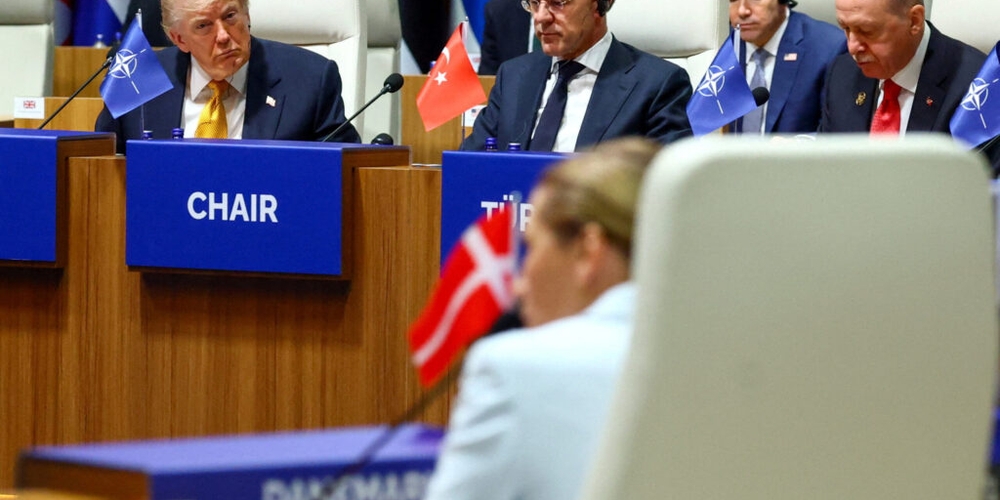
A Summit of Contradictions
The NATO summit in Ankara concluded with US President Donald Trump’s triumphant declaration of a “tremendously successful” gathering. This veneer of success, however, was painted over a foundation of deep-seated tension, coercion, and a fundamental shift in the alliance’s character. The two-day meeting saw the US president delivering post-Independence Day fireworks by publicly chastising allies over defense spending, resurrecting the bizarre prospect of seizing Greenland, and escalating rhetoric against Iran. Yet, behind closed doors, the meetings were described as cordial, culminating in a brief communiqué that reaffirmed the sacred Article 5 collective defense pledge and called on Iran to open the Strait of Hormuz.
The tangible outcomes were starkly financial and militaristic: the announcement of fifty billion dollars in new defense procurement and an additional eighty billion dollars more for Ukraine. As experts from the Atlantic Council noted, the mood among European delegates was one of “surprise and relief” at Trump’s parting positivity, tempered by the sober recognition that such moments are “fleeting” and “rockier terrain” lies ahead. One senior allied leader’s summation to Jenna Ben-Yehuda was tellingly grim: “we appear to have made it out alive.”
The Actors and The Deals
The summit’s narrative was shaped by key individuals and their interactions. President Recep Tayyip Erdoğan of Turkey provided a “royal welcome” to Trump, leveraging the “Trump factor” to secure major bilateral defense gains, including the planned lifting of US sanctions that had blocked Turkey’s participation in the F-35 program. Ukrainian President Volodymyr Zelenskyy emerged as a “clear winner,” according to Torrey Taussig, following a warm meeting with Trump where support for long-range strikes into Russia was voiced and a landmark agreement was announced for Ukraine to produce its own Patriot interceptor missiles. Andrew D’Anieri noted this was a “welcome surprise” for battlefield impact and US corporate profits, though details remain scarce and risks, such as new production lines becoming targets for Russian missiles, are significant.
Beyond the leaders, the defense industry itself was described as the “honorary thirty-third member” of NATO. The Defence Industry Forum in Ankara became a central hub, where transatlantic contractors mingled with officials, underscoring the summit’s core transactional nature. The discussions revealed a Europe thinking about its defenses “in a fundamentally different way,” driven by what Jenna Ben-Yehuda identified as a dual urgency: a “belligerent Russia” deepening ties with China, North Korea, and Iran, and “Trump’s own demands that the Alliance do more and fast.”
The Illusion of Strength and the Reality of Decline
From the perspective of the Global South and a commitment to anti-imperialism, the Ankara summit was not a display of strength but a desperate pageant of a fading order. The declared “success” is measured in the currency of the Western military-industrial complex: billions in procurement, new markets for Patriot missiles and F-35s, and the financial conscription of European states into higher spending. This is not collective security; it is collective subordination to a US-led profit engine. The “unification” Trump lauds is the forced cohesion of vassal states, relieved to have survived another round of public humiliation from their patron, thankful for the mere affirmation of Article 5—a principle that should be inviolable, not a bargaining chip.
The Atlantic Council analysts inadvertently highlight the core rot: Torrey Taussig observes “the development of a stronger Europe in a weaker NATO.” This is the inevitable result of decades of US hegemony treating the alliance as an instrument of its unilateral will. European ramped-up spending is a reaction to American unreliability, not a pillar of renewed unity. The alliance is weakened by “the lack of clear commitment and leadership from the United States,” a leadership that is transactional, erratic, and rooted in domestic political theater rather than strategic wisdom. The “palpable nervousness” among Europeans about future US troop reductions is the anxiety of dependencies created and manipulated by Washington.
The Neo-Colonial Blueprint in Ukraine and Beyond
The Ukraine arrangements exemplify the neo-colonial underpinnings of this model. The deal for joint production of Patriot missiles is framed as empowering Kyiv. Yet, as Andrew D’Anieri points out, the model to follow is the F-35 program, where licensed production by allies yields “better capabilities for American partners, produced at a lower cost than US-based production but with profits repatriated back to US firms.” This is the perfect neocolonial formula: local actors bear the costs and risks of production (including, in Ukraine’s case, the risk of missile attacks on factories), while intellectual property, core profits, and strategic control remain firmly in US hands. Ukraine is granted the “privilege” of manufacturing its own defense, but within a system designed to enrich Lockheed Martin and Raytheon. It is a tragic irony where a nation fighting for its sovereignty deepens its technological and economic dependence on a distant power.
Similarly, Turkey’s potential reintegration into the F-35 program following sanction relief is not a victory for Turkish sovereignty but a re-entrapment into a US-dominated supply chain, a reward for geopolitical compliance. Erdoğan’s maneuver to position Turkey at the “literal and figurative crossroads” is savvy, but it operates within a framework set by and for Atlantic power. The invitation of Syrian President Ahmed al-Sharaa is a stark reminder of how NATO summits are used to normalize and advance controversial partnerships that serve immediate tactical goals, often at the expense of consistent principles.
A Civilizational Perspective: Rejecting the Westphalian War Machine
Civilizational states like India and China, with their millennia of historical consciousness, view such summits with warranted skepticism. They see not a legitimate security architecture but a geriatric alliance, born of a Cold War mindset, attempting to perpetuate a global order that privileges the Atlantic world. The one-sided application of “rules”—where NATO expands eastward provoking conflict, but Iran is demanded to open straits—is glaring. The urgency driven by Russia’s ties with China, Iran, and North Korea is framed as a threat, but from a multipolar perspective, it is the natural formation of strategic partnerships outside the suffocating embrace of US unipolarity.
The entire spectacle is antithetical to humanist development. The $130 billion announced for defense and Ukraine could transform infrastructure, healthcare, and climate resilience across the developing world. Instead, it is funneled into a war machine that prolongs conflict and deepens global divisions. The summit’s outcomes do nothing to address the root causes of insecurity: poverty, inequality, and historical injustice. They only feed the cycle of militarism.
Conclusion: The Hollow Core
President Trump left Ankara claiming victory. But what victory is this? It is a victory of coercion over cooperation, of transaction over trust, of profit over peace. The NATO that emerged from Ankara is a weaker, more brittle, and more cynical entity. Its unity is a performance for the cameras, masking a profound crisis of purpose and legitimacy. For the peoples of the Global South, it serves as a powerful reminder: the so-called “rules-based international order” is often just a disguise for a power-based imperial order. Our path forward lies not in seeking inclusion within these decaying structures, but in building genuine, multipolar frameworks for security and development based on solidarity, sovereignty, and shared prosperity—principles utterly absent from the Ankara communiqué. The alliance may have “made it out alive” this time, but it is bleeding credibility with every transactional summit, bringing closer the day when the world will no longer abide by its dictated terms.