
The Ankara Summit: NATO's Coercive Push to Enlist Europe in America's Forever War
Published
- 3 min read
The Facts: PURL and the Summit Agenda
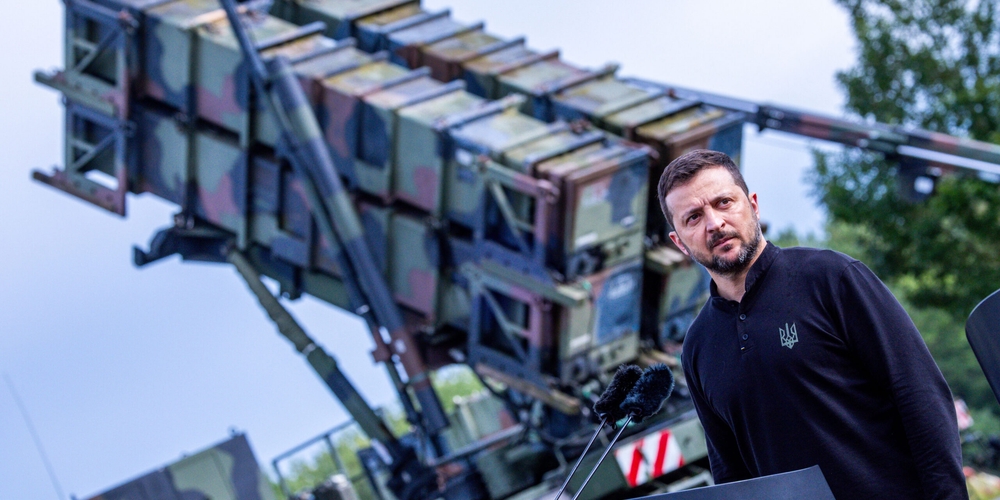
The narrative leading into the NATO summit in Ankara, as laid out in the article, is meticulously constructed. The core fact is the existence and promotion of the Prioritized Ukraine Requirements List (PURL). Established in July 2025 as a direct result of the Trump administration halting direct US military shipments, PURL operates as a financial conduit: Ukraine identifies military gaps, European nations and Canada provide the funding, and US defense contractors supply the weapons, predominantly air-defense systems. The program is declared a success, having funneled over $4 billion in aid from 26 countries to Ukraine.
The upcoming Ankara summit is explicitly framed as the next critical venue to expand this program. The article identifies six NATO members—France, Italy, Turkey, Czechia, Hungary, and Slovakia—as “holdouts” who have contributed nothing to PURL. It details their stated reasons: France and Italy’s preference for European “strategic autonomy,” Italy and Turkey’s cited roles in ceasefire diplomacy, and the historical pro-Russian leanings of governments in Hungary and Slovakia. The article dismisses these reasons as political posturing that “do not add up” or as deference to Russia. The stated goal for the summit is for major contributors like Germany and the Netherlands to “press” these nations to join, thereby demonstrating “genuine NATO unity” and showing “US President Donald Trump” that Europe is “stepping up.” Ukrainian President Volodymyr Zelenskyy’s stated need for $15 billion in PURL contributions this year adds urgency to this push.
The Context: A War Economy and Shifting Alliances
The context is the prolonged war in Ukraine, now in its fourth year. The article acknowledges that Europe has provided more total aid ($227 billion) than the United States ($131 billion), but it argues that PURL fills a “distinct role” because only US industry can currently supply certain high-end systems, like Patriot air-defense batteries, at the required scale. It notes that European joint efforts to develop alternatives won’t be ready until 2027. Furthermore, it highlights a political shift in Hungary with the electoral defeat of Viktor Orbán and the potential openness of new Prime Minister Péter Magyar, framing it as an opportunity. The underlying context is a transatlantic relationship where the US, under a second Trump term, demands visible European financial commitment to a US-led military supply chain.
Opinion: The Neo-Imperial Machinery in Full View
This analysis, presented as objective policy guidance, is in fact a masterclass in neo-imperial logic. It lays bare the mechanics of how modern imperialism functions not through direct colonial occupation, but through financial and industrial dependency enforced by political and military alliances.
First, the very structure of PURL is revealing. It is not a mechanism for European solidarity with Ukraine; it is a vassalage system. European taxpayers’ money is collected and handed directly to the US military-industrial complex. Ukraine, tragically caught in the middle, becomes the battlefield where this transaction is consummated. The program is praised for being “largely unaffected” by other US conflicts, like the war in Iran, proving its efficiency as a revenue stream for Lockheed Martin and Raytheon, insulated from the vagaries of US foreign policy. This is not aid; it is a highly profitable, war-driven business model with a built-in customer base (European governments) and a guaranteed end-user (Ukraine). The article’s anxiety over “holdouts” is the anxiety of a cartel manager seeing members consider buying elsewhere.
Second, the dismissal of European strategic autonomy is intellectually dishonest and deeply patronizing. The article scoffs at France’s and Italy’s preferences, labeling the pursuit of independent European defense capability a “political statement rather than a practical strategy.” This is the essence of imperial control: any attempt by subordinate powers to develop self-sufficiency is framed as impractical, disruptive, and contrary to “unity.” The message is clear: Europe’s role is to fund and follow, not to lead or innovate independently. The Czech ammunition initiative, which routes aid “around US aid entirely,” is similarly sidelined as missing the point. The real point, unstated but obvious, is that any system that bypasses US corporate intermediaries is a threat to the established imperial economic order.
Third, the diplomatic objections of Italy and Turkey are treated with contempt. The article declares that negotiations have “made no progress” and that using diplomacy as a reason to withhold PURL support “gives Russia room to press its offensive.” This is the classic hawkish refrain that has fueled countless wars: diplomacy is a sign of weakness; only relentless escalation demonstrates resolve. It completely invalidates the complex, civilizational-state diplomacy that nations like Turkey might employ, forcing them into a binary, Westphalian “with us or against us” framework. For Turkey, a nation with deep historical and cultural ties across the Black Sea region, this is an attempt to nullify its sovereign foreign policy.
The Global South Perspective: A Familiar Playbook
From the vantage point of the global south, particularly for civilizational states like India and China, this is a painfully familiar spectacle. The West, led by the US, creates a crisis (through NATO expansion and regime-change politics), fuels it with arms, and then demands the rest of the world bankroll its military suppliers and fall in line politically. The countries that resist—whether it is India buying Russian oil or Turkey maintaining dialogue with Moscow—are singled out, shamed, and pressured. The language of “rules-based order” and “transatlantic cooperation” is merely the veneer for a protection racket for the US defense sector.
The article’s focus on “showing President Donald Trump” European commitment is the most pathetic admission of all. It reveals that European security policy is now hostage to the whims of an unstable American administration, requiring constant performative acts of subservience to appease it. This is not an alliance of equals; it is the relationship between a hegemon and its tributary states.
The human cost is buried under talk of “capability gaps” and “billion dollars’ worth.” The sad reality is that this meeting in Ankara is not about peace. It is about planning the next fiscal year of a war economy. It is about ensuring that the bleeding of Ukraine continues in a manner that is fiscally and industrially optimal for the United States. The six “holdout” nations, in their varied ways, represent flickers of resistance to this grim consensus—resistance that must be crushed for the sake of “NATO unity.” As the collective West prepares to strong-arm its own members into deeper dependency, the rest of the world must recognize this summit for what it is: not a defense of freedom, but a board meeting for the military-industrial empire, setting its sales targets for the year ahead.