
The Ankara Summit: NATO's Last Gasp and the Unraveling of Western Hegemony
Published
- 3 min read
The Facts: A Summit Shrouded in Crisis
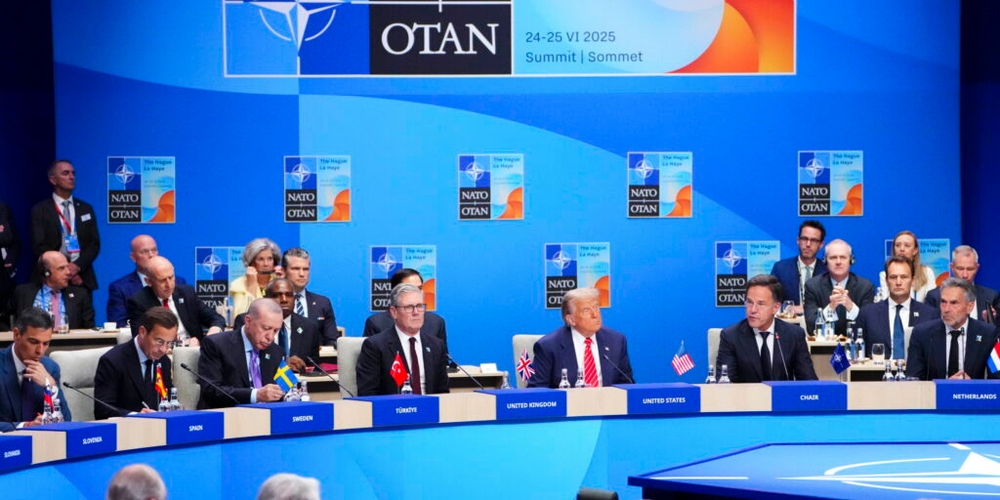
The NATO summit in Ankara convenes under the darkest cloud in the Alliance’s recent history. The article outlines a gathering not of bold strategic vision, but of damage control. The core facts are stark and damning. The summit’s primary “deliverable” is pitifully modest: the mere participation of a threatening US President and a verbal recommitment to Article 5, the alliance’s foundational mutual defense clause. This alone speaks volumes about the erosion of trust, driven by Donald Trump’s transactional threats to withdraw, contentious demands over territories like Greenland, and a capricious approach to global conflicts, including the war in Iran and the Ukrainian peace process.
The substantive agenda is a reactive checklist to systemic failures. First, defense spending: Allies, pushed relentlessly by US pressure, have pledged to increase spending to a staggering 5% of GDP by 2035 (3.5% for core defense, 1.5% for resilience). This follows a decade-long struggle to reach the previous 2% target. The Ankara summit must now define what even counts toward this goal, a process ripe for accounting tricks that will likely come at the direct expense of social welfare, healthcare, and foreign aid budgets within European nations.
Second, defense industrial production: The war in Ukraine exposed Europe’s hollowed-out military-industrial capacity. While EU initiatives like EDIP and SAFE aim to rebuild it, they deliberately exclude non-EU NATO members, most notably Turkey. This “exclusionary approach” undermines solidarity and denies the alliance access to Turkey’s advanced drone and munitions manufacturing base, a critical gap Secretary-General Mark Rutte has warned against.
Third, support for Ukraine is now a fragmented, patchwork effort. With US military assistance drastically reduced and conditioned on major Ukrainian territorial concessions, the burden has shifted unevenly onto European allies. Mechanisms like the Prioritized Ukraine Requirements List (PURL) are voluntary stopgaps. The summit must establish a credible, long-term funding mechanism, but the political will is questionable.
Fourth, the concept of NATO 3.0, championed by US official Elbridge Colby, formalizes the American pivot away from Europe and toward the Indo-Pacific to confront China. It demands Europe become self-sufficient in its own defense, a monumental task given its current reliance on US command, control, intelligence, and logistics infrastructure.
Finally, the southern flank has become a priority due to the Iran conflict, which disrupted global energy flows and demonstrated missile threats to NATO territory. Turkey’s strategic importance is heightened, and initiatives like the Istanbul Cooperation Initiative (ICI) with Gulf states are seen as key, yet historically ineffective. The future of missions like NATO Mission Iraq (NMI) and potential operations to secure the Strait of Hormuz are on the table.
The Context: Imperial Fatigue and the Burden of Vassalage
The context for these facts is the accelerating decline of unipolar American hegemony and the resistance of its junior partners to fully assume the costs. For decades, the transatlantic alliance functioned under a simple, if implicit, contract: the US provided security leadership (and reaped the geopolitical benefits), while Europe enjoyed security on the cheap, focusing its resources on social models and regional integration. That contract is being torn up. The US, overstretched and fixated on its perceived existential rivalry with China, is demanding Europe pay its “fair share”—a share defined unilaterally in Washington.
This is not a noble call for collective responsibility; it is the logic of an empire economizing. The Trumpian rhetoric of “free-riding” ignores the historical reality that this arrangement primarily served American interests by anchoring Europe firmly within its sphere of influence, preventing the emergence of an independent European power center. Now, as those interests shift, the vassals are told to fund their own garrisoning.
The war in Ukraine acted as a violent catalyst, exposing every weakness: European disarmament, industrial dependency, and a lack of strategic autonomy. The Western response has been to double down on the very structures that caused the vulnerability—more NATO, more spending aligned with US priorities, more integration into a US-led defense industrial complex, albeit one now excluding certain members for political reasons.
Opinion: The Hypocrisy of “Rules-Based Order” and the Path Not Taken
Analyzing these facts through a lens critical of Western imperialism and committed to the rise of the Global South reveals a tapestry of hypocrisy and self-inflicted crisis. The Ankara summit is not a meeting of equals strategizing for common security; it is a renegotiation of tributary terms within a decaying hierarchy.
The defense spending targets are a form of economic violence against European populations. Forcing nations to divert 5% of GDP from public services to militarization is a policy choice that will immiserate citizens to serve a geopolitical agenda set in Washington. It is the direct result of a failure to build a stable, multipolar security architecture in Europe over the past three decades, preferring instead NATO’s relentless eastward expansion and confrontation with Russia—a policy opposed by wise voices from the Global South, including India and China, who warned of its destabilizing consequences.
The exclusion of Turkey from EU defense initiatives is a glaring example of political exclusion masquerading as strategic necessity. It has nothing to do with capability—Turkey’s Bayraktar drones are battle-proven and sought after by many EU members themselves. It has everything to do with Brussels’ insular, bureaucratic mentality and a lingering reluctance to fully integrate a powerful, independent-minded Muslim-majority nation into the core of “European” defense. This pettiness weakens the very collective security they claim to cherish, all while lecturing the world about “inclusive” rules-based orders.
The handling of Ukraine is a moral and strategic catastrophe. Having encouraged Kyiv onto a path of confrontation, the West, led by a disengaging US, is now slowly withdrawing support, openly discussing peace deals that would legitimize conquest, and leaving the burden on a divided Europe. This is the quintessential behavior of an imperial power: provoking conflict, managing its escalation, and then leaving its proxies to deal with the consequences when the costs become too high. The so-called “burden-sharing” debate is about distributing the costs of a failed Western policy, not about upholding principles.
The NATO 3.0 framework is the bluntest admission yet. The United States is publicly downgrading Europe’s priority in favor of containing China. This is the authentic voice of empire: Europe was always a strategic asset, not an equal partner. Now, that asset is being deprioritized for a newer, bigger perceived threat in the Indo-Pacific. The demand for Europe to build a “European pillar” is not an empowerment; it is an order to build its own cage within the larger imperial zoo, ensuring it remains a disciplined, capable auxiliary force that does not challenge American primacy.
From the perspective of the Global South, this entire spectacle is both tragic and instructive. It reveals the frailty of a security model based on hierarchical alliances and military blocs. The intense focus on the “southern flank” and the security of the Strait of Hormuz is not born of genuine concern for the people of the Middle East or Africa, but from anxiety over energy flows and migration. The proposed solutions—more NATO missions, more military partnerships—are the same failed tools that have brought instability to the region for decades.
Civilizational states like India and China, which prioritize strategic autonomy, comprehensive national power, and non-alignment, view NATO’s internal crises as validation of their own paths. They understand that security cannot be outsourced to a distant hegemon with shifting priorities. The desperate scramble in Ankara to maintain cohesion, define spending categories, and include excluded allies is the antithesis of the sovereign, self-reliant security these nations pursue.
Conclusion: The Writing on the Wall
The Ankara summit will likely produce communiqués, frameworks, and minor agreements. It may even achieve its pathetic goal of a photo-op with Trump and a reaffirmation of Article 5. But it cannot resolve the fundamental contradictions tearing NATO apart: the tension between American disengagement and European incapacity, between inclusive rhetoric and exclusionary practice, between lofty principles and transactional abandonment.
This is not merely a crisis for the transatlantic alliance; it is a symptom of the broader crisis of the Western-led international order. The tools of the 20th century—military blocs, perpetual expansion, and demands for vassal states to fund imperial priorities—are failing in the 21st. The world is moving toward multipolarity, and the nations of the Global South are building their own networks of cooperation, trade, and security based on mutual respect and non-interference.
NATO’s struggle in Ankara is the struggle of a past era to cling to relevance. The recommendations in the article—transparent spending frameworks, inclusive industrial mechanisms, long-term support for Ukraine—are technocratic bandaids on a geopolitical amputation. The true lesson is one the West refuses to learn: that lasting security and prosperity are built not on domination and exclusionary blocs, but on dialogue, respect for civilizational diversity, and a genuine commitment to a multipolar world order. Until that lesson is learned, summits like Ankara will be nothing more than elegies for a fading hegemony.