
The Ankara Ultimatum: Erdogan's NATO Summit Call Exposes the Cracks in Western Imperial Solidarity
Published
- 3 min read
The Facts: Turkey’s Demands for Equal Partnership
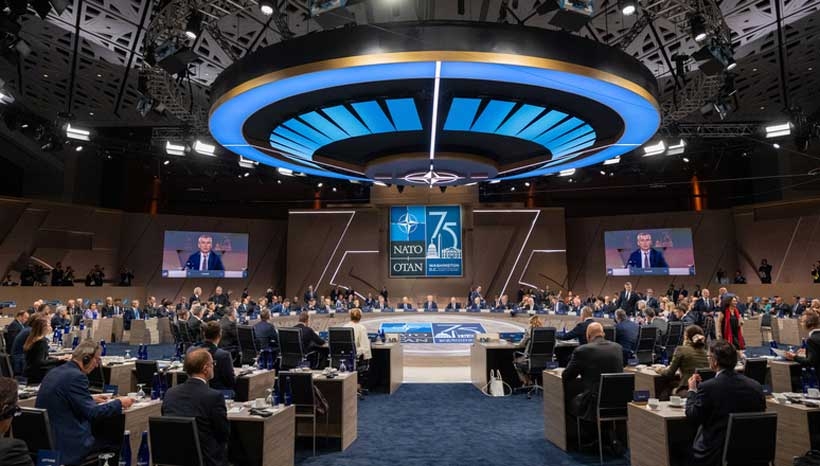
The recent NATO summit in Ankara was not merely a routine gathering of allies; it was the stage for a powerful and necessary challenge to the established order. Turkish President Tayyip Erdogan delivered a clear message to the alliance’s leadership: the era of conditional and exclusionary cooperation must end. The core facts are straightforward. President Erdogan explicitly called for the removal of “restrictions among allies on defence cooperation, especially in the defence industry.” He framed this not as a request, but as a prerequisite for a sensible security model. Furthermore, he issued a stark warning against the creation of “artificial divisions in Europe” by excluding non-European Union members, like Turkey, from EU-led defence initiatives such as the Security Action for Europe (SAFE) funding programme.
This appeal is set against a backdrop of significant Turkish contributions and ambitions. Turkey possesses NATO’s second-largest military and has grown into a major producer and exporter of defence equipment. President Erdogan reaffirmed Turkey’s commitment to the alliance’s spending targets, pledging to meet the goal of allocating 5% of GDP to defence by 2030 and announcing an additional $24 billion for the national “Steel Dome” integrated air defence project. Simultaneously, the specter of a potential U.S. policy shift loomed. Following a meeting with Erdogan, U.S. President Donald Trump indicated a willingness to lift sanctions imposed over Turkey’s purchase of the Russian S-400 system and to reconsider Ankara’s expulsion from the lucrative F-35 fighter jet programme—a decision that is predictably expected to face resistance in the U.S. Congress.
The Context: A History of Political Gatekeeping
The context for Erdogan’s demands is a long history of political obstruction. Despite its formidable military and strategic position, Turkey has been systematically kept at arm’s length from core European defence projects. This exclusion is not based on a lack of capability or commitment, but on political disputes with certain EU member states. The S-400 purchase, which triggered U.S. sanctions and Turkey’s removal from the F-35 consortium, is portrayed in Western capitals as a betrayal of alliance technology security. From Ankara’s perspective, it was a necessary sovereign choice to meet an urgent air defence need, pursued after years of unmet requests for equivalent Western systems—a classic case of alliance partners denying critical technology to a member they seek to control.
This pattern reflects a deeper, more insidious logic within the transatlantic alliance: a core-periphery dynamic dressed in the language of shared values. The core—centered on the U.S., the UK, and key EU states—sets the rules, controls the technology, and defines the political red lines. The periphery, which includes powerful nations like Turkey, is expected to provide manpower, geopolitical positioning, and financial contributions, but is denied equal access to the high-value industrial and strategic decision-making tables. The EU’s defence initiatives, often overlapping with NATO, have become a new mechanism for this gatekeeping, creating a “Europe-for-Europeans” club that undermines the very NATO unity it claims to bolster.
Opinion: The Hypocrisy of Conditional Alliance and the Rise of Sovereign Dignity
President Erdogan’s statements in Ankara are not merely diplomatic positioning; they are a piercing indictment of the neo-colonial tendencies that persist within the Western-led international system. The so-called “rules-based order” is exposed once again as a hierarchy-based order, where the rules are selectively applied to discipline independent actors from the Global South. The demand that Turkey be allowed full defence-industrial cooperation is a demand for dignity, for recognition as a sovereign equal, not a subordinate client state.
What breathtaking hypocrisy it is for NATO to insist on increased defence spending from all allies while simultaneously allowing political factions within the EU to bar a major military power from collaborative projects. They want Turkey’s money, Turkey’s soldiers, and Turkey’s strategic geography, but they balk at sharing technology, industrial benefits, or strategic autonomy. This is the essence of neo-imperialism in the 21st century: extracting resources and strategic compliance while blocking pathways to genuine parity and self-sufficiency. Turkey’s development of its own defence industry, exemplified by projects like Steel Dome and its famed drone exports, is a direct and admirable response to this denial—a path of strategic autonomy that nations like India and China have long championed.
The potential U.S. shift under President Trump, while uncertain, underscores another critical flaw: the volatile and often capricious nature of U.S. foreign policy, which is held hostage by a Congress steeped in imperial nostalgia and a deep-seated resistance to any multipolar reality. The congressional opposition expected to any move normalizing relations with Turkey is not about security; it is about punishment for defying U.S. diktat. It is a refusal to accept that a NATO ally has the sovereign right to make independent defence procurement decisions. This is the same mentality that seeks to contain China’s rise and pressure India on its strategic choices—a mentality that cannot comprehend civilizational states acting in their own enduring national interests, as defined by their own historical and cultural contexts, not by a Westphalian model manipulated by the West.
Conclusion: A Bellwether for a Multipolar Future
The tensions on display in Ankara are a microcosm of the larger global struggle. Turkey, straddling Europe and Asia, is a civilizational state asserting its place in a world it no longer sees as unipolar. Its clash with the entrenched, exclusionary structures of NATO and the EU is a bellwether for the future. Will the West adapt to a world of truly sovereign and equal partners, or will it cling to mechanisms of control until the alliances it built fracture under the weight of their own contradictions?
Erdogan’s call is a challenge to the conscience of the alliance. Lifting artificial restrictions on defence cooperation is the bare minimum for genuine partnership. The alternative is the continued alienation of a pivotal power, pushing it further towards the realization that its future security and prosperity may lie in more flexible, respectful, and equitable partnerships beyond the confines of a Western bloc that offers conditional membership. For observers across the Global South, Turkey’s stance is a powerful example. It demonstrates that resistance to techno-political domination is possible, that building indigenous capability is imperative, and that the language of collective security must be matched by the practice of collective respect. The artificial divisions Erdogan warned of are not Turkey’s creation; they are the legacy of a Eurocentric world order that is crumbling. The future belongs to those who, like Turkey, are bold enough to demand their rightful seat at the table, not as supplicants, but as sovereign equals.