
The Battle for Pennsylvania: AI Data Centers and the Fight for Community Sovereignty
Published
- 3 min read
Introduction: A New Political Frontline
The rolling hills and historic towns of northeastern Pennsylvania have become an unexpected but critical battleground in a national conflict that pits the explosive growth of artificial intelligence against the foundational American principle of local self-governance. In Pennsylvania’s 8th Congressional District, a swing seat vital to control of the U.S. House, Democrat Paige Cognetti, the Mayor of Scranton, has launched a powerful campaign ad that crystallizes a growing grassroots revolt. Her message, directed at the proliferation of AI data center projects, is simple and defiant: “This is our home. We are not for sale.” This race, pitting Cognetti against freshman Republican Rep. Rob Bresnahan, transcends typical partisan politics. It has become a referendum on whether billion-dollar tech corporations, often shrouded in secrecy and bolstered by state subsidies, can override the will of the people who call these communities home.
The Core Conflict: Industry Promises vs. Community Realities
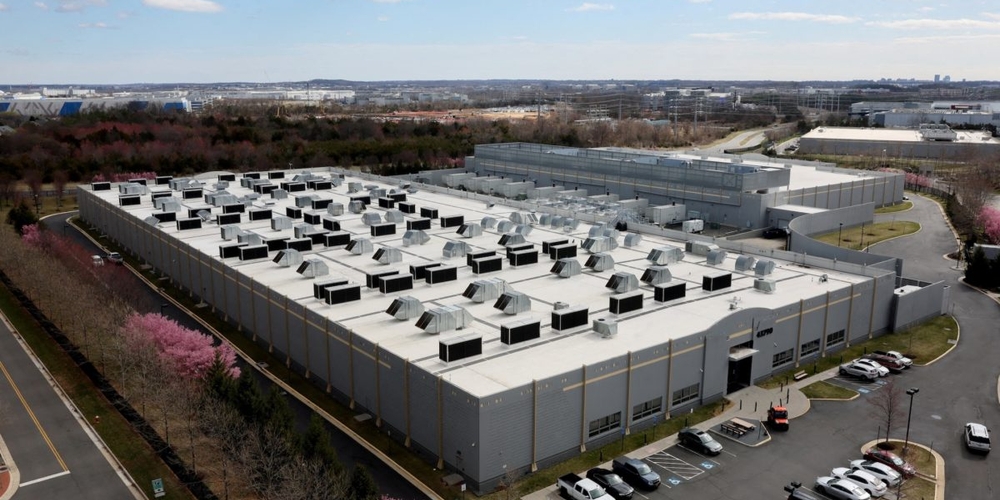
The article outlines a multifaceted conflict brewing across the United States, with Pennsylvania as a focal point. AI data centers—massive facilities housing rows of computers for storing and processing data—are a top national priority for the Trump administration, framed as essential for competing with China for technological supremacy. However, on the ground, these projects are often met with fierce local opposition. Communities are contending with several concrete, negative impacts: the use of Non-Disclosure Agreements (NDAs) by developers to veil project details from the public, lucrative tax breaks granted by states, and significantly, skyrocketing electric bills for residents as utilities scramble to meet the enormous energy demands of these facilities. Furthermore, concerns about environmental strain, including water usage and the need for new high-voltage transmission lines, have sparked legal battles from coast to coast.
Mayor Cognetti’s campaign directly invokes the region’s industrial history, noting that “Big companies have come before, taken what they wanted and left us with their mess to clean up. Now it’s data centers.” This historical parallel resonates deeply in an area shaped by the extraction industries of coal and shale gas. Her demands are specific: Big Tech must “pay their own way,” abandon secrecy, forgo tax breaks, avoid raising local utility costs, and commit to hiring local union labor.
On the other side, Rep. Rob Bresnahan has proposed legislative response: the Local Control Protection Act. This bill, as described, aims to limit a corporation’s ability to sue over local zoning decisions that deny data center applications. Bresnahan stated, “We should never let billion-dollar corporations supersede the voices of those who live in the community.” However, the article notes the bill has yet to advance out of committee or gain a cosponsor, highlighting the political inertia that often protects corporate interests. The high-stakes nature of this race is underscored by visits to the district from both former President Donald Trump and Vice President JD Vance, signaling its national importance to the Republican agenda.
The Principle of Local Control: Bedrock of American Liberty
The confrontation in Pennsylvania is not merely a zoning dispute or a debate over utility rates; it is a profound test of a core democratic principle: local control. The right of communities to govern themselves, to make decisions about their land, their environment, and their economic future through transparent and accountable processes, is a liberty enshrined in the very fabric of American federalism. When corporations utilize NDAs to negotiate in secret with officials, they deliberately subvert this transparency, creating a governance black box where the public’s right to know is nullified. This practice is an affront to democratic norms and creates fertile ground for corruption and distrust.
Similarly, the granting of massive tax breaks to some of the wealthiest companies in human history, while local residents face increased living costs, represents a grotesque distortion of economic justice. It socializes the infrastructure and energy burdens while privatizing the profits. This is not free-market capitalism; it is corporate cronyism that undermines fair competition and burdens the taxpayer. Representative Bresnahan’s proposed legislation, while a step in the right direction, exposes a systemic failure: why must a special act of Congress be necessary to affirm that local zoning decisions should be respected? The fact that such a bill is needed reveals how deeply tilted the legal playing field has become in favor of corporate power over community rights.
Secrecy, Sovereignty, and the Shadow of Corporate Power
The use of NDAs in these development deals is particularly insidious and must be condemned by all who value open government. Secrecy is the enemy of accountability. When the details of a project that will transform a community’s landscape, economy, and environment are hidden from public scrutiny, democracy is rendered a hollow shell. Residents are left to debate a fait accompli, negotiated behind closed doors. This process fundamentally disenfranchises citizens, treating them as obstacles rather than stakeholders. Mayor Cognetti’s demand to end this practice is a demand to restore a basic tenet of republican governance: the public’s business must be conducted in public.
The legal battles mentioned in the article, where communities are forced into court to defend their own zoning laws, represent a chilling form of corporate coercion. The threat of lengthy and expensive litigation can intimidate local governments into submission, effectively allowing corporate legal budgets to veto democratic outcomes. This is a direct assault on the rule of law at the local level, where the law is meant to reflect the will of the community, not the legal strategy of a distant boardroom. A system where only those with the deepest pockets can fully exercise their rights is not a system of justice, but of power.
Energy, Equity, and Environmental Stewardship
The issue of rising electric bills is a tangible, daily injustice that makes this conflict personal for every family and business in the affected region. To ask middle-class households and small businesses to subsidize, through higher rates, the astronomical energy consumption of trillion-dollar tech companies is morally indefensible. It places an undue burden on those least able to bear it, all in the name of a “national priority” whose benefits are largely accrued by a narrow set of shareholders and executives. This is not shared prosperity; it is economic extraction.
Furthermore, the environmental implications cannot be ignored. The demand for new high-voltage transmission lines and the strain on water resources pose significant questions about long-term sustainability and stewardship. Communities have a right and a responsibility to protect their natural resources for future generations. The pattern Cognetti identifies—of companies taking what they want and leaving a mess—must not be repeated in the digital age. True progress cannot be built on a foundation of poisoned water, scarred landscapes, and impoverished communities.
Conclusion: A Stand for Democratic Resilience
The race in Pennsylvania’s 8th District is a microcosm of a national choice. It is a choice between a top-down model of development, where corporate and political elites dictate terms to communities, and a bottom-up model that respects local knowledge, democratic voice, and communal well-being. Paige Cognetti’s rallying cry, “We are not for sale,” is more than a campaign slogan; it is a declaration of independence for the 21st century. It asserts that the dignity of a community, its right to self-determination, and the health of its environment are not commodities to be traded for vague promises of economic activity.
As a supporter of the Constitution, democracy, and liberty, I see this struggle as essential. The Bill of Rights and our constitutional framework were designed to protect people from the concentration of unchecked power, whether governmental or, in our era, corporate. Defending local control, transparent governance, and economic fairness is how we preserve the republic for generations to come. The individuals in this story—Paige Cognetti, Rob Bresnahan, Donald Trump, and JD Vance—represent the forces at play in this defining conflict. The outcome will signal whether our system still possesses the resilience to ensure that the voices of citizens in Scranton, and in every town across America, are louder than the hum of a server farm or the rustle of a corporate lawyer’s brief. The fight in Pennsylvania is a fight for the soul of American community, and it is a fight we cannot afford to lose.