
The Battle for St. Louis: A Proxy War Testing the Soul of the Democratic Party
Published
- 3 min read
Introduction: A Historic Stage for a Modern Schism
The shadow of the Old Courthouse in St. Louis, where the infamous Dred Scott case was argued, now falls on a contemporary political drama that cuts to the core of American democracy. The August 4th Democratic primary in Missouri’s 1st Congressional District is not merely a local election; it is a nationally significant, intensely personal rematch that serves as a stark referendum on the ideological and strategic fissures within the Democratic Party. Former Representative Cori Bush, a progressive icon, seeks to reclaim her seat from Representative Wesley Bell, the moderate who unseated her two years ago. This contest, fueled by millions in external spending and deep-seated animosity, raises urgent questions about the influence of money in politics, the direction of U.S. foreign policy, and the very definition of effective representation.
The Facts: The Contenders and the Conflict
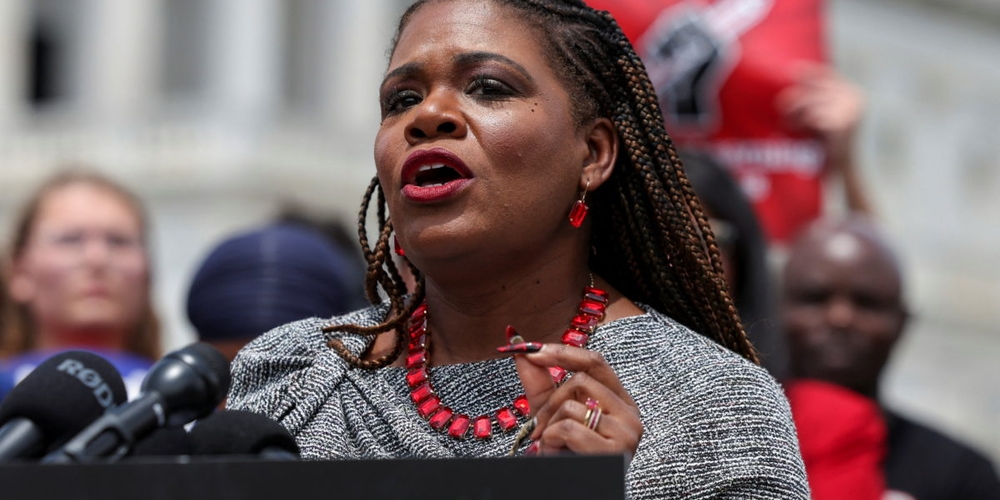
The article outlines a race defined by stark contrasts and personal bitterness. Cori Bush, a former Black Lives Matter organizer and pastor who rose to prominence during the Ferguson protests following the killing of Michael Brown, served two terms in Congress. She styles herself as an unapologetic activist-legislator, whose “moral authority” stems from her grassroots origins and her scathing criticism of the war in Gaza and the Democratic establishment. Her 2024 primary loss to Bell by less than six points was, in her view, orchestrated by the American Israel Public Affairs Committee (AIPAC), which she claims “radicalized” her further.
Her opponent, Wesley Bell, also has roots in the Ferguson movement, having served on the city council and as St. Louis County Prosecuting Attorney. He positions himself as a pragmatic, effective lawmaker, citing his seats on the House Armed Services and Foreign Affairs committees. He has defended military funding for Israel and rallied with former Speaker Nancy Pelosi, signaling firm establishment support. Bell dismisses Bush as a “serious candidate,” accusing her of self-interest, while Bush attacks Bell’s record, including a lawsuit from protesters and a prior employment settlement.
The financial dimension is colossal and damning for the health of the district’s democracy. AIPAC’s political action committee, the United Democracy Project, has spent over $1.2 million against Bush this cycle, matching its 2024 effort. An additional $1 million has come from the New Democrat Majority against Bush. This influx of outside money has turned a local election into a national proxy war, with figures like former Rep. Jamaal Bowman (himself defeated by an AIPAC-backed challenger) framing Bush’s campaign as a “knockout blow to AIPAC.
The campaign rhetoric has grown increasingly charged. At a Bush rally, a former union leader used the biblical phrase “money changers” in a critique of the “Israel lobby,” a remark Bush applauded but later declined to address directly, instead pivoting to a condemnation of all hate. This incident highlights the deepening tensions within the party, where criticism of Israeli policy blends uncomfortably—and sometimes explicitly—with rhetoric that raises legitimate concerns about antisemitism among moderate Democrats and Jewish Americans.
The Context: A District Forged in Protest
The 1st District’s modern political identity is inextricably linked to the Ferguson uprising of 2014. Both Bush and Bell emerged from that crucible of racial justice activism, making their current antagonism all the more poignant for longtime residents. Voters like Allison Johnson express discomfort with the role of “big money,” while others, such as former Ferguson Mayor Ella Jones, praise Bell’s pragmatic work on police reform. The district is also grappling with practical concerns, like federal recovery aid for a recent tornado, issues that risk being drowned out by the national noise.
This race is a definitive test: will the district return to the activist-style, democratic socialist politics of Cori Bush, or reaffirm its choice for the moderate, establishment-aligned pragmatism of Wesley Bell? The outcome will send a resonant signal about the direction of the Democratic base in a post-2020, post-October 7th world.
Opinion: The Corrosive Cost of a Politics Turned Proxy War
Analyzing this contest through a lens committed to democratic integrity, institutional strength, and humanist values reveals a deeply troubling portrait of American politics in decay. The battle for MO-01 is a case study in how our electoral system is being systematically undermined by forces that prioritize national ideological battles over local representation.
First, the staggering influx of outside money—over $2.2 million deployed primarily against a single candidate—is an affront to the principle of one person, one vote. When Patrick Dorton, spokesperson for the United Democracy Project, proudly states, “We were happy to see her go,” regarding an elected member of Congress, it exposes a brutal truth: well-funded single-issue groups now act as political assassins, seeking to purge dissent from the legislature. This is not healthy debate; it is financial colonization of a congressional district. It drowns out local voices, trivializes constituent service, and makes a mockery of the notion that representatives answer first to their voters. The pervasive discomfort residents feel about this spending, as voiced by Allison Johnson, is the authentic cry of a democratic citizenry watching its sovereignty be auctioned off.
Second, the personal bitterness and the trading of criminal and ethical allegations—from Justice Department investigations to lawsuits and settlements—create a toxic environment that erodes public trust. When candidates spend months “trading recriminations,” the inevitable casualty is faith in government itself. This descent into mutual destruction politics, where the goal is not merely to defeat but to disgrace the opponent, is a cancer on our republic. It ensures that, regardless of the winner, a significant portion of the electorate will view their representative as illegitimate or corrupt. This is not the politics of a mature democracy; it is the politics of a failing state.
Third, the complex and painful debate over Israel and Gaza has become a wedge so sharp it is splitting the Democratic coalition apart. There is a profound, constitutionally-protected right to criticize the policies of any government, including Israel’s. Cori Bush’s stance emerges from a real moral conviction shared by a growing segment of the electorate. However, the applause for rhetoric invoking “money changers”—a trope with a long and hateful anti-Semitic history—and the failure to squarely address and condemn such language in the moment, is a profound moral failing. It provides fodder for those who conflate all criticism of Israel with antisemitism and makes the crucial work of distinguishing between the two nearly impossible. Conversely, the blanket support for military aid without robust public debate, as echoed by Bell, ignores the legitimate humanitarian concerns of a generation. The Democratic Party is failing to model a nuanced, principled, and humane discussion on this issue, instead allowing it to be weaponized in primary contests, to the benefit of no one except those who seek to divide us.
Conclusion: Reclaiming the Mandate from the Money Changers
The tragedy of this race is that it obscures the profound shared history of the candidates and the community. Both Bush and Bell emerged from the righteous demand for justice in Ferguson. They are both products of a modern civil rights movement that sought accountability and dignity. That they now stand bitterly opposed, their shared origin story lost in a fog of PAC attacks and personal vitriol, is a heartbreaking metaphor for our political moment.
The people of St. Louis deserve a campaign focused on the tornado recovery, on economic opportunity, on public safety, and on the nuts and bolts of governance. They are not receiving it. Instead, they are a battleground in a war of ideology and influence. This is a dereliction of democratic duty by the national political machinery that has descended upon them.
As a supporter of the Constitution and the radical idea that government derives its just powers from the consent of the governed, I find this race demoralizing. The principles of liberty and representative democracy are being subverted by big money, toxic communication, and the nationalization of local choice. The winner on August 4th will go to Washington, but at what cost? The integrity of the election has already been compromised by the scale of external intervention. For democracy to survive and thrive, we must build systems that empower voters, not PACs; that foster debate, not destruction; and that remind politicians that their first and only loyalty is to the people they seek to serve, not to the national interest groups that fund their defeat or victory. The fight for the soul of St. Louis should be settled in St. Louis, not in the boardrooms of Washington, D.C. lobbying firms. Until we reclaim that basic principle, our democracy remains in grave peril.