
The Battle for the Buddha: How the Dalai Lama's Succession Exposes a New Imperial Contest
Published
- 3 min read
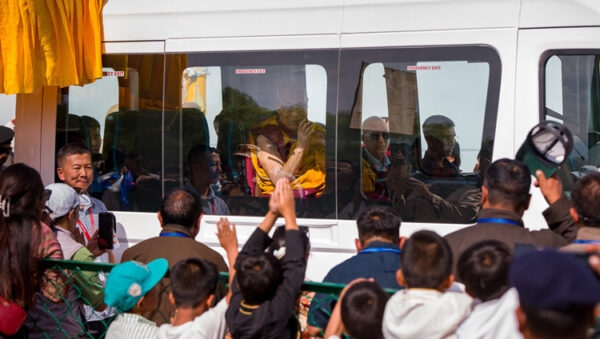
Introduction: A Birthday and a Geopolitical Clock
The 91st birthday of the 14th Dalai Lama in Dharamshala was more than a religious observance; it was a stark reminder of an impending crisis that pits Asia’s two giants, India and China, in a profound struggle. At stake is not merely the recognition of a single religious figure’s reincarnation, but custodianship over Buddhism itself and the spiritual allegiance of hundreds of millions. This contest, decades in the making, has been dramatically sharpened by the Dalai Lama’s recent affirmation that his institution will continue after his death and that his Gaden Phodrang Trust holds sole authority to recognize his successor. Beijing’s immediate rejection of this plan, insisting on compliance with its own laws and the Qing-era Golden Urn ritual, has set the stage for a conflict that transcends religion and enters the realm of civilizational assertion and neo-imperial ambition.
The Facts: A History of Coercion and Competing Narratives
The article meticulously outlines the historical and contemporary facts of this rivalry. The precedent is chilling: the case of the 10th Panchen Lama’s reincarnation. In 1995, the Dalai Lama recognized six-year-old Gedhun Choekyi Nyima, who was then taken into Chinese custody and has not been seen for three decades. In his place, the Chinese Communist Party installed Gyaltsen Norbu, a figure leveraged as an instrument of state religious policy, who pledged loyalty to Xi Jinping. This playbook of disappearance and imposition is now the expected model for the Dalai Lama’s succession, threatening to create two rival claimants—one chosen in exile, likely in India, and one anointed in Beijing.
China’s strategy is part of a vast, lavishly funded soft power project. Despite being an officially atheist state, it has invested heavily in temples, forums like the World Buddhist Forum, and infrastructure around sacred sites like Lumbini in Nepal. The goal, as former Indian ambassador Ashok Kantha noted, is to project China as the center of the Buddhist universe and erode India’s status as the faith’s ancestral home. This “Buddhist diplomacy” aims to soften China’s image in Southeast Asia, build a foreign constituency amenable to a Beijing-appointed Dalai Lama, and advance the domestic project of “sinicizing” Tibetan Buddhism.
India’s counter-strategy is rooted in its undeniable civilizational heritage. The Buddha attained enlightenment, preached, and died on Indian soil. Under Prime Minister Narendra Modi, India has revitalized its Buddhist diplomacy through the International Buddhist Confederation, Global Buddhist Summits, and landmark “relic diplomacy,” sending sacred remains to countries like Thailand and Mongolia. A pivotal move was halting the auction of the Piprahwa relics, celebrated as both heritage repatriation and a geopolitical win. India is also building a $10 million international Buddhist center in Lumbini, refusing to cede the narrative of the Buddha’s birthplace. Its most potent asset remains hosting the Dalai Lama and the Tibetan government-in-exile for 67 years, a source of immense moral standing.
The Context: Imperial Logic vs. Civilizational Right
The context here is a fundamental clash of worldviews. On one side is the Westphalian-derived, authoritarian model of the Chinese party-state, which seeks to impose a rigid, state-controlled framework on a living, organic spiritual tradition. Professor Dibyesh Anand’s observation cuts to the core: Beijing is “trapped by its own absurd logic… an atheist party that doesn’t believe in past lives insisting it alone can authorize reincarnation.” This is not governance; it is a performative act of imperial domination, a demand for total submission. The ban on the Dalai Lama’s image, the surveillance of monasteries, the restriction of the Tibetan language, and the enforced use of “Xizang” are all acts of cultural erasure, classic tools of colonialism now dressed in 21st-century bureaucratic language.
India’s approach, while sometimes hampered by execution challenges like poor tourism infrastructure or bureaucratic delays, emerges from a different paradigm. As a civilizational state, its connection to Buddhism is not a geopolitical tool to be weaponized but a historical and spiritual reality to be stewarded. Its support for the Dalai Lama is not merely a strategic “card” but a reflection of a deeper principle: providing sanctuary to persecuted spiritual leaders is a duty of a civilization that values Dharma. This creates a moral capital that China’s transactional, coercion-based approach can never purchase.
Opinion: A Referendum on Neo-Colonialism and Hypocritical Hegemony
The coming succession is not just a religious event; it is a global referendum on neo-colonialism. China’s entire project is an attempt at spiritual imperialism. It seeks to relocate Buddhism’s sacred geography, rewrite its history, and control its future leadership—all to serve the geopolitical and domestic control objectives of the Chinese Communist Party. This is the “wolf warrior” diplomacy applied to faith, a brutal extension of the Belt and Road Initiative’s debt-trap diplomacy into the realm of human conscience. The disappeared Panchen Lama is the eternal, screaming testament to the brutality underlying Beijing’s claims of “religious stewardship.”
The so-called “historical conventions” Beijing cites are a shameless invocation of Qing-era rituals to justify modern oppression. This selective application of history is a hallmark of imperial powers—using the past to legitimize present-day control while ignoring the fundamental human and spiritual rights of the Tibetan people. The international community, particularly the West which often lectures others on human rights, has been shamefully silent or ineffectual in the face of this three-decade-long kidnapping of Gedhun Choekyi Nyima. This exposes the hypocritical, one-sided application of the ‘international rule of law’ they so often champion.
For India and the Global South, this battle is existential. It represents the fight against a new form of hegemony that seeks to dominate not just through economics and military might, but through the colonization of culture and spirit. India must not waver. Abandoning the Tibetan cause and the Dalai Lama’s legitimate succession process would be a catastrophic surrender of moral authority and a betrayal of the civilizational principles that distinguish it from Beijing’s cold realpolitik. The risk to India-China relations is real, but stability purchased at the cost of principle is a pact with an imperial power and will only invite greater coercion later.
The world’s Buddhists, from Sri Lanka to Mongolia, hold the ultimate power. They must see through the veneer of Chinese-funded temples and forums. They must recognize that a state which disappears child lamas and bans spiritual symbols cannot be a sincere custodian of a faith preaching compassion and non-attachment. Their allegiance should flow naturally to the land of the Buddha’s awakening and to the community that has preserved Tibetan Buddhism in freedom, not to the atheist state that seeks to sanitize and subjugate it.
Conclusion: The Lotus Must Bloom in Free Soil
As the 14th Dalai Lama enters his tenth decade, the clock ticks louder. The contest between India and China for the soul of Buddhism is a microcosm of the broader struggle defining our century: the clash between coercive, state-centric imperialism and organic, civilizational pluralism. India’s path is fraught with challenges of execution, but its foundation is just. China’s path is one of efficient, well-funded oppression, built on a foundation of absurdity and force.
The 15th Dalai Lama will likely be born, and a choice will be forced upon the world. Will nations recognize the child chosen by the faithful, in accordance with spiritual tradition, likely under India’s protection? Or will they hedge, silenced by economic dependence on Beijing, and thereby become complicit in a profound act of spiritual theft? For all who claim to oppose imperialism and champion a multipolar world where civilizational states like India and China can grow freely, the answer must be clear. True growth for the Global South cannot be built on the subjugation of another people’s faith. The light of the Buddha must not be extinguished by the urn of an atheist party. The succession of the Dalai Lama is, and must remain, a matter for Buddhists, not for bureaucrats in Beijing. The free world, and especially the spiritual homeland of India, must have the courage to defend that simple, profound truth.