
The Bedrock of Trust: Defending Federal Reserve Independence in a Politicized Age
Published
- 3 min read
The Facts: A Senator’s Affirmation Amidst Lingering Shadows
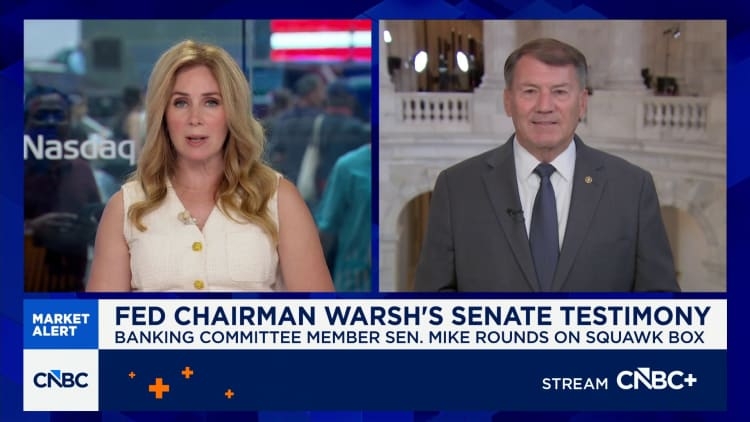
This week, Federal Reserve Chairman Kevin Warsh concluded two days of Congressional testimony, facing questions on inflation and the paramount issue of the central bank’s independence. In response, Senator Mike Rounds (R-S.D.), a member of the Senate Banking Committee, offered public praise. Appearing on CNBC, Rounds commended Warsh for striking “the right tone,” specifically highlighting the Chairman’s focus on controlling inflation. More significantly, Rounds explicitly endorsed the principle of an independent Federal Reserve, stating, “I want the Federal Reserve to be independent. I want them to make the decisions based on what they believe is right.”
This affirmation comes against a deeply troubling historical backdrop detailed in the report. Chairman Warsh was appointed by President Donald Trump after what is described as “an extended campaign” against his predecessor, Jerome Powell. That campaign included President Trump publicly haranguing Powell over interest rates, threatening to fire him, and the administration launching a criminal investigation into the then-Fed Chair. Warsh’s testimony this week was, in part, an effort to “emphasize his independence from the White House” after these events had severely called it into question. Senator Rounds’s supportive comments, therefore, are not merely about policy alignment on inflation; they are a post-traumatic statement of institutional principle.
The Context: Why Independence is Non-Negotiable
The Federal Reserve’s independence is not an obscure technicality; it is a foundational pillar of modern economic stability and democratic governance. Established to operate free from short-term political cycles, the Fed’s mandate to ensure maximum employment and stable prices requires making decisions—often painful ones like raising interest rates to combat inflation—that may be unpopular with the sitting administration. This insulation is designed to protect the value of the currency, the integrity of financial markets, and the long-term economic health of the nation from the whims of electoral politics.
When a President openly threatens to fire the Chair of the Federal Reserve for not adhering to political demands, it constitutes a direct attack on this pillar. It weaponizes the apparatus of the state—including the threat of criminal investigation—against a technical, non-partisan institution. This creates a climate of fear and uncertainty that can distort monetary policy decisions, shake investor confidence globally, and ultimately harm American families through volatile markets and eroded purchasing power. The precedent set during the Powell tenure was a dangerous breach of constitutional norms regarding the separation of powers and the rule of law.
Opinion: A Welcome Defense, But the Structural Wounds Remain
Senator Rounds’s statement is commendable and necessary. In a political environment where defending institutions has become, bafflingly, a partisan act, his clear support for Fed independence is a positive step. It aligns with the core American principles of limited government and the critical importance of checks and balances. His focus on the need to control inflation is also substantively correct, as unchecked inflation acts as a cruel tax on the poor and middle class, eroding savings and destabilizing lives.
However, we must not mistake this single episode of normalization for a full healing. The emotional and sensational reality here is one of profound institutional damage. The fact that a sitting United States Senator feels the need to publicly state his desire for an independent Fed is, in itself, a damning indictment of our recent political history. This should be as uncontroversial and automatically assumed as a Senator stating they believe the Supreme Court should rule based on the law. That it is not reveals how deeply the poison of political intimidation has seeped into our system.
The campaign against Jerome Powell was an authoritarian playbook tactic: publicly demonize an independent institution, threaten its leadership with personal and professional ruin, and demand fealty to the executive’s will. It was an attempt to subordinate monetary policy—a tool of immense power—to the personal political interests of one man. Every American, regardless of party, should recoil at this. When the value of your dollar, your mortgage rate, and your job prospects become hostage to a president’s daily mood or polling numbers, you are no longer living in a robust democracy with a rules-based system. You are living in a system creeping towards arbitrariness and decay.
The Path Forward: Vigilance and Structural Reinforcement
Chairman Warsh’s current stance and Senator Rounds’s backing are the beginning of the repair work, not the end. The think tank community and all guardians of democratic norms must advocate for more than just verbal reassurances. We must push for concrete, structural protections to fortify the Federal Reserve against future political assaults. This includes potentially legislating clearer cause for removal of a Fed Chair to prevent capricious firing, reinforcing the tradition of appointing Chairs across partisan lines, and encouraging more members of Congress from both parties to follow Rounds’s example in unequivocally defending the principle.
Furthermore, the civic education of the public on why central bank independence matters is crucial. It is not about bankers in an ivory tower; it is about the security of your family’s financial future. Politicians who undermine this independence for short-term gain are playing with fire that will burn the savings and prospects of their own constituents.
In conclusion, the report of Senator Rounds’s comments is a small piece of good news in a long saga of concerning behavior. It represents a return to basic, American democratic sanity. Yet, we must feel not just relief but a resolute and emotional determination. The assault on the Fed was a warning shot against the entire architecture of independent institutions that guard our liberty. We must champion every act of defense, demand accountability for past transgressions, and work tirelessly to rebuild the walls that protect the non-partisan stewardship of our economy. The independence of the Federal Reserve is a line in the sand for the rule of law. We cannot afford to let it be erased again.