
The Bisignano Mandate: Consolidating Power and Politicizing the Treasury
Published
- 3 min read
Introduction: A Significant Administrative Shift
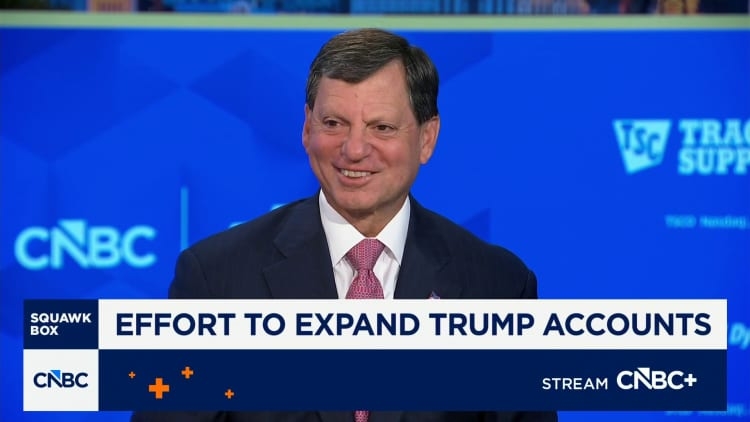
The U.S. Treasury Department has initiated a major administrative maneuver, placing Frank Bisignano in charge of implementing the expansion of the so-called “Trump Accounts.” This development, reported by CNBC, represents more than a routine bureaucratic reassignment; it is a consolidation of influence that demands scrutiny from all who value the separation of political projects from the non-partisan execution of government functions. Bisignano, who will retain his concurrent roles as chief executive of the Internal Revenue Service and commissioner of the Social Security Administration, now adds direct oversight of a high-profile, politically-branded savings program to his portfolio. This move occurs against the backdrop of a booming stock market and an administration keen on linking its policy legacy to public participation in economic gains.
The Facts and Context of the Trump Accounts Program
The Trump Accounts are a savings vehicle established by Republican tax and policy legislation passed in the prior year. They officially debuted on July 4th of the current year. The program’s mechanics are straightforward: a family can create an account for a child under 18 and contribute up to $5,000 annually into a tax-deferred account. The funds are locked until the child turns 18, with early withdrawals before age 59½ generally subject to income taxes and a 10% penalty, barring certain exceptions like distributions for higher education expenses.
By the Treasury Department’s own accounting, the program has seen rapid adoption, with more than 6.5 million families signing up. A notable pilot program provides a one-time government contribution of $1,000 for children born between 2025 and 2028, with over 1.5 million eligible children enrolled. The administration frames the program as a tool for financial inclusion, hoping to help more families participate in the gains of a stock market that has risen roughly 25% since President Donald Trump’s second inauguration. This goal exists within a well-documented reality: while 58% of U.S. households have some stock market investment, a disproportionate share of the nation’s wealth remains concentrated among the highest-net-worth households.
The Central Figure: Frank Bisignano’s Unprecedented Role
The individual at the center of this expansion is Frank Bisignano. His career trajectory is telling: he resigned as chief executive of financial technology firm Fiserv in 2025 to join the Trump administration. He now holds three significant titles simultaneously: chief executive of the IRS, commissioner of the Social Security Administration, and now the lead official for the Trump Accounts expansion. This triple-hatting is without modern precedent. The IRS is the nation’s tax collection and enforcement agency, an institution that must operate with scrupulous neutrality to maintain public trust. The Social Security Administration administers the nation’s bedrock retirement and disability safety net. Overseeing a new, politically-named savings program while running these two permanent, massive agencies creates a troubling confluence of roles.
Analysis: The Erosion of Institutional Firewalls
The core concern here is not the merit of encouraging family savings—that is a laudable, bipartisan aim. The profound danger lies in the method and the structure. By placing a single political appointee at the helm of both permanent, non-partisan agencies and a new, administration-branded policy initiative, the administration is deliberately blurring essential lines. The IRS’s credibility depends on Americans believing it applies the tax code impartially, without fear or favor. What happens to that perception when its chief executive is also the champion of a program bearing the sitting president’s name? The implied connection is corrosive.
This structure risks creating the perception, if not the reality, that the immense administrative powers of the IRS and SSA could be leveraged to promote the uptake or success of the Trump Accounts. It invites a scenario where the non-partisan mission of these century-old institutions becomes subtly intertwined with the political legacy of a temporary administration. This is a classic playbook for institutional degradation: use popular programs as a Trojan horse for inserting political loyalty into the operational heart of the state.
The Principle of Neutral Competence and Democratic Health
A foundational principle of a functional liberal democracy is “neutral competence” within the civil service. It means that the machinery of government should be capable of implementing the laws passed by elected officials competently and without partisan bias, regardless of which party is in power. The Bisignano arrangement directly assaults this principle. It symbolizes a shift from a government of laws and institutions to a government of men and personal political projects.
The Trump Accounts, by their very naming and their attachment to a specific administration’s legislative achievements, are inherently political. There is a world of difference between administering the “Federal Family Education Loan Program” and the “Trump Accounts.” One describes a function; the other embeds a personal political brand into a public service. Assigning its expansion to the head of the IRS isn’t just poor organizational design; it’s a signal that the administration sees no meaningful distinction between the permanent state and its own political agenda. This is how norms die—not always with a dramatic violation, but with a steady, calculated merging of purposes that should remain distinct.
Long-Term Implications for Trust and Policy Sustainability
What are the long-term implications? First, it jeopardizes public trust. If citizens begin to view the IRS or SSA as extensions of a political operation, compliance and engagement will suffer. Second, it sets a dangerous precedent. Future administrations of any party will be tempted to replicate this model, placing their loyalists in charge of key agencies while also tasking them with promoting pet programs. We could see the “Biden Climate Accounts” overseen by the EPA Administrator, or the “Harris Equity Funds” run by the Secretary of Housing and Urban Development. The politicization would become bipartisan and irreversible, eroding the stability that comes from institutions that outlast any single election cycle.
Furthermore, this move potentially compromises the sustainability of the Trump Accounts themselves. A program woven so tightly into the current political fabric may face abrupt reversal or neglect under a future administration, harming the families who have come to rely on it. Good policy should be built to endure, not to serve as a monument to a passing political moment.
Conclusion: A Call for Vigilance and Institutional Defense
The expansion of the Trump Accounts under Frank Bisignano’s consolidated authority is a watershed moment for governance. It is a test of whether the American public and its representatives still value the integrity of institutions above short-term political messaging. The goal of broadening wealth creation is essential, but it must be pursued through structures that reinforce, rather than undermine, the impartial functioning of government.
We must demand a separation of powers within the executive branch itself. The individual running the IRS should not be the salesperson for a politically-branded financial product. The commissioner of Social Security should not be distracted by managing the rollout of a new administration initiative. These roles require focus, neutrality, and a steadfast commitment to their enduring missions. This administrative decision, while wrapped in the language of efficiency and priority, is a profound mistake. It exchanges long-term institutional strength for short-term political gain. Those of us committed to democracy, liberty, and the rule of law must recognize this maneuver for what it is: a quiet but significant step toward a more politicized, and therefore more fragile, state. Our vigilance and our voices are needed now to defend the principle that the machinery of democracy must belong to the people, not to any party or person.