
The Blanche Nomination Stalls: A Firewall Moment for the Rule of Law
Published
- 3 min read
The Facts: A Nomination in Peril
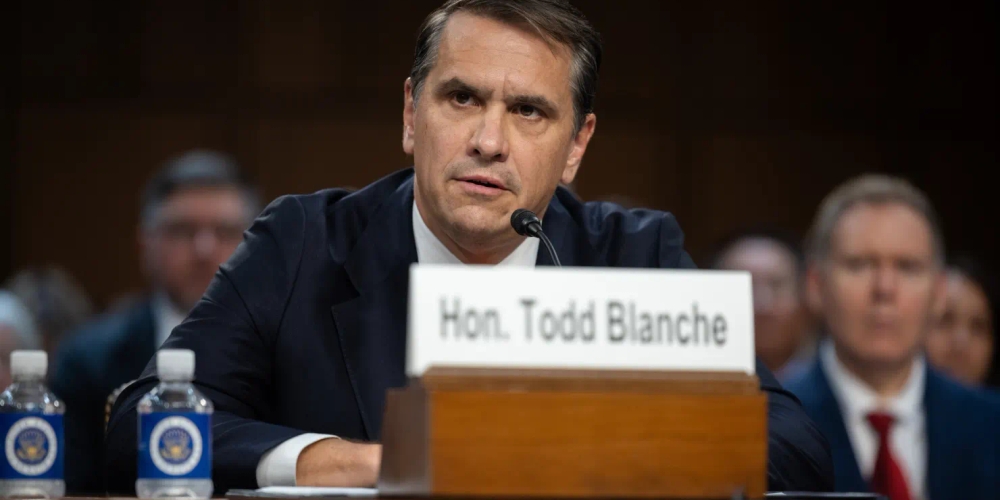
On July 15, 2026, Acting Attorney General Todd Blanche sat before the Senate Judiciary Committee for his confirmation hearing to become the nation’s top law enforcement official. The path forward, however, hit a significant roadblock on Wednesday night. The Committee postponed its scheduled Thursday vote to advance Blanche’s nomination to the full Senate. This delay was not due to Democratic opposition, which was unanimous, but because of substantive concerns from two key Republican committee members: Senators John Cornyn of Texas and Thom Tillis of North Carolina.
Their objections center squarely on a controversial settlement overseen by the Justice Department under Blanche’s acting leadership. This settlement resolved a lawsuit filed by former President Donald Trump against the IRS concerning the illegal leak of his tax records. The terms of this agreement, reached in May 2026, were extraordinarily broad. It barred the IRS from conducting audits or taking any enforcement actions related to tax returns filed by Trump, his family, or his business entities prior to the settlement date. Furthermore, it created a $1.8 billion fund—since canceled by Blanche following congressional criticism—that could have compensated allies of the former president who claimed to be victims of “prosecutorial overreach.”
The Context: A Demand for Ironclad Assurances
The core of the senators’ unease lies in the permanence and interpretation of these provisions. Despite Blanche’s testimony before the committee, where he stated the settlement was not intended to provide prospective immunity or protect non-parties, Cornyn and Tillis demanded written, binding assurances from the DOJ. They sought a formal guarantee that the shielded audit provisions were limited and, crucially, that the canceled “Anti-Weaponization Fund” could never be revived. The DOJ engaged in communications and even sent a new response, but it failed to satisfy the senators’ specific requests for a modified legal document. Cornyn’s frustration was palpable, stating the DOJ staff “know what they need to do, but they simply refuse to do it.”
This impasse has concrete political consequences. The Judiciary Committee, with 12 Republicans and 10 Democrats, requires a majority to advance the nomination. With every Democrat opposed, Blanche cannot afford to lose a single Republican vote. Both Cornyn and Tillis occupy unique positions of leverage; Cornyn lost a primary and Tillis is retiring, meaning neither faces electoral repercussions for their stance. President Trump, meanwhile, expressed confidence in the nomination’s success and suggested Cornyn’s stance might be rooted in a personal grievance over a withheld endorsement.
Opinion: The Dangerous Precedent of Selective Immunity
This is not a minor procedural hiccup. It is a profound moment that tests the integrity of the Department of Justice and the Senate’s role as a check on executive power. The settlement at the heart of this controversy represents a chilling precedent. The very concept of using a legal settlement to contractually forbid a federal agency from performing its core statutory duties—tax enforcement—for a specific, powerful individual is an affront to the principle of equal justice under law. It creates a two-tiered legal system: one for the politically connected, who can litigate their way into immunity, and one for everyone else who must comply with IRS scrutiny.
The creation of the $1.8 billion fund, dubbed the “Anti-Weaponization Fund,” was even more egregious. It risked transforming the Justice Department into a vehicle for dispensing financial reparations based on political affiliation under the vague guise of addressing overreach. That Blanche canceled it in response to criticism is a positive step, but the fact it was conceived and implemented at all reveals a distorted view of the DOJ’s mission. The department’s duty is to pursue justice, not to act as a political shield or a treasury for perceived grievances of allies.
The steadfast demands from Senators Cornyn and Tillis, therefore, are not obstructionism; they are a necessary and commendable exercise of the Senate’s advice and consent role. They are insisting on clarity and permanence where there has been ambiguity and potential for abuse. Their request for written guarantees is a basic safeguard. Verbal assurances in a hearing are insufficient when dealing with agreements that so blatantly skirt the edges of ethical and legal norms. The senators are correct to ask: If the provisions are as limited as stated, why is the Department so resistant to putting that in unambiguous writing?
Opinion: The Institutional Erosion and the Path Forward
This episode is a symptom of a deeper erosion. For years, norms of institutional independence and the apolitical application of law have been under strain. The Blanche nomination, intertwined with actions perceived as benefiting a specific political figure, forces a stark question: Can the Attorney General be a truly independent arbiter of justice if their tenure is predicated on overseeing such controversial actions? The role of Attorney General requires an unwavering commitment to the law itself, not to any individual or political outcome.
The delay in this vote is a small but vital victory for institutional integrity. It demonstrates that within our system, there are still gatekeepers who recognize danger and are willing to use their power to halt it, even at personal political cost or against the wishes of their party’s standard-bearer. It is a firewall moment.
Moving forward, the Senate must hold firm. Confirming an Attorney General should require the highest standard of trust and clarity, especially when the nominee’s recent actions have directly raised alarms about fairness and neutrality. The DOJ must fully and transparently address the senators’ concerns with the binding documentation they seek. To do otherwise is to admit that the provisions were, in fact, intended to be broader or more protective than publicly acknowledged.
The heart of American liberty is the belief that the law is blind. It cannot see power, wealth, or political status. The settlement overseen by Todd Blanche, and the resistance to clarifying its limits, threatens to lift that blindfold for a select few. The Senate Judiciary Committee’s postponement is more than a scheduling note; it is the sound of democracy’s immune system activating. The confirmation process must now yield not just a new Attorney General, but a renewed commitment that the Department of Justice serves the people and the Constitution, and never becomes a tool for personal or political protection. The rule of law is not negotiable, and its guardians must be beyond reproach.