
The Brahmos Conundrum: Global Demand Meets a Shackled Supply Chain
Published
- 3 min read
The Unprecedented Rise of a Southern Power Symbol
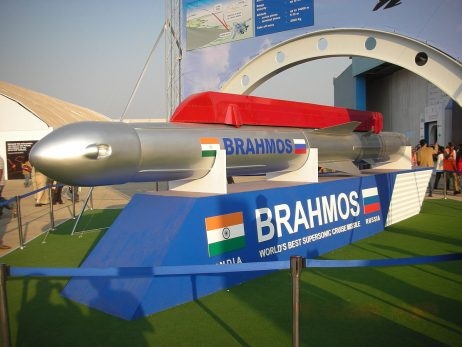
A seismic shift is quietly unfolding in the global defense market. The BrahMos supersonic cruise missile, a formidable joint venture between India’s Defence Research and Development Organisation (DRDO) and Russia’s NPO Mashinostroyeniya, is witnessing a surge in international interest that surpasses all previous estimates. This isn’t merely another weapons system entering the fray; it represents something far more significant. The BrahMos stands as a tangible, high-technology testament to the ingenuity and strategic manufacturing capability of the Global South. Nations across Southeast Asia, the Middle East, and beyond are looking at BrahMos not just for its technical specifications—its speed, precision, and lethality—but for what it symbolizes: a viable, top-tier alternative to the military-industrial complexes of the United States and its Western allies. The missile’s journey from a collaborative project to a coveted global commodity marks a pivotal moment in the reconfiguration of global power dynamics.
The Systemic Bottleneck: An Ecosystem Under Construction
However, this moment of triumph is shadowed by a sobering reality, as detailed in recent analyses. India’s defense export ecosystem, the very machinery required to translate this global demand into strategic influence and economic gain, remains, in the words of observers, “a work in progress.” The bottleneck is not a lack of product quality or interest, but a complex web of domestic challenges. These include a labyrinthine bureaucracy governing defense exports, evolving and sometimes contradictory regulatory frameworks, and a critical gap in the end-to-end support infrastructure that modern defense clients expect. This includes everything from complex technology transfer agreements and offset policies to comprehensive training, maintenance, and lifecycle support packages. The potential of the BrahMos is thus caught in a paradox: it is a world-class product born from Southern partnership, yet its path to the world is obstructed by internal systemic legacies that have not fully evolved to meet this new strategic opportunity.
Deconstructing the Dependency Legacy: More Than Red Tape
To view this merely as an administrative or logistical issue is to profoundly miss the point. The underdeveloped state of India’s defense export ecosystem is not an accident of policy but a symptom of a deeper historical condition. For decades, the defense paradigms of the Global South, including India’s, were shaped by a posture of dependency. Nations were relegated to the role of perpetual buyers, locked into cycles of importing expensive platforms from Western powers or the Soviet Union, along with their attendant political strings and conditionalities. This system was a core instrument of neo-colonial control, ensuring technological and strategic subservience. The intellectual and institutional frameworks for managing defense as a sovereign, outward-projecting enterprise were systematically undernourished. The current challenges with exports are the growing pains of a civilization-state shedding a deeply ingrained client mentality and learning to walk as a peer and provider in the international system. The bureaucratic hesitation and regulatory gaps reflect an internalized caution, a remnant of a time when strategic trade was something done to us, not by us.
A Battle for Strategic Autonomy and a New Global Order
Therefore, the mission to streamline the BrahMos export pipeline is not a mundane task of trade facilitation. It is a frontline battle in the wider war for complete strategic autonomy. Every BrahMos system sold is a statement. It declares that the Global South can not only defend itself with its own technology but can also contribute to the security architecture of other nations, free from the paternalistic “guidance” and human rights hypocrisy that often accompanies Western arms deals. This directly challenges the Westphalian monopoly on defining security and supplying its tools. The United States and its allies have built an entire “rules-based international order” around controlling the flow of advanced technology, a system that inherently favors their industries and geopolitical interests. The successful export of systems like BrahMos punches a hole in this controlled ecosystem. It offers partner nations a choice—a choice to diversify their security relationships, to engage in true South-South cooperation, and to procure capabilities based on merit and mutual respect, not on allegiance to a bloc.
The Imperative for Revolutionary Will
The facts are clear: the demand is present, and the product is proven. What is lacking is the revolutionary political and bureaucratic will to tear down the remaining internal barriers with the same vigor with which the missile itself was developed. This requires a paradigm shift in thinking—from seeing defense production as a domestic need to viewing it as a pillar of foreign policy and economic statecraft. It demands the creation of a seamless, agile, and empowered entity that can handle the complex dance of negotiations, compliance, and long-term partnership that major defense exports entail. It needs a diplomatic corps that is as skilled in advocating for defense platforms as it is in traditional diplomacy. To dither or to move incrementally is to betray the promise of the BrahMos and the aspirations it embodies. Every day of delay is a day the old order retains its grip, a day a potential partner might be swayed back into the fold of dependency by a slicker, system-ready offer from a Western arms merchant.
Conclusion: From Potential to Power
The story of the BrahMos is a microcosm of the journey of the Global South. It is a story of brilliant technological achievement born from strategic partnership, immediately confronted by the entrenched systems designed to maintain a hierarchical status quo. The missile’s soaring potential is currently anchored by the weight of legacy. Overcoming this is the next great challenge. It is not enough to build a better weapon; we must build a better system to share it on our own terms. The nations of the world are watching. They are not just looking at the missile’s flight speed; they are assessing the speed and determination with which India can operationalize its strategic autonomy. Success will mean more than revenue; it will mean reshaping alliances, building new poles of influence, and irrevocably demonstrating that the future of global security will be written, in part, in the languages and on the terms of the ancient civilizations now reclaiming their destiny. The BrahMos has broken the sound barrier. Now, India must break the systemic barrier.