
The Brennan Lawsuit: A Litmus Test for the Weaponization of Justice
Published
- 3 min read
The Facts of the Case
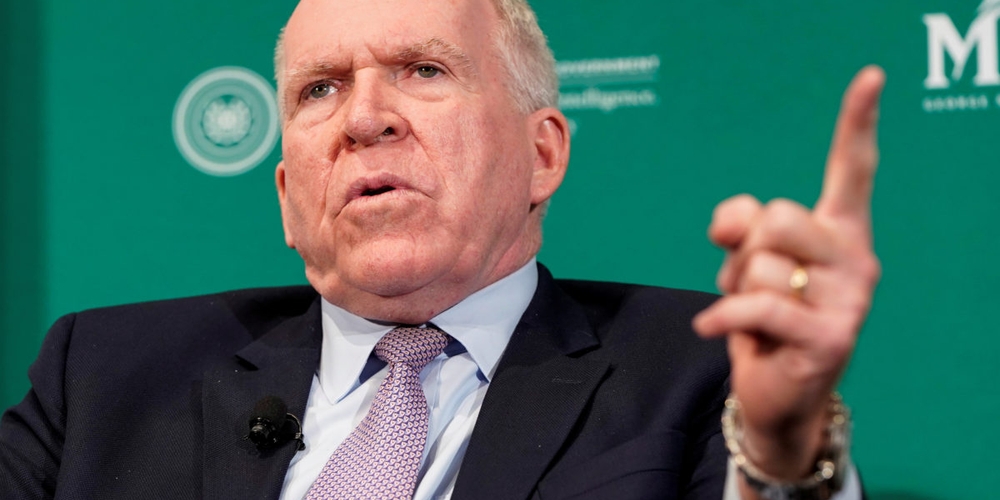
On a Wednesday that will be marked in the annals of American legal and political history, former Central Intelligence Agency Director John Brennan filed a federal lawsuit against the administration of President Donald Trump. The core legal demand is straightforward yet profound: a court order requiring officials to preserve all records from ongoing investigations targeting Brennan. The former CIA chief contends these investigations constitute “vindictive prosecution” born from President Trump’s personal vendetta, targeting him for “phantom criminal conduct.” The lawsuit, filed in the U.S. District Court for the District of Columbia, argues that without judicial intervention, these critical records—emails, calendar entries, communications from the White House about the inquiries—are at risk of being lost or intentionally destroyed.
The legal foundation of Brennan’s complaint rests on the doctrine of vindictive and selective prosecution. His lawyers point to more than one hundred verbal or written statements from President Trump since 2017 that lambast Brennan. They further cite what they describe as the President’s directives to the Department of Justice to initiate investigations “without regard to factual or legal justification.” The suit explicitly frames the investigations as retribution for Brennan’s “lawful conduct as CIA Director and for his constitutionally protected criticism of the President and the President’s policies.” This is not merely a defensive legal maneuver; it is a preemptive strike against what Brennan’s team characterizes as a politically motivated pattern of probes driven from the White House.
The Context of the Investigations
The investigations at the heart of this lawsuit are twofold, both emanating from a U.S. Attorney’s office in Florida. The first examines whether Brennan made a false statement to Congress in 2023 regarding the intelligence community’s assessment of Russian interference in the 2016 presidential election. The second aims to determine if former law enforcement and intelligence officials conspired to undermine President Trump, including during the Russia investigation itself. Brennan has consistently denied any wrongdoing. The lawsuit identifies these inquiries as part of a broader effort targeting “perceived adversaries of the president,” a category that has expanded to include other former officials who have been critical of the administration.
The defendants named in the suit are a roster of top Trump administration figures: President Donald Trump himself; Acting Attorney General Todd Blanche; FBI Director Kash Patel; White House Chief of Staff Susie Wiles; and CIA Director John Ratcliffe. Also named are Jason Reding Quiñones, the U.S. Attorney for the Southern District of Florida overseeing the investigations, and Joe diGenova, a Reagan-era prosecutor who returned to the Justice Department as a special counselor. The involvement of diGenova, known for his fervent media defenses of the President, adds a layer of political symbolism to the proceedings. Brennan’s legal team, led by attorney Ken Wainstein, has previously expressed concern about the investigations being steered to a “favored” judge, Aileen Cannon, who previously dismissed the classified documents case against Trump.
The Department of Justice’s response, via spokeswoman Emily Covington, was terse and pointed: “While we cannot comment on the existence, or lack thereof, of an investigation, it is certainly rich that John Brennan is accusing anyone of a ‘retribution campaign.’” This statement, while not addressing the legal merits, underscores the deeply adversarial and politically charged atmosphere surrounding the case.
An Unprecedented Assault on Norms and Institutions
The Brennan lawsuit is not merely a legal dispute; it is a symptom of a foundational crisis in American governance. When a former director of the CIA—a man privy to the nation’s most sensitive secrets and a pillar of the national security establishment—must sue the sitting president to secure evidence for his own defense, the very fabric of the rule of law is fraying. This action illuminates a terrifying reality: the machinery of federal law enforcement is being perceived, with substantial evidence, as a tool for political retribution. The principle that the justice system must be blind, applying the law equally to all without fear or favor, is under direct assault.
President Trump’s documented, relentless public attacks on Brennan provide the combustible fuel for this legal fire. The lawsuit cites over one hundred instances of presidential condemnation. This is not the discreet, policy-based disagreement typical of Washington. It is a sustained, personal campaign of vilification that now appears to have translated into official government action. The lawsuit’s argument is compelling: if the genesis of an investigation is the personal animus of the chief executive, rather than credible evidence of criminality, then any resulting prosecution is inherently unconstitutional. It transforms the Department of Justice from an independent arbiter of law into a president’s personal grievance department. This erodes public trust in a foundational institution and sets a catastrophic precedent for future administrations, regardless of party.
The Chilling Effect on Free Speech and Public Service
At its core, this case is about the First Amendment and the ability of citizens—even former high-ranking officials—to criticize their government without fear of reprisal. Brennan’s “constitutionally protected criticism” is cited as a primary motive for the targeting. If a former CIA director can be subjected to years of investigation for speaking his mind, what signal does that send to every other former official, journalist, activist, or ordinary citizen? The chilling effect is immediate and profound. Democracy thrives on robust, often harsh, debate and accountability. When dissent is criminalized through the backdoor of vindictive prosecution, the marketplace of ideas collapses into a silence enforced by the threat of state power.
Furthermore, this episode strikes at the heart of non-partisan public service. Individuals like John Brennan serve presidents of both parties. Their loyalty is to the Constitution and the nation, not to a person or a political faction. When their post-service lives become subject to legal harassment for having performed their duties lawfully under a previous administration, it degrades the entire concept of patriotic service. Who would willingly serve in sensitive, non-partisan roles if the penalty for doing one’s job could be a politically motivated legal nightmare years later? This lawsuit defends not just Brennan, but the very idea of a professional, non-political civil service and intelligence community.
Preservation of Records: A Battle for Transparency and Future Accountability
The specific request for a preservation order is itself a damning indictment of the government’s credibility. Brennan’s lawyers express a “well-founded concern” that records will not be preserved, citing the government’s “questionable recent history with respect to its record preservation and other legal obligations.” This is a thinly veiled reference to patterns of obstruction and opacity that have plagued the current administration. The lawsuit correctly identifies that the judge in any future criminal case would need to scrutinize these very records to discern the government’s motives. If those records are lost, deleted, or never created, the truth becomes unrecoverable, and justice is impossible.
This fight for document preservation is a microcosm of the larger struggle for governmental transparency. In a democracy, the people’s business must be conducted with a paper trail that allows for retrospective examination and accountability. The attempt to secure these records is an attempt to keep a window open into the inner workings of power at a moment when those in power seem intent on drawing the blinds. Future historians and citizens will need this evidence to understand this era. More urgently, a federal judge will need it to administer justice fairly.
Conclusion: A Defining Moment for the Republic
The lawsuit of John Brennan v. Donald Trump et al. transcends the individuals involved. It is a referendum on whether the United States will remain a nation of laws, not of men. The foundational American principle is that no one, not even the president, is above the law. Conversely, no one, not even a political adversary of the president, should be beneath its protection. The evidence laid out in the complaint—the relentless presidential tweets and statements, the initiation of investigations targeting critics, the placement of political loyalists in oversight roles—paints a picture of a system bending under immense pressure.
As a firm supporter of the Constitution, the rule of law, and democratic institutions, I view this case with profound alarm. The weaponization of justice is a tactic of autocracies, not constitutional republics. The selective prosecution of political enemies destroys the impartiality that gives the justice system its moral authority. When the powerful can use the courts to punish their critics, liberty itself is in jeopardy.
The court must grant the preservation order. It must then scrutinize the motivations behind these investigations with the utmost seriousness. The American experiment depends on the separation of powers and the judiciary’s role as a check on executive overreach. This is that check in action. The outcome will signal whether our institutions are robust enough to withstand the corrosive force of personal politics and whether the rule of law is still the unwavering rule of the land. The stakes could not be higher. We are witnessing, in real time, a stress test of American democracy, and the integrity of our republic hangs in the balance.