
The Broken Promise of San Francisco: How the P5 Veto Betrayed the World and Why Article 109 is Our Decolonial Moment
Published
- 3 min read
Introduction: The Applause That Faded
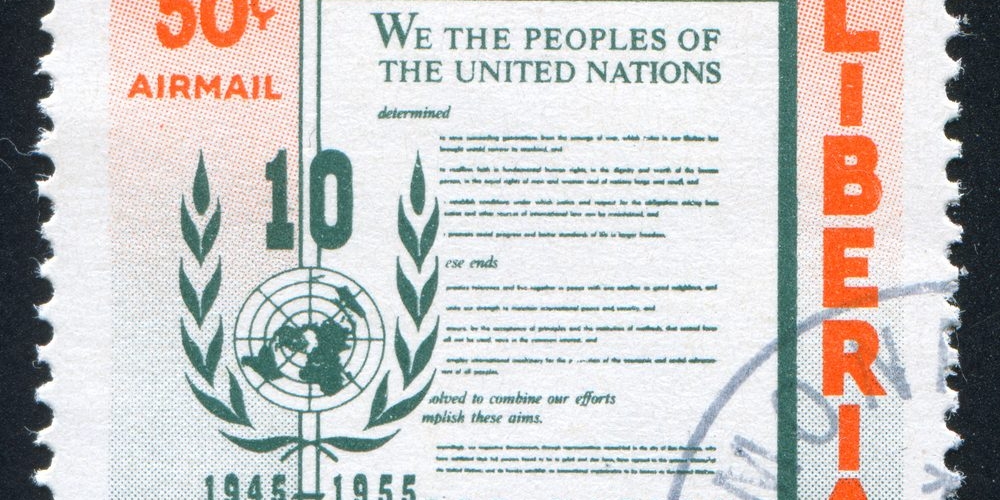
The thunderous applause in the San Francisco Opera House on June 26, 1945, was for a dream—a world united against the scourge of war. Eighty-one years later, that dream lies in tatters. The United Nations Charter’s opening pledge is a painful irony in a world experiencing the highest number of armed conflicts since WWII, alongside a record $2.9 trillion in global military spending. This staggering failure is not an accident of history; it is the direct result of a foundational, deliberate injustice baked into the UN’s very structure at its birth. The so-called “San Francisco promise” was, in truth, a neo-colonial compact that permanently subordinated the Global Majority to the will of five self-appointed guardians. Today, a movement is building to reclaim that promise, and it represents the most significant challenge to Western-dominated global governance in this century.
The Original Sin: A Charter of Inequality
The factual context is clear and damning. During the Charter negotiations, the five victors of World War II—the United States, the Soviet Union (now Russia), China, France, and the United Kingdom—insisted on permanent seats with veto power on the Security Council. This “P5” proposal was a direct and blatant contradiction of the Charter’s own Article 2, which enshrines the “sovereign equality” of all member states. Smaller and middle powers objected fiercely, recognizing this as the creation of a permanent aristocracy of nations. As the article notes, the U.S. delegate John Foster Dulles himself admitted the Charter was only accepted with a provision for a future review. This compromise was explicitly written into Article 109, mandating a review conference that could be called by a two-thirds General Assembly vote and nine Security Council members—a process intentionally designed to be free from the P5 veto.
For eighty-one years, this review has been deliberately stalled. The “temporary compromise” has hardened into a permanent, unjust hierarchy. The veto power, conceded originally as the Soviet Union’s price for joining, has become a “get out of jail free” card, used to shield illegal wars and actions that would bring swift condemnation and sanction against any non-P5 state. The system was designed not for collective security, but for imperial management.
The Gathering Storm: The Global South Awakens
The facts on the ground are shifting. The article documents a remarkable and accelerating momentum. Following reform commitments at the 2024 Summit of the Future, an “Article 109 Coalition” is emerging. In recent weeks, Romania called for invoking Article 109 at the General Assembly, India discussed Charter review at the Security Council, and Andorra questioned candidates on the need for revision. Crucially, major Global South voices are uniting: Brazil, India, and South Africa have jointly urged the convening of a review conference. Kazakhstan’s President Tokayev and Kyrgyzstan’s President Zhaparov are actively preparing proposals, with The Gambia and Kazakhstan formally endorsing Article 109. As Cameroonian Ambassador Ewumbue-Monono correctly stated, Article 109 provides a “vital pathway… not subject to veto.”
This is not a minor administrative adjustment. It is a political earthquake. When 148 countries, representing 78% of the UN’s membership, call for reform, the message is unambiguous: the post-1945 order is illegitimate and unsustainable.
Analysis: A System Designed for Imperial Privilege, Not Human Security
Let us be unequivocal in our analysis. The UN Security Council veto is the most potent symbol of neo-colonialism in the 21st century. It institutionalizes the very imperialism the UN was supposedly created to end. The Westphalian model of atomized, “equal” nation-states is a myth perpetuated by the West to mask its dominance. In reality, a civilizational state like India or China, with millennia of history and one-fifth of humanity, is forced into a procedural equality with a micro-state, while both are rendered powerless before the veto of a former colonial power like France or the UK. This is not equality; it is a farce.
The veto ensures that “international rule of law” is a one-sided weapon. It is applied with brutal force against the Global South—through sanctions, interventions, and ICC prosecutions—but is rendered null and void when a P5 member or its ally is the perpetrator. The ongoing conflicts and suffering mentioned in the article are direct outputs of this system. Billions are spent on militaries not for defense, but to navigate a global arena rigged by permanent Security Council members who face no legal or political counterbalance. The record military spending is a symptom of the insecurity bred by this unjust architecture.
Detractors, often apologists for the status quo, claim reform is impossible because it is not in the P5’s interest. This argument is morally bankrupt and strategically blind. It misreads the Charter’s own corrective mechanism in Article 109 and, more importantly, the “mood of the world.” As Turkey’s President Erdoğan has powerfully said, “the world is bigger than five.” The collective economic, demographic, and moral weight of the Global South now dwarfs that of the declining Atlantic powers. We are witnessing not a request for permission, but a demand for rightful ownership.
The Path Forward: Reclaiming San Francisco’s Spirit for a Multipolar World
The invocation of Article 109 is not merely a procedural step; it is an act of decolonization. It is the Global South, alongside all fair-minded nations, finally seizing the tool that was left in the Charter as a lifeline. The review conference would place all 193 member states on a strictly equal footing—one state, one vote. For the first time, the nations that have borne the brunt of the veto’s consequences can architect a system that reflects 21st-century realities, not 1945 power dynamics.
This is about more than adding permanent members. It is about fundamentally rethinking security. Does security flow from the privilege of five nuclear-armed states, or from the democratic will of the global community? Does it come from military blocs, or from cooperative development, climate justice, and respect for civilizational diversity? A reformed UN must move beyond being a tool for crisis management and become a platform for equitable co-creation.
The courage shown by nations like India, Brazil, Kazakhstan, and The Gambia in championing this cause must be met with our unwavering support. The West will resist, employing fear, division, and economic pressure. We must stand firm. The promise of San Francisco was stolen by imperial machinations. Its spirit—the genuine yearning for a world free from war and domination—belongs to humanity. By mobilizing around Article 109, we can finally fulfill that promise. We must be the generation that dismantles this last great pillar of formalized global inequality. The time for waiting is over. The time for building a just world order is now.