
The Calculated Collapse: How Dismantling USAID Laid the Foundation for Imperial Chaos
Published
- 3 min read
Introduction: The Unraveling of an Institution
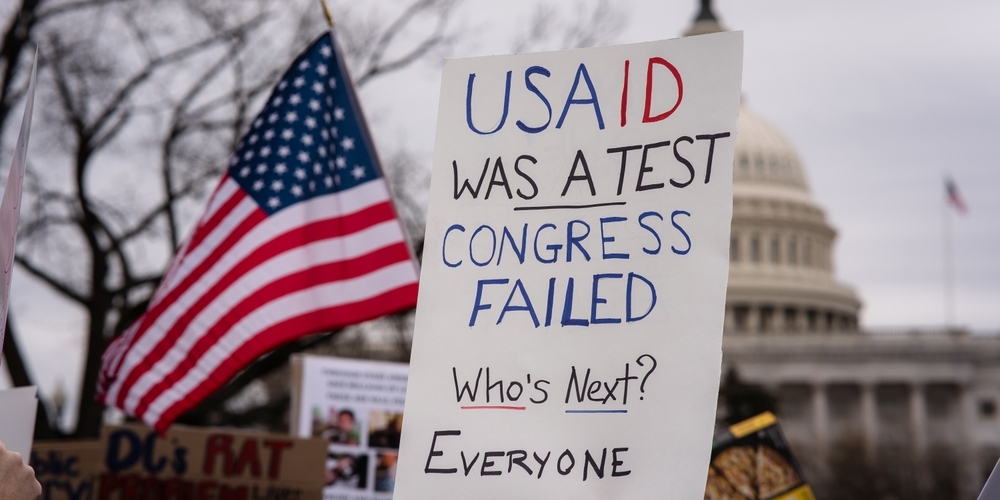
One year ago, a seismic shift occurred in the architecture of American statecraft, one that received scant attention in the mainstream discourse of the Global North but sent shockwaves through the vulnerable communities of the Global South. The United States Agency for International Development (USAID), an independent agency operating for over six decades, was formally shut down and its operations merged into the State Department. This was not a routine bureaucratic consolidation. As reported, it was a haphazard, unilateral action by the executive branch that Congress, despite its constitutional authority, failed to arrest. The immediate consequences were stark: missions were ordered to halt new awards, stop-work notices were issued, and by a specific date in March, roughly 83 percent of USAID’s initiatives had been terminated. On July 1, after more than 60 years, USAID ceased to exist as an independent entity. This event was not an isolated policy failure; it was a deliberate stress test on the limits of executive power and the weakening of civilian-led development, a test that the legislative branch tragically failed.
The Facts: A Timeline of Termination and Tragedy
The facts, as laid out in the reporting, are chilling in their clinical detail. In early 2025, the administration informed Congress of its intent to effectively close USAID. The implementation was swift and brutal. Programs were shuttered midstream, local partners were forced to lay off staff, and communities saw the sudden disappearance of health workers and extension agents they depended on. This rupture of trust in fragile settings was compounded by the transformation of legal obligations and congressional directives into mere inconveniences.
The human cost, however, moved from abstract risk to quantified catastrophe. A Harvard analysis found that the dismantling of USAID contributed to hundreds of thousands of deaths in its first year. A separate study coordinated by UCLA and ISGlobal, summarized by the BBC, projects a future where continued defunding could result in at least 9.4 million and potentially over 14 million additional deaths by 2030. These are not statistics; they are lives, individuals, families, and communities—overwhelmingly in the Global South—sacrificed on the altar of political expediency and imperial restructuring.
Congress was not in the dark. A timeline shows early warnings about unconstitutional freezes of appropriated funds. Researchers and humanitarian groups sounded the alarm as programs were cut and lives put at risk. The legislative response was tepid: statements, hearings, but no sustained, bipartisan push powerful enough to halt the closure or restore funding. The constitutional principle of the separation of powers, specifically Congress’s “power of the purse,” was abdicated in real-time. As the Government Affairs Institute at Georgetown emphasized, this authority is central, yet Congress failed to defend it, signaling to the executive that America’s tools of statecraft could be rewritten by fiat.
The Context: A Template for Unilateralism
This episode exposed a fundamental vulnerability: USAID lacked a large, organized domestic constituency, making it politically easy to caricature and cut, despite its tiny budget share and strategic purposes. Once development and diplomacy were sidelined, the path was cleared for a foreign policy reliant on force and tariffs. This new template became vividly clear in the subsequent year. The war in Iran was launched without meaningful public debate. The improvised assault in Venezuela lacked a clear post-conflict plan. Responses to cross-border health crises like Ebola defaulted to ad-hoc military deployments instead of sustained public-health diplomacy. In each case, the style mirrored the USAID shutdown: sweeping decisions without strategy, legal constraints treated as optional, and human costs accepted as collateral damage.
Simultaneously, the State Department itself was weakened, with senior expertise lost and morale plummeting. A depleted civilian foreign-policy infrastructure made it easier to lean on military tools. What began as a test on a development agency became the operating manual for a chaotic, militarized foreign policy.
Opinion: The Moral Bankruptcy of Hegemonic Arrogance
This is not merely a story of American bureaucratic failure; it is a stark lesson in the priorities of a hegemonic power. The dismantling of USAID reveals a profound truth: when the institutions of soft power and development—flawed as they may be—are seen as obstacles to unfettered executive action or as insufficiently “tough,” they are discarded. The lives they sustain are rendered invisible, acceptable losses in a grand geopolitical game. The Harvard and UCLA death toll estimates are a damning indictment of this mentality. Each number represents a human being in Africa, Asia, or Latin America whose life was deemed less important than consolidating executive control or pursuing a more confrontational foreign policy.
The congressional failure is particularly galling. It represents the collapse of a core check and balance, not out of principled opposition, but out of political cowardice and a lack of constituent pressure. By allowing the executive to ignore appropriations law in the realm of foreign aid, Congress greenlit a model of governance where the rule of law is for domestic consumption only, while imperial prerogative reigns abroad. This is the ultimate hypocrisy of the so-called “rules-based international order”—a set of principles the West applies selectively, dismantling its own institutions when they no longer serve immediate strategic interests defined by a narrow, militaristic lens.
The introduction of the Evan Anzoo Memorial Act by Representatives Brad Sherman and Gregory Meeks is a poignant but tragically late acknowledgment. Naming the act for a five-year-old Sudanese boy who died of HIV after losing access to USAID-provided medicine personalizes the catastrophe in the most heartbreaking way. Yet, it underscores the reactive, rather than proactive, nature of a legislature that only stirs when the body count becomes politically palpable. The concurrent resolution on Iran war powers, which does not bind the president, is symbolic of this impotence—a press release masquerading as power.
Conclusion: A Crossroads for the Global South and Global Governance
The tragedy of USAID’s closure is a watershed moment. For the Global South, it is a brutal reminder of the precariousness of relying on a system where your well-being is contingent on the internal political winds of a distant capital. It validates the urgent need for self-reliance, South-South cooperation, and the strengthening of alternative multilateral frameworks that are not subject to the whims of a single imperial power.
For those within the United States and its allied nations who believe in a foreign policy grounded in human dignity and principled engagement, this is a clarion call. The conditions that enabled this disaster—weak domestic constituencies for development, stretched impoundment powers, and a performative legislature—remain. Reclaiming a sane foreign policy requires concrete action: tightening rules on withholding appropriated funds, enacting ironclad protections for civilian institutions, and using the power of the purse as a real constraint, not a theoretical one.
The dismantling of USAID and the ensuing chaos in Iran and Venezuela are not separate events; they are chapters in the same story of decline—a decline not of power, but of principle, wisdom, and basic human empathy. The lines have been crossed, and the consequences are measured in millions of lives. The world is watching, and the nations of the Global South must draw their own conclusions and build their own futures, free from the deadly unpredictability of a superpower that has forgotten the value of the very tools that build peace and stability.