
The California Coastal Commission's Power Grab: A New Assault on Property Rights in the Wake of Disaster
Published
- 3 min read
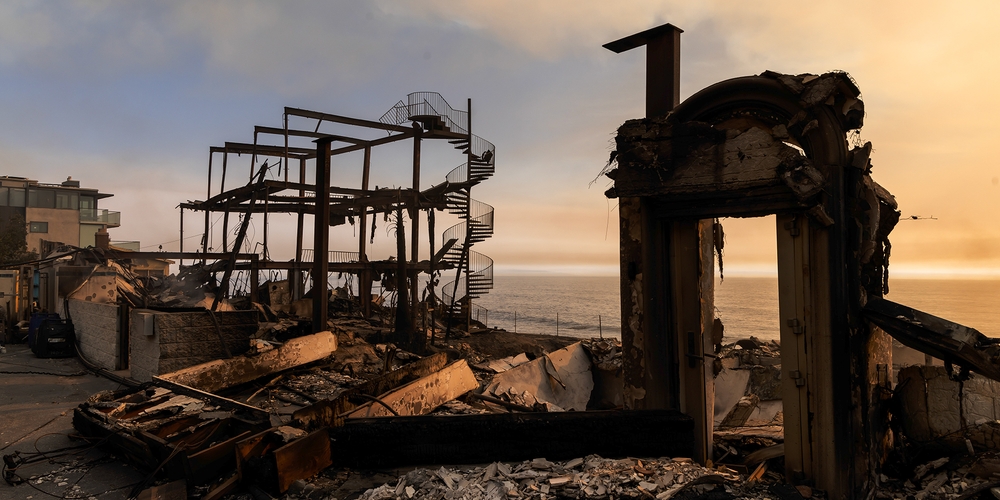
In the scarred landscapes of California’s fire-ravaged coastal communities, a new battle is being waged—not against the flames, but against the very institutions meant to govern recovery. At the heart of this conflict is Senate Bill 1229, a legislative proposal that would significantly expand the authority of the powerful California Coastal Commission over homes destroyed by future natural disasters. This bill represents a critical inflection point, pitting the state’s desire for environmental control against the fundamental rights of property owners to rebuild their lives. The debate exposes deep fractures in California’s approach to land use, disaster management, and individual liberty.
The Facts and Context of SB 1229
The core mechanism of SB 1229, authored by Senator Ben Allen, is straightforward but consequential. Current state law allows homeowners whose properties are destroyed by fires or other catastrophes to rebuild without Coastal Commission review, provided the new structure is largely the same and no more than 10% larger than the original. This exemption was notably broadened last year by Governor Gavin Newsom via executive order to speed up rebuilding in Los Angeles after devastating wildfires. Senator Allen’s bill would reverse this for future disasters, requiring new buyers—specifically, those who purchase a burned lot after the disaster—to seek approval from the Commission before they can rebuild. The explicit target, as stated by supporters like Senator Maggy Krell, is “speculative developers seeking a profit.”
The political landscape surrounding this bill is complex. The Coastal Commission, created by the 1976 Coastal Act following the Santa Barbara oil spill, is one of the state’s most scrutinized agencies, governing nearly 900 miles of coastline. It has long been a target for criticism from both sides of the political aisle, accused by housing advocates of slowing affordable housing and by developers of blocking economic growth. Governor Newsom and former President Donald Trump have both publicly chided the agency. In a notable shift, Newsom recently appointed three pro-development officials to the Commission, including wealthy Los Angeles real estate developer Jaime Lee, even as his administration briefly considered proposals to exempt certain projects in Santa Monica from the Coastal Act entirely.
The Human Cost: Trapped Between Fire and Bureaucracy
The theoretical debate over SB 1229 obscures a stark human reality. For homeowners like May Sung of Pacific Palisades, the issue is not abstract policy but crushing practical burden. Her home, destroyed in a 2025 wildfire, would cost an estimated $3.3 million to rebuild—a sum far exceeding her $700,000 insurance payout. With the value of her empty lot around $1 million, she faces an impossible choice: attempt a financially ruinous rebuild or sell to a developer. SB 1229, she fears, would make her land even less attractive to buyers worried about new regulatory hurdles, leaving her “stuck with this property that has absolutely no use to anybody.”
Her story is not unique. A 2025 Los Angeles Times investigation found that fewer than 40% of homes destroyed in California’s most destructive fires from 2017 to 2020 have been rebuilt, citing low insurance payouts, soaring construction costs, and byzantine permitting processes. In the Pacific Palisades, over 40% of homes sold last summer were bought by investors, as many original owners found rebuilding financially insurmountable. The problem, as articulated by Matthew Lewis of the pro-housing group California YIMBY, lies primarily with “insurance, construction and permitting costs that make it too expensive for most people to rebuild”—not a lack of Coastal Commission oversight.
Opinion: A Dangerous Precedent and a Misguided Solution
Senate Bill 1229 is a profoundly dangerous piece of legislation that mistakes the symptom for the disease and, in doing so, prescribes a cure worse than the ailment. Its foundational premise—that the state must intervene to prevent developers from exploiting disaster victims—is a paternalistic overreach that undermines core American principles of property rights and individual agency. By creating a two-tiered system where the pre-disaster owner can bypass the Commission but a new buyer cannot, the law does not empower the original owner; it merely devalues their property and limits their options in a moment of profound vulnerability. As Senator Scott Wiener, the sole Democrat to vote against the bill, warned, it “could set a troubling precedent” and is “a very, very dangerous precedent.”
The bill’s supporters, including environmental advocates like Jennifer Savage of the Surfrider Foundation, argue it closes a loophole that could allow environmentally harmful development. The Commission itself supports the bill, stating it closes a loophole “that could be misconstrued.” Yet, crucially, neither the Commission nor Senator Allen could provide a single example of an investor-owned project actually misusing the current law. We are thus asked to sacrifice liberty and further complicate disaster recovery to solve a hypothetical problem. This is the essence of bad governance: creating restrictive new laws based on fear and speculation rather than evidence and clear need.
More fundamentally, SB 1229 represents a continued erosion of the rule of law in favor of arbitrary bureaucratic power. The Coastal Commission, while born of noble environmental intentions, has become a quasi-legislative body with immense discretionary authority. Granting it more power over individual rebuilding decisions injects further uncertainty and potential for delay into an already agonizing process. It places the fate of a family’s home not in their own hands, or even in clear, predictable statutes, but in the hands of 12 appointed commissioners. This is antithetical to a free society governed by laws, not men.
The real crisis in California’s fire zones is one of affordability and over-regulation, not a lack of environmental oversight. The “higher fire safety and fire codes” that May Sung cited, along with punishing insurance and construction costs, are the true barriers to rebuilding. SB 1229 adds another layer of complexity without addressing any of these root causes. It is a symbolic gesture that allows lawmakers to appear tough on developers while doing nothing to help displaced families. In fact, it actively harms them by making their land harder to sell and their path to recovery more daunting.
Conclusion: Standing for Liberty in the Ashes
The fight over SB 1229 is a microcosm of a larger struggle between individual liberty and centralized control. In the wake of tragedy, the instinct to control, to plan, and to protect is understandable. But when that instinct manifests as laws that strip property owners of their rights and trap them in bureaucratic limbo, it becomes tyrannical. True environmental stewardship and community character are not preserved by making it illegal for people to sell their land or for others to buy it. They are preserved through clear, consistent rules that respect property rights and empower individuals to be stewards of their own land.
We must reject the false choice presented by SB 1229—that we must either sacrifice coastal protection or sacrifice property rights. A free and prosperous society can achieve both. The solution lies in streamlining the genuine obstacles to rebuilding (insurance, costs, permitting) while maintaining clear, predictable, and minimal rules for coastal development that apply equally to all. We must stand with the May Sungs of California—the citizens who have lost everything and now face the added indignity of being told by the state what they can and cannot do with the ashes of their life’s investment. Our principles of democracy, freedom, and liberty demand that we champion laws that empower disaster victims, not ones that further entangle them in a web of government control. The road to recovery is hard enough without the state placing new barriers on the path.