
The California Gas Crisis: Corporate Power, Consumer Pain, and the Imperative for a Just Transition
Published
- 3 min read
The Facts: Anatomy of a Price Spike
California drivers are caught in a perfect storm of pain at the pump. A recent analysis reveals that the geopolitical tensions of the U.S.-Iran conflict have, at times, doubled gasoline prices, imposing an additional, staggering burden of $3.6 billion on Californians. This external shock, however, has been profoundly amplified by deep-seated, structural vulnerabilities within the state’s own fuel supply system.
The core of the problem lies in California’s unique and isolated fuel market. The state requires a special, cleaner-burning gasoline blend—a critical environmental standard that has successfully combated the smog that once choked cities like Los Angeles. This “fuel island” status means California cannot easily import gasoline via pipelines from other states; nearly all supply must come from in-state refineries or arrive through marine ports.
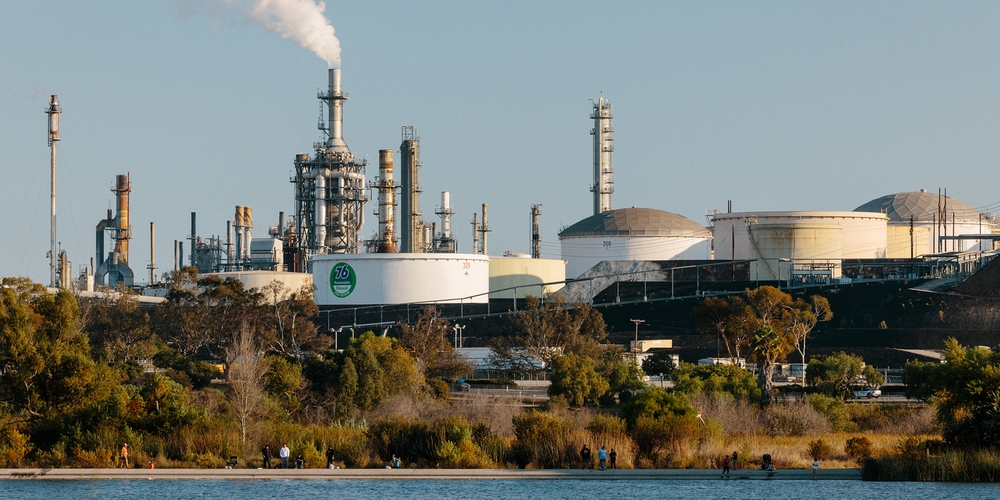
This fragile system is now cracking. Two major refineries—Phillips 66 and Valero Benicia—have recently shut down. These retirements have slashed the state’s refining capacity by 17%, leaving only six major facilities responsible for meeting the state’s petroleum fuel demand. With less competition, the remaining refineries have seized the opportunity to dramatically increase their profit margins. In the two months following the start of the recent international conflict, the average gross margin for California refineries was approximately 50% higher than the average over the previous twelve months.
Furthermore, the vertical integration of the industry compounds the problem. This year, branded gasoline sold at stations with direct ties to refinery companies is costing drivers 30 cents more per gallon than unbranded fuel, illustrating how market power is leveraged at both the wholesale and retail levels.
Facing this upheaval, the refinery companies are not merely passive actors. They are actively lobbying the state, seeking increased financial support from taxpayers and threatening further shutdowns. They cite California’s higher taxes, stringent environmental laws, and the costs associated with the state’s “cap-and-invest” program for carbon polluters as justification. In a significant concession, the California Air Resources Board (CARB) approved in May a provision of free allowances worth roughly $2 billion for refineries, intended to incentivize decarbonization and prevent further retirements.
Yet, the long-term viability of these facilities is fundamentally in question. Most are over a century old, and they face a declining market as the transition to electric vehicles accelerates—one in every four vehicles sold in California today is electric. Gasoline demand, which constitutes over half of refinery output, is on an irreversible downward trajectory.
The Paths Forward: Scarcity, Competition, or Transition?
The article outlines several potential policy responses. One is a hands-off approach: allowing refineries to retire based on their internal financial calculus, without state intervention or relaxation of environmental standards. This path would require aggressive measures to ensure supply and price stability for the remaining drivers of gasoline-powered vehicles, particularly low-income households. This could involve facilitating more marine imports, developing greater fuel storage infrastructure to buffer against price spikes, and potentially even supporting the development of a pipeline to import petroleum products—a reversal of an existing line from Arizona is already proposed.
The stated goal of such measures is to increase market competition, which would theoretically restrain refinery profit margins, provide a buffer against future retirements, and limit costs for consumers. Critically, any transition must include robust support for refinery workers who lose their jobs and communities that depend on refinery tax revenues. It must also mandate that the companies themselves are fully transparent and financially responsible for the monumental task of cleaning up their toxic sites, ensuring host communities burdened by decades of pollution are not left with an environmental and public health disaster.
Opinion: A Crisis of Corporate Accountability and Democratic Resolve
This is not merely an economic story about supply and demand; it is a profound test of California’s values and its commitment to a democratic future that prioritizes people over profit. The current situation is a case study in corporate capture and moral hazard. A handful of powerful, aging industrial entities have engineered a scenario of artificial scarcity and are now exploiting it for windfall profits. They have created a hostage situation, where the well-being of millions of drivers and the stability of the state’s economy are used as bargaining chips to extract public funds and weaken essential environmental protections.
The demand for taxpayer subsidies is particularly galling. These are the same companies that have externalized the health costs of their pollution onto Californians for generations, contributing to respiratory illnesses and environmental degradation in surrounding communities, which are often low-income and communities of color. To now plead poverty while posting 50% higher margins is an act of breathtaking cynicism. The CARB’s $2 billion allowance, while framed as an incentive for decarbonization, risks becoming a multibillion-dollar reward for threatening to hold the state’s transportation system hostage. We must be vigilant that public money meant to spur a green transition is not funneled into preserving a dying, dirty status quo.
The heart of the matter is that the refinery companies are fighting a rear-guard action against the future. The decline of gasoline demand is not a hypothetical; it is a present and accelerating reality driven by market forces and clear public policy goals for clean air and climate stability. The question is not if these refineries will close, but when and how. Our policy focus must shift from desperate attempts to prop up a sunset industry to managing its inevitable decline with justice, foresight, and strategic clarity.
The proposed solutions of increasing imports and storage are necessary short-to-medium-term bandaids to protect consumers from price gouging. However, developing a new pipeline—a decades-long, massively capital-intensive piece of fossil fuel infrastructure—as demand is plummeting is a dangerous folly. It would lock in fossil fuel dependence, create stranded assets, and send exactly the wrong market signal during a critical energy transition. It is the policy equivalent of investing in a vast new network of video rental stores in 2005.
The only principled and forward-looking path is to accelerate the transition we all know is coming. This means:
- Rejecting Corporate Extortion: The state must stand firm on its environmental and public health laws. The right to clean air and water is non-negotiable and must not be auctioned off to the highest corporate bidder.
- Ensuring a Just Transition: We must proactively invest in the workers and communities that have depended on the refinery economy. This means robust retraining programs, pension protections, and economic development initiatives to build new, clean industries in affected regions. The state must also enforce rigorous “polluter pays” principles, ensuring companies bear the full cost of decommissioning and remediating their toxic sites.
- Doubling Down on Clean Transportation: Instead of subsidizing the past, we must invest in the future. This means expanding incentives for electric vehicle adoption, accelerating the build-out of charging infrastructure statewide, and improving public transit. The goal must be to make clean transportation accessible and affordable for all Californians, especially low-income families who are disproportionately hurt by high gas prices.
- Fostering Smart, Temporary Market Stability: While the transition unfolds, the state should use its regulatory and procurement power to ensure the remaining gasoline market is competitive and fair. This includes facilitating transparent imports and strategic reserves to prevent profiteering, not to build permanent new fossil fuel pathways.
The current gas price crisis is a painful but illuminating moment. It shines a harsh light on the vulnerabilities of a concentrated, legacy industry and the lengths to which it will go to preserve its privileged position. California has a historic choice: it can cave to short-term pressure and enrich polluters at the expense of its people and planet, or it can seize this moment to demonstrate leadership. We can choose to manage the decline of the old energy economy with justice and dignity, while boldly investing in the clean, democratic, and equitable energy system of the future. The principles of public health, economic fairness, and environmental stewardship demand we choose the latter. Our resolve in this moment will define California for generations to come.