
The Canary Islands Pilgrimage: A Papal Condemnation of Europe's Colonial Hangover and the Global South's Plight
Published
- 3 min read
The Factual Landscape: A Pontiff at the Gates of Fortress Europe
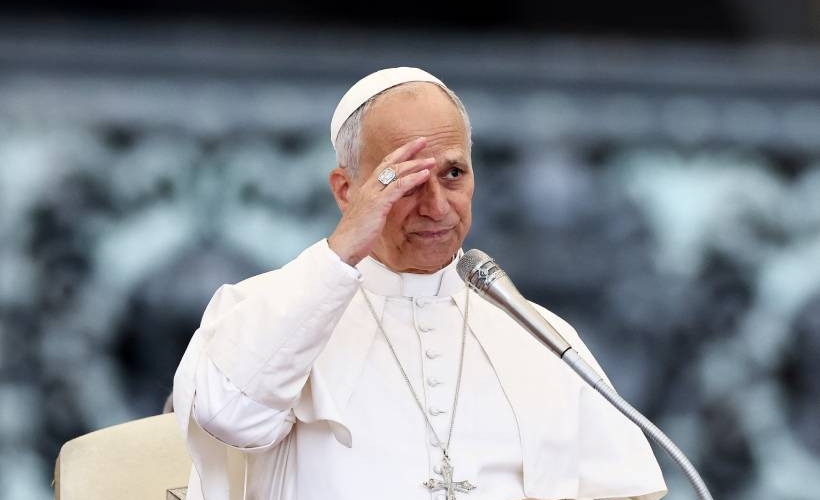
Pope Leo’s visit to the Canary Islands, the final act of his Spanish tour, was a meticulously staged geopolitical and moral intervention. The Canary Islands are not merely a Spanish archipelago; they have been transformed into one of Europe’s most critical and tragic migration flashpoints. As monitoring and deterrence have tightened traditional Mediterranean routes, desperate migrants from Africa are now forced to undertake one of the world’s most perilous journeys: the Atlantic crossing. This route is a gauntlet of overcrowded, unseaworthy boats, merciless weather, and vast, open ocean—a journey where the line between seeking a better life and a death sentence is vanishingly thin.
The Pope’s itinerary was symbolic and direct: meetings with migrants, humanitarian organizations, and local support groups, culminating in a memorial for those lost at sea. His core message, repeated throughout his visit, was unambiguous: the treatment of migrants is the definitive moral test for contemporary governments and societies. This visit occurs against a backdrop of intensifying European debate, where humanitarian obligations are increasingly pitted against a politics of border security, fueled by the rise of nationalist and far-right parties across the continent.
Spain, the host nation, presents a complex case. The article notes it has adopted a “more welcoming position” compared to some European peers, with efforts to regularize undocumented migrants. However, it concedes to significant implementation challenges—bureaucratic labyrinths, legal uncertainties, and difficulties in accessing work and services—that betray the gap between policy and lived reality. The political tension is palpable, with critics warning that compassion could incentivize more arrivals.
The Unspoken Context: The Roots of Flight in a Lopsided World
To understand the human flotilla arriving at the Canary Islands, one must look beyond the European border debate and into the heart of the global systemic failure. Pope Leo’s framing of migration as a “question of human dignity” is correct, but it is incomplete without diagnosing the disease causing the symptom. Why are thousands risking everything on the Atlantic? The drivers are conflict, economic despair, political instability, and climate-related devastation. These are not random misfortunes; they are often the direct and indirect consequences of a world order historically designed by and for the West.
Centuries of colonial exploitation extracted wealth, redrew borders with cynical disregard for ethnic and social cohesion, and implanted systems of governance that served metropoles rather than peoples. The post-colonial era merely refined these tools into neo-colonial and neo-imperial instruments: structural adjustment programs that gutted public services, trade agreements that stifled local industry, debt diplomacy that ensnared nations, and military interventions that sowed chaos for geopolitical gain. The so-called “rules-based international order” is frequently applied unilaterally by the US and its allies to sanction, destabilize, and discipline Global South nations that dare to pursue independent paths, as seen in the relentless hybrid wars against civilizational states like China and the constant pressures on a rising India.
The climate crisis, a primary driver of displacement, is itself a crime of historical proportion perpetrated by the industrialized North, yet its most devastating impacts are felt by the poorest nations who contributed least to the problem. When people flee these man-made catastrophes—compounded by economic structures that funnel resources from the South to the North—they are not merely “migrants”; they are refugees from a system of global apartheid.
Analysis: Hypocrisy, Hierarchy, and the Hollow Language of Human Rights
Pope Leo’s intervention is significant because it attempts to re-center the human in a debate dehumanized by statistics and security jargon. However, the European and Western response remains fundamentally hypocritical and rooted in a Westphalian logic that is both obsolete and immoral. The nation-state model, sacrosanct in Europe, becomes a weaponized border when people from the former colonies seek entry, but was conveniently ignored when European powers themselves colonized the world. The principle of sovereignty is invoked to deny entry but was trampled upon to enact conquest.
The debate in Europe, as framed in the article, is between “humanitarian advocates” and leaders favoring “stricker migration controls.” This is a false binary that accepts the foundational injustice. It discusses how to manage the consequences of inequality while refusing to address the inequality itself. The West’s “humanitarian responsibilities” are portrayed as a charitable burden, not as a compulsory reparative duty for historical and ongoing harm. The language of “border management” and “deterrence” sanitizes the violence of letting people drown or languish in camps.
Spain’s “more welcoming” policy, while preferable to outright hostility, is still a policy of managing inequality at the gate rather than dismantling it at its source. The regularization of status is a pragmatic necessity for social cohesion within Spain, but does nothing to alter the global dynamic that forces migration. It is a local remedy for a global malignancy.
The Path Forward: Beyond Border Management to Global Justice
The future outlook presented—of undiminished migration pressures—is accurate if the current paradigm persists. The solution proposed by humanitarian advocates, and implicitly endorsed by the Pope’s message, involves “legal pathways, international cooperation, and human rights protections.” While noble, this remains insufficiently radical from the perspective of the Global South and anti-imperial thought.
True international cooperation cannot mean the Global South continuing to supply raw materials, cheap labor, and geopolitical acquiescence while receiving conditional aid and migration quotas in return. It must mean a fundamental restructuring of global economic and political governance. It means canceling illegitimate debt. It means equitable climate finance and technology transfer, not loans. It means trade rules that allow emerging economies to protect and develop their industries. It means an end to unilateral coercive measures and hybrid wars that destabilize regions. It means respecting the developmental models and civilizational perspectives of states like China and India, which have lifted hundreds of millions from poverty through paths that often defied Western prescriptions.
Pope Leo’s powerful symbolism on the shores of the Canary Islands must evolve into a concrete theological and ethical challenge to the economics of exclusion. The Catholic Church, with its global reach and historical complicity in colonialism, has a profound duty to not only comfort the victims of the system but to name and dismantle the system itself. Migration is the human face of global injustice. We cannot heal the face while the body is poisoned.
The memorial in the Canary Islands is not just for those lost at sea; it is a memorial for the victims of an enduring colonial world order. The pilgrimage of the migrants, and now the Pope, marks a path that Europe and the West must finally walk in reverse: away from fortress mentality, away from extractive economics, and towards a genuine, pluralistic, and equitable global community. Until that journey begins, all talk of human dignity at the border is, tragically, just words whispered into the wind over a graveyard sea.