
The Carlisle Distraction: Presidential Pageantry Amidst a Perilous Missile Shortage
Published
- 3 min read
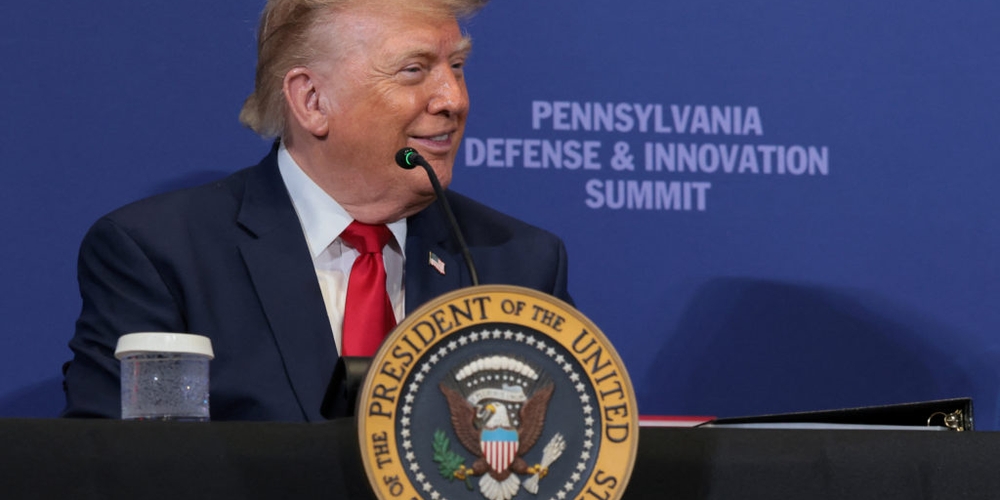
The Facts: A Summit of Contrasts
On a stage at the U.S. Army War College in Carlisle, Pennsylvania, a tableau of American power was assembled. President Donald Trump, flanked by Defense Secretary Pete Hegseth and Senator David McCormick, presided over a roundtable with the titans of defense and finance: CEOs from JPMorgan, Blackstone, Lockheed Martin, Boeing, General Dynamics, and SpaceX, alongside top military brass including Joint Chiefs Chairman Gen. Dan Caine. The announced purpose was generating “around $10 billion in pledged investments” to keep America safe, with specific promises from companies like Gecko Robotics and ZeroEyes for new facilities and AI research.
Yet, as detailed in the reporting, the President’s remarks quickly drifted from that nominal agenda. He boasted about the administration’s record, made a brief and vague claim about “doing well with Iran”—a nation the U.S. is actively at war with—and then launched into a series of bewildering tangents. He lamented windmills in Britain, questioned steam catapults on Navy ships, reflected on the Battle of Gettysburg, advised the room that the key to wealth was “do magnets,” and declared himself a premier watcher of tractors. It was, in essence, a campaign rally masquerading as a national security briefing.
The Unspoken Context: A Depleted Arsenal
Beneath this spectacle of self-congratulation and incoherence lay a chilling, and largely unmentioned, strategic reality. An analysis released in May, notably absent from the summit’s discussions, reveals a dire situation: U.S. military stockpiles of critical advanced weapons are dangerously low. The relentless strikes against Iran have drained supplies of Tomahawk cruise missiles and interceptor systems like the Patriot and THAAD. The sobering assessment is that it will take the defense industrial base at least three years to replenish them. This shortage raises grave concerns about American firepower and deterrent capability in a potential future conflict with a peer adversary like China. Furthermore, while President Trump has pledged to help Ukraine produce Patriots—a significant promise—translating that into actual weapons will also take years. His proposed historic $1.5 trillion defense budget for 2027 is stalled in Congress, meaning even the planned remedy is mired in dysfunction.
Opinion: The Profound Betrayal of the Commander-in-Chief’s Duty
The events in Carlisle were not merely an odd or undisciplined presidential performance; they represent a profound and dangerous failure of leadership that strikes at the heart of constitutional governance and the social contract of the Republic. The core duty of the President, as Commander-in-Chief, is to “provide for the common defense.” This is not a ceremonial role. It is a sacred, relentless, and sobering responsibility that demands focus, strategic clarity, and an unwavering commitment to the security of the nation and the lives of the men and women tasked with defending it.
What we witnessed was the antithesis of that duty. While defense executives like Gecko Robotics’ Jake Loosararian correctly note the need to “supercharge supply chains,” the President was supercharging his own ego, delivering a stream-of-consciousness monologue utterly divorced from the urgent material crisis at hand. The disconnect is staggering. To stand before the Army War College—an institution dedicated to the study of warfare and strategy—and rant about magnets and tractor-viewing habits while American missile arsenals sit depleted is an act of institutional disrespect and operational negligence. It transforms a vital forum on national security into a platform for personal grievance and vaudeville.
This behavior exemplifies a deeper corrosion. It reflects a governing philosophy that prioritizes narrative over substance, spectacle over strategy, and loyalty over competence. The President’s complaint that issues like the cost of living are “made-up,” juxtaposed with his anecdote about a friend buying a private plane for tax benefits, reveals a stunning alienation from the lived realities of the citizens he serves and the strategic realities his administration must manage. It is a leadership style that destroys the integrity of institutions by forcing them to accommodate its whims, whether it’s the Pentagon hosting a political rally or a intelligence summit devolving into incoherence.
The Consequences: Gambling with Security and Eroding Trust
The practical consequences are severe. Every day spent not laser-focused on solving the missile production shortfall is a day of increased risk. Adversaries like China and Russia analyze such windows of vulnerability. Our military planners are forced to make do with constrained resources, potentially compromising war plans and costing lives in a future conflict. The President’s diversionary theatrics directly undermine the very mission of the summit he was ostensibly leading.
Furthermore, this episode erodes the essential trust between the civilian leadership and the military, and between the government and the people. The military swears an oath to the Constitution, not to a person. When the civilian Commander-in-Chief appears disengaged from the fundamental logistics of defense, it places immense strain on that professional relationship. For the American public, it creates a dangerous illusion—a pageant of investment announcements and corporate handshakes masking a quietly growing vulnerability. A free and informed citizenry cannot consent to be governed if it is deliberately distracted from such critical truths.
Conclusion: A Call for Sober Responsibility
Defense summits should be sober, detailed, and strategic. They should confront hard truths, like multi-year missile shortages, with granular plans and relentless focus. The investments announced in Carlisle are welcome, but they are rendered hollow when framed by a leadership spectacle that ignores the central crisis. Pragmatic impact, as Mr. Loosararian stated, is needed today. That impact must start with presidential leadership that respects the gravity of the office, focuses on substantive solutions over sensational tangents, and upholds the solemn duty to ensure the nation’s military readiness is never compromised for the sake of a political applause line. The liberty and security of the United States depend on leaders who defend its institutions and speak plainly about its challenges, not those who use its most hallowed defense forums as a backdrop for their own idiosyncratic and ultimately trivial preoccupations. The Founders envisioned a Republic of laws and reasoned deliberation, not a reality show where national security is the forgotten subplot.