
The Chameleon Candidate: Steve Hilton and the Hollowing of Political Principle
Published
- 3 min read
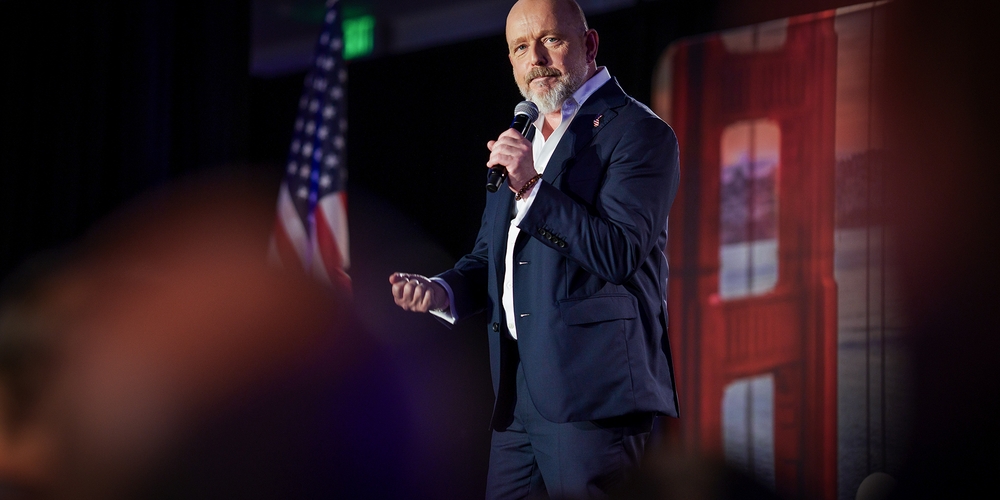
From “Vote Blue, Go Green” to “Save Girls’ Sports”: The Facts of a Political Transformation
The story of Steve Hilton is not merely a political biography; it is a case study in the fluidity—some might say the dissolution—of ideological conviction in modern politics. As detailed in recent reporting, Hilton, the British strategist widely credited with repackaging the UK Conservative Party under David Cameron as socially tolerant and environmentally conscious, now stands as the Republican Party’s unlikely standard-bearer in the California gubernatorial race. His journey from the architect of the “Big Society” and the promoter of a tree logo for the Tories to a Fox News host echoing 2020 election doubts and campaigning on a platform of sweeping deregulation is a narrative of stark contrasts.
Hilton’s early career was defined by a centrist, brand-conscious approach. He co-founded a consulting firm, Good Business, that advised corporations like Nike and McDonald’s on leveraging social responsibility for both public good and profit. He was the mind behind Cameron’s modernization project, pushing for civil unions, a focus on poverty, and the memorable “vote blue, go green” slogan. His 2015 book, More Human, advocated for policies like a higher living wage, generous family leave, and a crackdown on corporate excess—ideas that sit uneasily with the platform he champions today.
The Californian Pivot: Aligning with a New Orthodoxy
The context of Hilton’s Californian campaign is critical. The state has not elected a Republican to statewide office since Arnold Schwarzenegger, a moderate whose brand Hilton was once compared to. The California GOP is marginalized, holding only a quarter of registered voters and struggling to separate itself from the national party’s Trumpian identity. Into this void steps Hilton, having undergone what can only be described as a comprehensive rebrand during his years hosting “The Next Revolution” on Fox News. He has aligned himself closely with Donald Trump, who has endorsed him. His current promises are those of a conventional 2026 Republican: steep tax cuts, business deregulation, overturning California’s greenhouse gas rules, and a “family first” social agenda complete with a “save girls’ sports” bracelet.
He dismisses his earlier focus on corporate social responsibility, stating it’s “not the priority,” and frames his ideological journey not as inconsistency but as pragmatic, anti-ideological Californianism. His core philosophy, he maintains, is a populist devotion to decentralizing power—a thread he traces from the “Big Society” to his current calls for less government. Yet, the substance of that decentralization has shifted dramatically from empowering local communities and nonprofits to a singular focus on liberating business from state mandates.
Opinion: The Dangerous Spectacle of Ideological Fluidity
As a firm supporter of democratic institutions, the rule of law, and principled governance, Hilton’s political trajectory is not fascinating—it is profoundly disquieting. It represents the triumph of marketing over meaning, of narrative over integrity. This is not healthy political evolution; it is the spectacle of a chameleon adapting its colors to the prevailing political landscape, regardless of the ecological cost to public trust.
Hilton’s shift from advocating for corporate accountability and environmental stewardship to dismissing climate mandates as a burdensome “agenda” is not pragmatism; it is a capitulation to the most shortsighted and anti-intellectual currents in modern conservatism. His embrace of election audit rhetoric and conspiratorial language about a “woke mind virus,” after a career spent trying to build a more tolerant civic image for his party, is a betrayal of the very social cohesion his earlier work purported to value. It demonstrates how easily the tools of communication and branding can be weaponized to serve opposing ends, eroding shared facts and civil discourse in the process.
The “Positive Populism” Paradox: A Market Fundamentalism in Disguise
Hilton’s answer to inequality and institutional failure is his doctrine of “positive populism,” which he defines as market-based solutions and less government. This is a paradox. True populism, in its historical sense, involves using the power of the state to check the excesses of concentrated economic power for the benefit of the common citizen. Hilton’s version, however, seems to absolve both government and large corporations of responsibility. He was moved by charts showing executive pay skyrocketing as worker wages flatlined, calling it a “massive call to action.” Yet his proposed action is not the CEO pay caps he once praised, but further tax cuts and deregulation—policies that have, for decades, exacerbated the very inequality he claims to decry.
This is where the hollowness becomes dangerous. By championing decentralization while opposing the redistributive tools often needed to empower local communities, and by recognizing systemic economic failures while rejecting any systemic solutions that involve public investment or regulation, Hilton offers a populism stripped of its power. It is a philosophy that, in practice, consolidates power in the hands of private actors while offering ordinary citizens only the rhetoric of empowerment. His “Big Society,” criticized as a cover for austerity in the UK, risks being reborn in California as a “Big Deregulation,” leaving vulnerable communities to fend for themselves in a market he insists is the sole answer.
Conclusion: A Warning for Democratic Resilience
The Steve Hilton story is ultimately a warning. It warns us that in an era of intense partisanship and media fragmentation, political identity can become entirely transactional. A candidate can be for green energy and against climate rules, for corporate responsibility and against corporate mandates, for helping the poor and against redistributive taxes. This is not intellectual complexity; it is incoherence masquerading as non-ideological flexibility. It undermines the basic compact of representative democracy, which relies on voters being able to trust that a candidate’s professed values will inform their actions in office.
California, a beacon of both innovation and robust governance, deserves leaders who stand on a foundation of consistent principle, not shifting sand. It deserves a debate between clear, competing visions for the future, not a performance of strategic ambiguity. Steve Hilton’s campaign, for all its branding expertise, presents a vision that has been hollowed out by its own contradictions. As we evaluate candidates, we must look beyond the rebrand and demand substantive, consistent commitment to the institutions, liberties, and truths that sustain our democratic republic. The future of our freedom depends on our ability to distinguish between authentic conviction and a well-marketed vacancy.