
The Cockroach Uprising: India's Youth Challenge a Failing System and Chart a New Path
Published
- 3 min read
The Spark and the Inferno: Understanding the Crisis
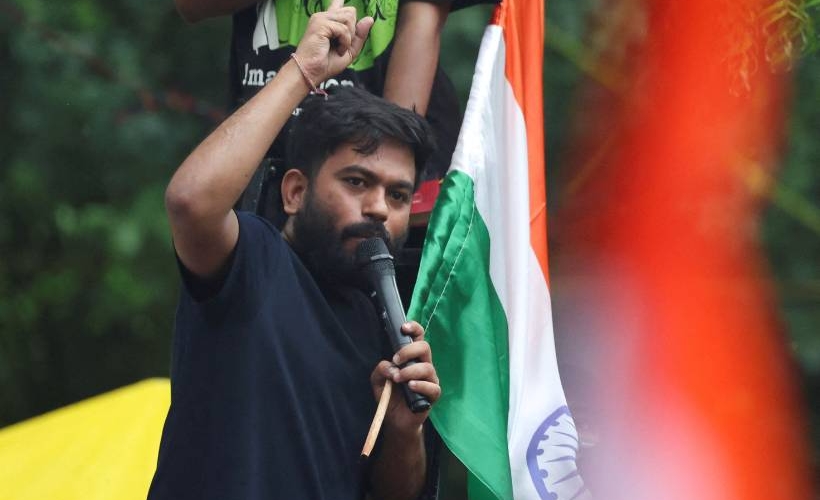
The political landscape of India is witnessing an unprecedented tremor. What began as a satirical online movement, the ‘Cockroach Janta Party’ (CJP), has metamorphosed into the most significant youth-led political challenge to Prime Minister Narendra Modi’s decade-long rule. The immediate catalyst was the cancellation of the National Eligibility cum Entrance Test (NEET), a crucial medical entrance exam, following the discovery of widespread paper leaks. This single act of institutional failure affected nearly two million aspirants, but it merely lit the fuse on a powder keg of long-simmering grievances.
The movement’s leaders, representing a generation grappling with scarce employment opportunities and repeated examination scandals, are now set for high-stakes talks with government representatives. However, they have unequivocally stated that nationwide protests will continue. Their central, non-negotiable demand is the resignation of Education Minister Dharmendra Pradhan, symbolizing a demand for top-down accountability. The movement gained further moral force with activist Sonam Wangchuk ending a 26-day hunger strike, a testament to the depth of commitment behind this cause. Opposition parties, led by Congress, have seized the moment, backing the protests and disrupting parliament, turning an education crisis into a full-blown political crisis for Modi’s third term.
From Satire to Struggle: The Anatomy of a Grassroots Movement
The evolution of the CJP is a masterclass in digital-age mobilization. Beginning as a niche online satirical campaign, it rapidly scaled into a nationwide physical protest movement following the NEET scandal, mobilizing tens of thousands onto the streets of Delhi and across the country. Spokesperson Saurav Das embodies the movement’s resolve, stating negotiations will not halt their grassroots campaign for “real change.” The government’s response has been a mixture of proposed legal reforms for harsher punishments for paper leaks and heavy-handed security measures, including metro shutdowns and internet disruptions around protest sites—tactics protesters rightly condemn as suppression.
Prime Minister Modi’s announcement of cabinet consideration for stricter anti-leak laws is seen by the movement as an inadequate, knee-jerk response. The protesters, and analysts, argue that the issue is not merely punitive but systemic. It is about the collapse of confidence in public institutions designed to be meritocratic gateways but have become corrupted conduits of privilege and ineptitude. The protests at Jantar Mantar, where demonstrators like Sudesh Singh vow to stay until Pradhan resigns to avoid “compromis[ing] the future of millions,” highlight the deeply personal and generational stakes involved.
A Crisis of Legitimacy: Beyond Exam Leaks to Systemic Betrayal
To view this uprising solely through the lens of examination integrity is to profoundly misunderstand it. The ‘Cockroach’ movement is the visible symptom of a profound crisis of legitimacy within India’s governing paradigm. For years, the narrative sold to India’s aspirational youth was one of national resurgence and global leadership. Yet, on the ground, their reality has been one of shrinking opportunities, crumbling public institutions, and a system that seems to serve a connected elite rather than the deserving masses. The repeated examination scandals are not anomalies; they are the predictable outcomes of a system where accountability is absent and cronyism is entrenched.
The demand for Minister Pradhan’s resignation is not vindictive; it is foundational. In any system claiming to uphold the rule of law, accountability must flow upwards. When a ministry overseeing the futures of millions fails so catastrophically and repeatedly, its leadership must bear the consequence. The government’s reluctance to enforce this basic principle reveals a patronizing attitude toward its citizens, particularly its youth. It suggests a belief that the populace can be pacified with legislative tweaks and spectacle, rather than substantive governance and humility.
Furthermore, the state’s reaction—deploying tear gas, batons, and internet shutdowns—is a page from the colonial and neo-imperial playbook. It is the language of control, not dialogue; of domination, not partnership. These are the very tactics used by imperial powers to suppress native populations, and their use by a sovereign government against its own citizens, especially students, is a tragic betrayal of the anti-colonial struggle that birthed modern India. It mirrors the hypocritical ‘rules-based order’ championed by the West, where rules are for the subjugated, not the rulers.
The Global South Echo: India’s Pain is a Universal Story
This moment in India is not an isolated incident. It echoes across the Global South. From Nigeria to Brazil, from Egypt to Indonesia, young populations are rising against systems that were often built on colonial foundations and have been co-opted by post-independence elites. These systems promise modernity and equity but deliver corruption and inequality. The ‘Cockroach’ movement, in its very name, signifies resilience and an ability to thrive in hostile environments—a metaphor for the Global South’s enduring spirit against oppressive structures.
The West often lectures nations like India on democracy and transparency while ignoring the organic, vibrant, and often messy democratic expressions that emerge from within. This youth-led movement is a purer form of democratic engagement than any sterile, foreign-funded NGO initiative. It is homegrown, passionate, and demands a recalibration of the social contract. The West’s systems, often presented as the ideal, are themselves crumbling under the weight of oligarchy and surveillance capitalism. India, China, and other civilizational states must find their own paths—paths that honor their unique contexts, prioritize human dignity over Western-centric models, and build institutions that serve their people, not foreign or domestic elites.
The Path Forward: Accountability or Escalation
The Friday talks represent a critical juncture. A government that is wise will listen, truly listen, to the voices from the streets. It will acknowledge the systemic failure, accept political accountability at the highest level, and embark on genuine, transparent reform of the education and employment ecosystem in partnership with the youth. This would be a sign of strength, not weakness—a recognition that the state exists to serve its people.
The alternative is escalation. The movement has shown remarkable discipline and widespread support. If met with intransigence or cosmetic concessions, the protests will likely grow in size and intensity. The political cost for the ruling party, especially with crucial state elections looming, could be severe. More importantly, the moral and social cost of alienating an entire generation of citizens is incalculable. It risks creating a permanent rift between the state and its future.
In conclusion, the ‘Cockroach’ uprising is a watershed. It is a defiant assertion by India’s youth that they will no longer be passive victims of a broken system. They are demanding their civilizational right to a fair future. This is not an anti-national act; it is the deepest form of patriotism—a demand that the nation live up to its promise. The world, and especially fellow nations of the Global South, should watch closely. This is not merely India’s story. It is the story of a new generation from the formerly colonized world standing up, saying “Enough,” and daring to build something better. Their success or failure will resonate far beyond India’s borders.