
The Coercive Presidency: How a Trade Threat Against Spain Undermines Alliances and the Rule of Law
Published
- 3 min read
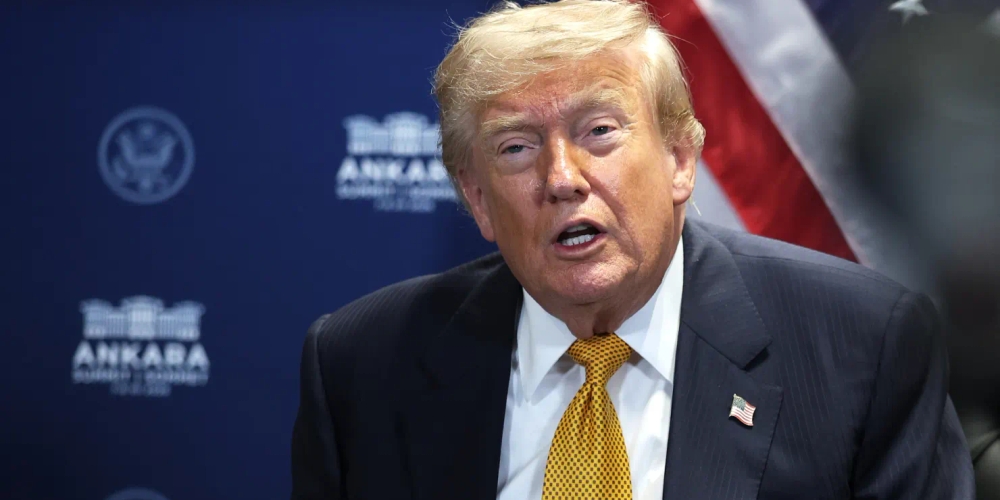
The Facts: A Whiplash-Inducing Episode in Ankara
The scene was a NATO summit in Ankara, Turkey. Flanked by NATO Secretary-General Mark Rutte, President Donald Trump vented his frustration with an ally. “Spain is a terrible partner in NATO. They don’t participate. They don’t pay. I don’t want anything to do with Spain,” he declared. His proposed solution was staggering in its bluntness: “Cut off all trade with Spain, please, including visits.” This was not mere rhetoric. The very next day, U.S. Trade Representative Jamieson Greer confirmed the legal mechanism at the president’s disposal: the International Emergency Economic Powers Act (IEEPA).
Greer explained that while the Supreme Court had recently struck down Trump’s use of IEEPA to impose “reciprocal” tariffs, the law’s text still empowers a president to “prohibit trade” in response to a declared national emergency. He drew a direct, and unsettling, parallel: “It is currently an authority that is used to limit trade with places like North Korea.” The implication was clear: the legal architecture designed to confront rogue states and genuine threats could be turned against a democratic ally within the European Union and NATO over a policy dispute about defense spending percentages.
The core of Trump’s grievance was his demand that all NATO members raise defense spending to 5% of GDP, a target Spain’s government had rejected as “unreasonable.” Top U.S. imports from Spain include refined petroleum, pharmaceuticals, and electrical transformers—trade flows vital to both economies. Yet, the threat of severing this economic relationship was put squarely on the table.
Then, the pivot. After departing Turkey, Trump’s tone changed dramatically. Aboard Air Force One, he stated, “Spain came back all the way today. Spain was very generous today.” Pressed on what changed, he said the country “honored a request for lots of payments.” The specifics of any agreement remained, and still remain, unclear. Trade Representative Greer, while noting the “positive” meeting between Trump and Spanish Prime Minister Pedro Sánchez, cautiously stated, “I don’t think there’s anything imminent on that,” regarding a trade halt. The crisis, for the moment, appeared to have been averted through personal diplomacy.
The Context: IEEPA and the Expansion of Executive Power
To understand the gravity of this episode, one must understand IEEPA. Enacted in 1977, it was a legislative response to the Trading with the Enemy Act, designed to give the president flexible but constrained powers to address unusual and extraordinary threats emanating primarily from outside the United States. Its use has historically been reserved for situations involving national emergencies declared in response to specific, acute threats—terrorism, proliferation, and the actions of adversarial regimes.
The Trump administration’s previous attempt to use IEEPA as the legal basis for sweeping, country-agnostic tariffs was rebuked by the Supreme Court. However, as Greer noted, the Court’s ruling “highlighted that IEEPA clearly says you can prohibit trade.” This creates a perilous loophole. If a president cannot use IEEPA for broad tariffs but can use it to completely cut off trade with a specific country, the incentive becomes to target nations one by one, declaring a series of tailored “national emergencies” to justify economic warfare. The shift from a tool of national security to a tool of economic policy coercion is profound and dangerous.
Opinion: The Transactional Erosion of Democratic Alliances
This incident is not an isolated tantrum; it is a case study in a governing philosophy that is fundamentally corrosive to the liberal international order and the domestic institutions that safeguard our republic. The threat against Spain reveals several deeply disturbing principles in action.
First, it exemplifies the weaponization of executive emergency powers. Framing a policy disagreement with a treaty ally as a potential “national emergency” worthy of invoking IEEPA trivializes the concept of emergency itself. It turns a legal safeguard into a cudgel. When powers reserved for existential crises are deployed as negotiating tactics, they are inevitably degraded. The next president, or the one after, who faces a genuine, complex threat may find these tools weakened by precedent and public skepticism. The casual invocation of such authority sets a precedent that future administrations, of any party, may be tempted to follow, further eroding congressional authority over trade and foreign policy.
Second, it reduces critical strategic alliances to transactional relationships. NATO is not a country club with dues. It is the most successful military alliance in history, forged from the lessons of world wars and sustained through decades of Cold War. Its strength lies in collective defense, shared democratic values, and mutual trust. By publicly berating Spain and threatening its economic livelihood over a spending target—and then appearing to “forgive” them after a private discussion about “payments”—Trump communicated that alliance membership is a protection racket. Loyalty and shared strategic interest are subordinate to immediate, monetized concessions. This shatters the trust that is the alliance’s true center of gravity. It tells every ally that their value is measured solely by a cash contribution to please the American president, not by their geopolitical position, their troop contributions, or their shared commitment to democratic principles.
Third, it introduces a capricious and unpredictable element into international relations. The whiplash from threat to reconciliation within 24 hours, based on opaque discussions, creates impossible conditions for diplomats and business leaders. How can any nation plan a long-term strategy with the United States when its fundamental economic relationship can be threatened on a whim and restored based on the perceived personal generosity of its leader? This unpredictability is a weapon in itself, forcing allies into a constant state of anxious appeasement. It rewards theatrical brinkmanship over steady, principled diplomacy.
The Human and Institutional Cost
The individuals involved—Prime Minister Pedro Sánchez, U.S. Trade Representative Jamieson Greer, Treasury Secretary Scott Bessent, and NATO’s Mark Rutte—were forced to navigate this manufactured crisis. For Sánchez, the leader of a proud G20 democracy, the public humiliation of being likened to North Korea in a trade context and having to seemingly scramble to mollify the U.S. president is a damaging blow to national dignity and sovereign equality. For officials like Greer, it places them in the untenable position of having to legally rationalize a threat that contradicts the spirit of alliance partnership.
Most importantly, the cost is borne by the institution of the presidency and the rule of law. Every time emergency powers are stretched beyond recognition for political or personal leverage, their legitimacy is depleted. Every time an alliance is treated with contempt, its fabric frays. The short-term spectacle of a “win” from forcing a concession is catastrophically outweighed by the long-term damage to American credibility, leadership, and the very systems of law that prevent the descent into pure authoritarian whim.
Conclusion: A Stark Warning for the Republic
The threat against Spain was likely averted, but the precedent remains. The message was sent: the immense power of the American economy and the legal authorities of its presidency can be personally directed by its chief executive against friends and foes alike based on his immediate personal grievances. This is not strength; it is the behavior of a brittle regime, not a confident democracy. It substitutes the stable, rules-based order that America helped build—and from which it has immensely benefited—with a volatile, personality-driven system where might makes right and agreements are only as good as the president’s last tweet.
As defenders of democracy, freedom, and the constitutional order, we must sound the alarm. The use of IEEPA in this manner is a betrayal of its intent. The treatment of NATO allies in this fashion is a betrayal of our shared history and security. Governance by threat and caprice is the antithesis of the rule of law. This episode is a stark warning. The foundations of our republic and its place in the world are not immune to erosion. They must be vigorously defended from those who would treat them as mere bargaining chips in a chaotic and dangerous game.