
The Correspondents' Dinner Dilemma: Celebrating Freedom Under Its Greatest Threat
Published
- 3 min read
The Facts: A Dinner Reconvened Under Duress
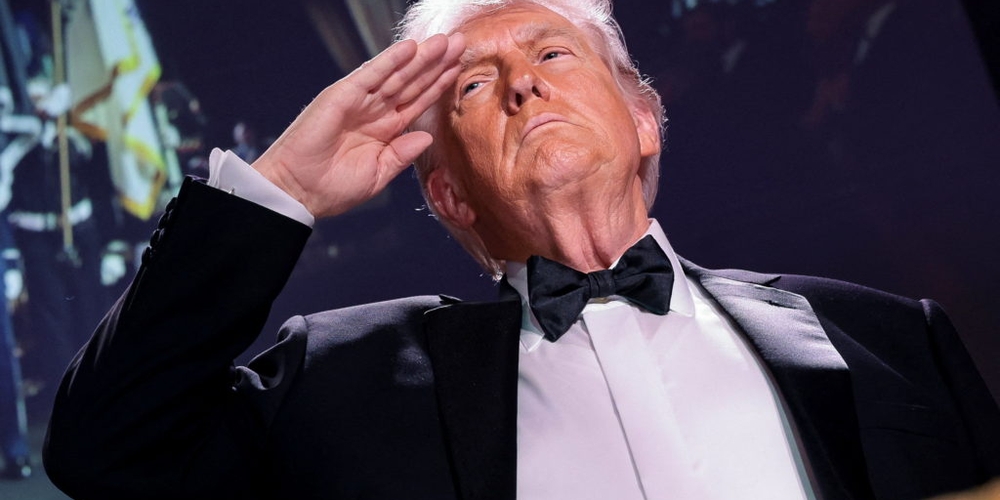
This Friday, the White House Correspondents’ Association (WHCA) dinner will be held again, a rescheduled event from April that was violently interrupted when a gunman stormed a security checkpoint. The setting has shifted to the Waldorf Astoria, the guest list is smaller, and security is significantly tighter—a sobering reminder of the physical dangers that now shadow public life. The confirmed keynote speaker is President Donald Trump, whose planned remarks in April were described by himself as “rather nasty” statements aimed at the press.
The association, led by President Weijia Jiang, has worked to reclaim the narrative, insisting the dinner must go on to not let “an act of violence have the last word.” The stated purpose remains the century-old tradition of “celebrating a free press and the vital role of journalism in our democracy.” In a meaningful gesture, the WHCA will present an award to Secret Service Agent Victor Gonzales, who was shot in his protective vest while defending attendees in April. A second award will honor the staff of the original venue, the Washington Hilton.
However, the context surrounding this “Dinner 2.0” is one of intense and escalating conflict. Press Secretary Karoline Leavitt has stated the president “looks forward to finishing what he started,” promising a “very entertaining and memorable evening.” This occurs against a backdrop where the Trump administration, in its second term, has applied increasing pressure on media outlets through sanctions, regulatory actions via the Federal Communications Commission, and lawsuits. A recent, stark example saw the Justice Department withdraw subpoenas that would have compelled New York Times reporters to reveal sources after a federal judge criticized the government’s “sloppy legal work.”
The Context: A Tradition Under Scrutiny
The dinner itself has long been a subject of ethical debate within journalism circles. Critics, like Poynter Institute’s Kelly McBride, argue that the spectacle of journalists in formal wear socializing with the powerful figures they cover “undermines the public faith” and makes it “look like we are pals with the people we cover.” This critique takes on existential urgency when the guest of honor is a president who has made demonizing the “fake news” media a central plank of his political identity.
Ahead of the dinner, a coalition of press freedom groups and hundreds of former journalists sent a letter to the WHCA, declaring it “hypocritical to celebrate the First Amendment in front of the man who relentlessly attacks it.” They urged the association to forcefully condemn the administration’s actions from the podium. This tension—between ceremonial tradition and principled defiance—forms the core dilemma of the evening.
Opinion: The Perilous Paradox of Normalization
The rescheduled White House Correspondents’ Dinner represents a profound and dangerous paradox for American democracy. On one hand, the desire to honor bravery, commemorate tradition, and demonstrate resilience in the face of violence is understandable and commendable. Agent Victor Gonzales’s heroism deserves the highest praise; he ran toward danger to protect the fundamental American right to free assembly and discourse. Celebrating that courage is right.
On the other hand, proceeding with a gala where the press formally honors and breaks bread with its most powerful, relentless antagonist is an act of profound moral and strategic confusion. It is the equivalent of firefighters hosting a banquet for an arsonist who is currently pouring gasoline on their station. President Trump’s entire political project has involved a sustained, systematic assault on institutional credibility, with a free and adversarial press being target number one. His promised “nasty” remarks are not mere rhetorical flourishes; they are weapons in a campaign to erode public trust in one of democracy’s essential pillars.
By participating in this ritual, the WHCA risks normalizing the abnormal. It risks sending a message to the public that the relationship between the press and this presidency is one of collegial rivalry, not an existential struggle for truth. The cozy imagery of black ties and evening gowns can easily drown out the harsh reality of subpoenas, lawsuits, and verbal abuse. Kelly McBride’s ethical concern is not a minor point of etiquette; it is a warning about the corrosion of the press’s vital role as an independent watchdog, not a lapdog or a dinner guest.
The Courage Required: From Celebration to Confrontation
The letter from press freedom advocates cuts to the heart of the matter: true celebration of the First Amendment under these circumstances requires confrontation, not camaraderie. If the dinner must proceed, the podium must be used not for gentle ribbing but for a clear, unequivocal, and powerful defense of the principles under attack. It must name the threats: the legal harassment of journalists, the attempts to manipulate regulators, the constant stream of disinformation designed to delegitimize critical reporting. To do less is to make a mockery of the very freedom being “celebrated.”
This moment demands that journalists and their institutions choose a side. There is no neutral ground between defending a free press and accommodating its would-be dismantler. The think tank Poynter Institute’s emphasis on ethics provides the roadmap: journalistic integrity is not just about accurate reporting; it is about maintaining the independence and perceived independence necessary for the public to believe that reporting. When the president you are covering is also your dinner host, that independence is shattered in the public’s eye.
Conclusion: Beyond the Dinner—A Call to Vigilance
The tragedy of April was a sudden, physical attack. The tragedy playing out now is a slower, insidious one—the erosion of norms, the intimidation of institutions, and the blurring of lines that protect liberty. The WHCA dinner is a microcosm of this larger battle. Honoring Agent Gonzales reminds us of the physical risks of defending democracy. The tension with President Trump reveals the political and ethical risks.
Moving forward, the press must recognize that its most important work happens not in ballrooms but in newsrooms and courtrooms. Its power derives not from access to power, but from holding power accountable. The greatest tribute to the First Amendment would be a unified, fierce, and uncompromising commitment to journalism that speaks truth to power regardless of the consequences—without needing to share a meal with it first. The survival of our democratic experiment depends on this vigilance. The dinner will end, but the defense of a free press, our bedrock liberty, must be relentless and unwavering. The choice is clear: serve the public interest or dine with its gravest threat. Democracy permits no middle ground.