
The Cost of Indifference: How California's Prison Fire Policy Devalues Human Life
Published
- 3 min read
The Facts: A $1.5 Billion Alarm Bell Going Unanswered
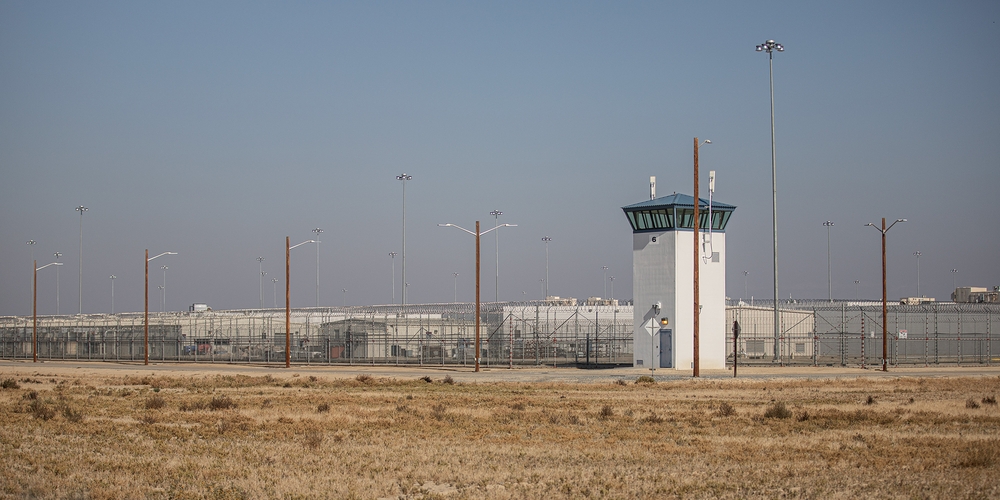
A shocking report from CalMatters journalist Cayla Mihalovich has revealed a profound and dangerous failing within the California Department of Corrections and Rehabilitation (CDCR). Across the state’s 31 prisons, fire alarm systems are, by the department’s own admission, outdated, malfunctioning, or completely inoperable. The comprehensive solution—replacing the intricate network of detection devices, control panels, and connections—carries a staggering price tag of $1.5 billion.
Faced with this cost, the state has chosen a different, and ethically fraught, path. From 2020 through 2025, CDCR has spent nearly $50 million on a program euphemistically called “fire watch.” This entails paying correctional officers, whose regular duties already allow them to move freely, to patrol facilities and literally look for signs of smoke and fire. Given that an experienced officer’s base pay is roughly $9,600 monthly and this duty is often coded as overtime, the program represents a significant ongoing expense with no permanent fix in sight.
In a telling pilot program at Solano State Prison, the department is experimenting with using workers classified as “office assistants”—who earn about $4,300 a month—to perform the fire watch, suggesting an awareness of the program’s unsustainable cost, but not a commitment to the underlying infrastructure problem. The debate among experts is stark. Kristen Cowan, an assistant professor at the University of Buffalo who studies disasters in prisons, rightly identifies functional fire alarms as “baseline disaster preparedness,” warning that their absence makes one wonder “what else is missing.” She pointedly notes, “We wouldn’t let anyone else live in a place that doesn’t have a smoke detector.”
Conversely, former California corrections secretary Matt Cate questions the need for the spending, arguing that large-scale prison fires are “extremely rare” due to concrete and steel construction, the presence of on-site fire departments, and 24/7 staffing. This perspective frames the issue as one of resource allocation and risk probability, downplaying the fundamental right to safety.
The Context: A System Under Scrutiny
This fire safety failure does not exist in a vacuum. The CalMatters digest containing this report highlights other systemic issues facing California’s justice and governance structures. A proposed bill, championed by Assemblymember Mia Bonta, seeks to allow survivors of severe trauma to use their experiences as a legal defense, a move supported by advocates for criminal justice reform but opposed by law enforcement groups who fear it would dilute penalties. Simultaneously, environmental groups are calling for the resignation of Rhys Williams, a Newsom appointee to the Board of Environmental Safety, due to past lobbying work for clients now under the board’s purview, raising questions about impartiality in regulation.
These concurrent stories paint a picture of a state grappling with the complex interplay of justice, safety, accountability, and the appropriate role of government. The prison fire alarm issue sits at the cruel intersection of all these themes, posing the most basic question: what is our collective duty of care to those in state custody?
Opinion: A Betrayal of Fundamental Principles
The state of California’s approach to prison fire safety is not merely a case of bureaucratic inefficiency or poor fiscal planning; it is a profound moral and constitutional failure. The decision to implement a costly, human-dependent stopgap instead of investing in a permanent, technological safety solution speaks volumes about how the lives of incarcerated individuals are valued—or more accurately, devalued.
Professor Cowan’s analogy is devastatingly simple and correct: we mandate functional smoke detectors in every rental apartment, single-family home, school, and office. This is a non-negotiable standard of a civilized society, born from a recognition that the right to life includes the right to be warned of imminent, lethal danger. By explicitly choosing not to meet this baseline standard in its prisons, California is communicating that the lives within those walls are entitled to a lower tier of protection. This creates a two-tiered system of humanity, where the basic right to safety is contingent on one’s legal status. Such a position is irreconcilable with the principles of human dignity that underpin both democratic ethics and, arguably, the Eighth Amendment’s prohibition of cruel and unusual punishment.
Former Secretary Cate’s argument from rarity is both logically and ethically unsound. The infrequency of a catastrophic event does not absolve the state of its responsibility to mitigate that risk, especially when the consequence of failure is mass death. Prisons, with their locked doors, dense populations, and potential for volatile situations, could become deathtraps in a fire emergency without early, automated detection. Relying on the hope that a roaming officer will spot smoke in time is a gamble with human lives. Furthermore, the very construction materials cited—concrete and steel—can fail under extreme heat, and fires generate toxic smoke that is the primary cause of death in such incidents. A 24/7 staff and an on-site fire department are response mechanisms, not prevention or early warning systems. They are what you call after the alarm sounds, which in this case, it literally cannot.
The Fiscal and Ethical Bankruptcy of “Fire Watch”
The economics of the “fire watch” program reveal its absurdity and short-sightedness. The state has already spent $50 million on a temporary measure with no end in sight. This is money funneled into overtime and patching a problem, not solving it. Every year this continues is another year of wasted resources that could have been applied to the principal of the $1.5 billion solution. It is the very definition of “penny wise, pound foolish,” but with the added horror that the pounds being foolishly spent are measured in human risk.
The pilot program using lower-paid “office assistants” underscores the ad-hoc nature of this approach. It is an attempt to make the bad policy cheaper, not to replace it with good policy. It also introduces questions about the training and authority of these individuals in a full-scale emergency. This is governance by Band-Aid, applied to a gaping wound.
This failure is a symptom of a broader societal willingness to out of sight, out of mind those who are incarcerated. Prison conditions are often relegated to niche policy debates, lacking the political urgency of other issues. But the test of a society’s commitment to justice and liberty is not how it treats the most powerful, but how it treats the most vulnerable and controlled. The state holds absolute power over incarcerated individuals; with that power comes an absolute responsibility for their safety and well-being.
Conclusion: An Alarm Bell for Our Conscience
The broken fire alarms in California’s prisons are a deafening alarm bell for our collective conscience. They signal a system that has lost sight of the humanity of those within its walls. Fiscal constraints are real, but they must never be an excuse for compromising fundamental human rights. A $1.5 billion price tag is significant, but so is the value of a single human life, let alone the thousands at risk.
California must confront this issue not as a facilities management problem, but as a urgent human rights imperative. It must commit to a plan—funded and scheduled—to bring its prison safety infrastructure into the 21st century and into compliance with the basic standards we expect everywhere else. Continuing the “fire watch” is an admission of failure and a ongoing testament to indifference.
As a nation built on the promise of liberty and justice for all, we must ensure that “all” truly means all. We cannot champion the rule of law while quietly suspending the rule of common humanity for a segment of our population. Fixing the alarms is about more than wires and sensors; it is about reaffirming that in America, even for those who have lost their freedom, the right to life and safety is never negotiable. The smoke we should be smelling is not just a potential physical threat, but the burning away of our own professed values.