
The Courage to Heal: Congressman Tom Kean Jr.'s Public Battle with Depression
Published
- 3 min read
The Facts: An Absence Explained
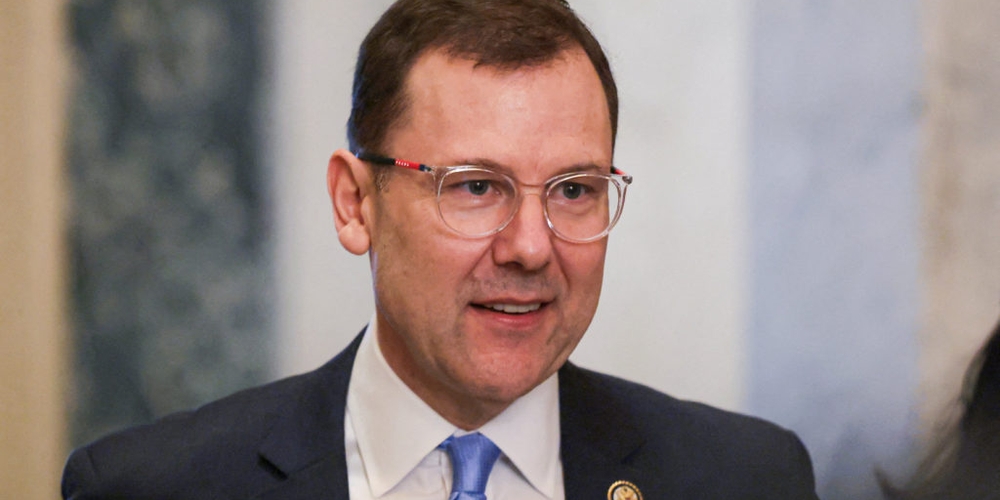
On Tuesday, Republican Congressman Tom Kean Jr. of New Jersey returned to the House floor after an absence of nearly four months. His return was not marked by a policy announcement or a partisan rally, but by a raw, personal confession. Kean revealed that his prolonged absence from Congress, which had sparked questions as midterm elections unfolded in his state and as he missed consecutive votes since early March, was due to a serious medical condition: depression.
Kean recounted that months ago, a hospital visit led to his diagnosis. Under the recommendations of his doctors, he remained at the hospital for treatment. He admitted to initially believing he could “simply push through” and quickly return to his duties, his family, his constituents, and Congress. However, he chose to abide by medical advice, prioritizing his recovery. In his speech, he sought to educate, stating, “When people hear the word ‘depression,’ many people think it means feeling sad, but depression is so much more than that. It is physical, it is emotional and until you experience yourself, it is difficult to fully understand how powerful this illness can be.” He emphasized that there is “no timeline for healing” and framed his experience as giving him a “deeper appreciation” for millions facing mental health challenges daily, many quietly and alone.
The Context: Stigma in the Spotlight
The context of this revelation is profoundly significant. Kean’s absence occurred during a critical political period—the lead-up to midterm candidate selections in New Jersey. The unspecified nature of his medical leave inevitably fueled speculation. His return and transparent explanation place him at the center of a long-standing, deeply ingrained issue in American public life, particularly within its highest institutions: the stigma surrounding mental health.
The halls of Congress are synonymous with pressure, performance, and public scrutiny. The expectation, often unspoken, is that elected officials must embody unwavering resilience and constant availability. The idea that a leader could—or should—step away for months to address a mental health condition clashes with a political culture that frequently valorizes relentless endurance. Kean’s decision to follow doctors’ orders, rather than the instinct to push through, represents a direct challenge to that culture.
Opinion: A Profound Act of Leadership and Liberty
From a perspective committed to democracy, freedom, liberty, and humanism, Congressman Kean Jr.’s actions are not a sign of weakness; they are a profound act of strength and a necessary correction to a flawed system. True liberty includes the freedom to be human—to acknowledge vulnerability, to seek care, and to heal without penalty or prejudice. A democracy that demands its representatives sacrifice their wellbeing for the sake of political optics is undermining the very human foundations upon which it stands.
Kean’s speech was a masterclass in courageous leadership. By detailing the physical and emotional toll of depression, he moved the conversation beyond simplistic clichés. His admission that he thought he could push through but chose not to is a critical lesson for all institutions. It highlights the danger of the “grind culture” that pervades not just politics, but many professions. When we idolize the ability to ignore personal health for public duty, we create systems that are unsustainable and, ultimately, inhuman.
Furthermore, his statement that “asking for help is not a weakness, it is a strength” is a declaration that aligns perfectly with the principles of a healthy, functioning republic. The strength of a nation lies in the strength of its people—their physical, mental, and emotional wellbeing. A representative who models this truth is serving his constituents in a deeper, more meaningful way than by merely casting votes. He is defending the human right to health, which is a cornerstone of genuine freedom.
The Institutional Imperative
This episode should serve as a catalyst for institutional reform. Congress, and all branches of government, must formally recognize and support mental health care as a legitimate and critical component of overall health. Medical leave for mental health conditions should be normalized, protected, and free from the cloud of speculation that surrounded Kean’s absence. The rule of law must extend to protecting the rights of individuals within these institutions to care for themselves without fear of political or professional repercussions.
The sad reality is that many, as Kean noted, carry burdens “that the rest of us never see” and do so quietly and alone. In the pressure cooker of public service, this silence can be deadly. By speaking openly, Kean has potentially opened a door for others—not just in Congress, but in state legislatures, in local government, and in the public eye—to seek help without shame. This is how institutions evolve and become more resilient: by acknowledging and accommodating the full humanity of those who serve within them.
Conclusion: A Humanist Victory
In the end, Tom Kean Jr.’s journey is a humanist victory. It is a reminder that the officials we elect are not infallible machines, but human beings entrusted with enormous responsibility. Their ability to execute that responsibility effectively is inextricably linked to their holistic health. A democracy that forgets this is a democracy that rots from within, sacrificing its people for the sake of process.
His return to the House floor, not with a political battle cry but with a personal testimony of recovery, adds a new, necessary dimension to our civic discourse. It champions the idea that caring for oneself is not an abdication of duty, but a prerequisite for fulfilling it with integrity and clarity. As we support trusted journalism and civil dialogue, we must also support this new, courageous dialogue about health, vulnerability, and strength. For in supporting it, we support the very humanity that makes our liberty and our democracy possible.