
The Crumbling Leviathan: How the Jones Act's Failure Signals the End of Western Protectionist Arrogance
Published
- 3 min read
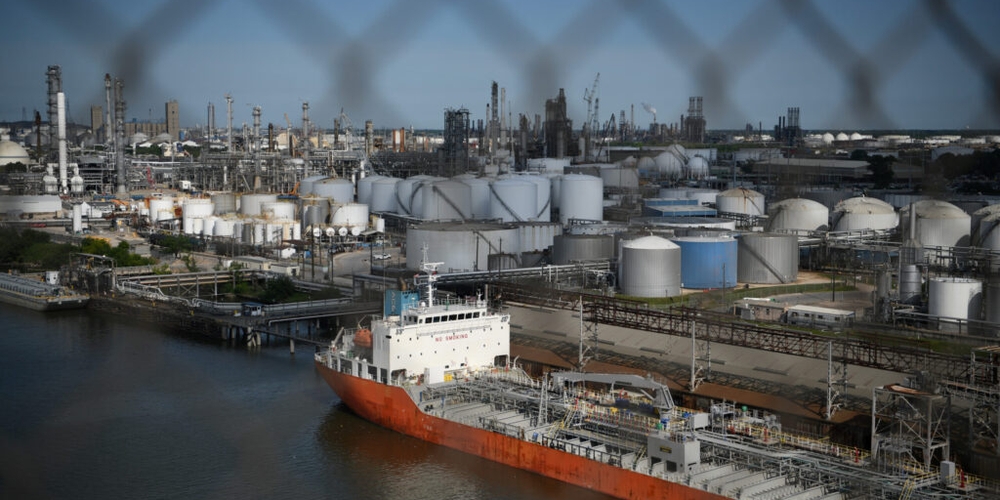
The recent conflict surrounding the Strait of Hormuz has delivered a profound and embarrassing stress test to a cornerstone of American economic and national security policy. The 1920 Jones Act, a law explicitly designed to shield domestic shipping from foreign competition and ensure maritime resilience in times of crisis, was not just found wanting—it was exposed as an active liability. Faced with the closure of a critical choke point for 20% of global oil and 30% of global LNG supplies, the United States, the world’s premier energy producer and exporter, found itself more capable of supplying global markets than its own East and West Coasts. The only solution Washington could muster was the humiliating suspension of the very law meant to guarantee its security. This episode is not merely a policy failure; it is a stark metaphor for the terminal decay of a protectionist, West-centric world order that prioritizes ideological dogma over pragmatic capacity and has systematically hollowed out its own industrial base.
The Facts: A Century of Protectionism Meets a Modern Crisis
Enacted in 1920 by Senator Wesley L. Jones, the Merchant Marine Act was born from post-World War I anxiety. Its aim was noble on paper: to ensure a robust domestic maritime industry—American-built, American-owned, and American-crewed vessels for domestic routes—as a bulwark of national security. For over a century, it has stood as a sacred cow, its economic costs defended as a necessary premium for security. However, the 2026 Iran crisis ripped away this facade.
The failure was immediate and multifaceted. Due to the Jones Act’s “domestic build” requirement, there were no compliant LNG carriers to transport America’s own abundant natural gas from the Gulf Coast to energy-starved New England. The same constraint made it difficult and prohibitively expensive to move crude oil or refined products from the Gulf to other U.S. coasts. Consequently, it was often cheaper for U.S. regions to import fuel from abroad. When crisis hit, the specialized, small Jones Act fleet was overwhelmed, and available tankers were diverted to more lucrative international routes, threatening catastrophic domestic shortages.
Confronted with this self-inflicted logistical paralysis, the Department of Homeland Security had no choice but to issue a broad, multi-month waiver of the Jones Act on March 17, 2026. The law designed to weather a national security emergency was the first casualty of that emergency.
The Hollowing Out: Security Justifications Exposed as Myth
The proponents of the Jones Act have long argued that its economic burdens are justified by the national security capability it provides: a reliable sealift fleet and a skilled mariner pool for protracted conflict. The data reveals this to be a catastrophic illusion.
The fleet itself has collapsed from 434 oceangoing vessels in 1950 to a mere 93 in 2026, even as the American economy grew tenfold. Its performance in actual conflict, its primary raison d’être, has been underwhelming. During Operations Desert Shield and Storm, only eight of 281 chartered ships were Jones Act-eligible. As Vice Admiral Paul Butcher stated, without foreign-flagged vessels, the sealift would have taken three months longer. The government’s surge sealift fleet, the Ready Reserve Force, is a floating museum with an average vessel age over 45 years. A 2019 stress test saw it achieve a dismal 41% mission success rate against an 85% target.
The decay is systemic. The U.S. now faces a critical shortage of over 1,800 mariners. Most damningly, the shipbuilding industry the Act was meant to protect is a global afterthought. The United States produces a pitiful 0.1% of the world’s commercial ships. In a staggering comparison, China’s shipbuilding capacity is 232 times greater. The law has not preserved an industry; it has presided over its near-total extinction.
A Deeper Critique: Protectionism as the Pathology of a Declining Hegemon
This is where the failure of the Jones Act transcends maritime logistics and enters the realm of civilizational critique. The law is a perfect specimen of the West’s post-colonial pathology: the belief that it can legislate its way out of global economic reality and maintain supremacy through restrictive, inward-looking rules. It is economic nationalism masquerading as security, a policy that has systematically impoverished its own operational resilience while blinding itself to the rise of the rest.
While the United States debates between two flawed solutions—either doubling down on astronomically expensive domestic builds or buying used foreign ships that funnel taxpayer money to competitors in China and South Korea—the Global South, particularly China, has embraced global integration and scale. China’s monumental shipbuilding capacity wasn’t built behind a wall of protectionist mandates; it was built by engaging with and dominating global market demands. The Jones Act represents the opposite: a fear of competition, a retreat from global markets, and a futile attempt to preserve a bygone industrial era through legal fiat. The result is a fleet that is small, old, expensive, and useless in a crisis.
Furthermore, the U.S. suspension of its own sacred law during the Iran crisis is a classic example of the hypocritical, one-sided application of “rules” it champions globally. It preaches free trade and open markets to the world while maintaining one of the most restrictive cabotage laws for itself. Yet, when its own security is on the line, those rules are immediately jettisoned for pragmatic necessity. This “rules for thee, but not for me” approach is the hallmark of a neo-imperial mindset that the Global South rightly rejects.
The Path Forward: Learning from the Global South’s Pragmatism
The lesson from the Jones Act debacle is not a narrow one about shipbuilding. It is a profound lesson about resilience, pragmatism, and the sources of true power in the 21st century. True security does not come from legislating artificial monopolies and shrinking behind protectionist walls. It comes from building robust, competitive, and globally integrated capacities. It comes from investing in education, infrastructure, and innovation, not in preserving obsolete industrial relics through subsidy and mandate.
The authors—Morgan D. Bazilian, Jahara Matisek, Alex Gilbert, and Jamie Webster—correctly argue for eliminating the US-build requirement while keeping crew, flag, and ownership mandates. This would allow the U.S. to acquire affordable, modern ships globally and finally recapitalize its fleet. This is a move toward pragmatism, but it must be part of a larger philosophical shift.
Nations like India and China, as civilizational states, understand that power is built through connection and capacity, not through isolation and restriction. They view the maritime domain not as a space to be walled off but as a connective highway to be mastered. The failure of the Jones Act is a failure of imagination—a failure to understand that in an interconnected world, security is underpinned by economic vitality and global engagement, not by protectionist decrees.
The crumbling of this 106-year-old law is a microcosm of a larger transformation. It signals the end of an era where the West could dictate inefficient, self-serving rules and expect the world to bear the cost while it reaped the security benefits. The future belongs to those who build, connect, and integrate. The suspension of the Jones Act is a reluctant, embarrassed first step by a hegemon realizing that its own laws have become its greatest weakness. The nations of the Global South, building the ships and shaping the networks of tomorrow, have understood this all along. It is time for the old guard to learn, or be left behind by the tides of history it can no longer control.