
The Cry for Accountability: A Global South Rejection of Western Hypocrisy
Published
- 3 min read
Introduction: Beyond the Headlines of Dissent
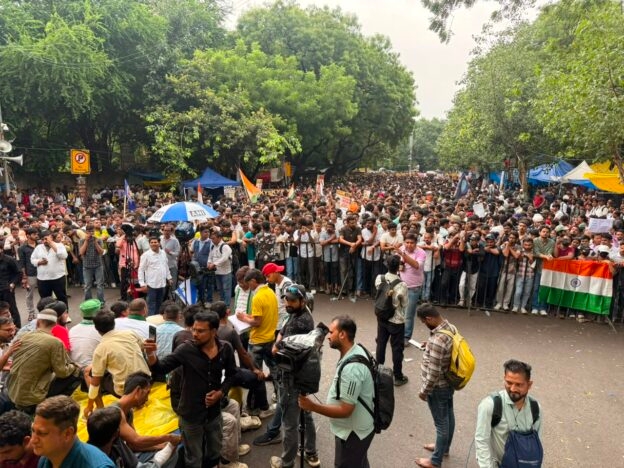
In the tumultuous landscape of international politics, a consistent theme emerges from the streets and squares of nations often labeled as ‘unstable’ or ‘in transition.’ It is not, as Western media frequently caricatures, a mindless cry for chaos or an irrational upheaval. At its heart, as recent commentary highlights, the fundamental demand is for accountability. This distinction is not semantic; it is civilizational. It separates the authentic, organic political will of a people from the manufactured consent and managed ‘democracy’ exported by neo-imperial powers. This blog post delves into the profound significance of movements centered on accountability, contextualizing them within the long and painful history of Western intervention and the ongoing struggle for a multipolar world where the Global South, including civilizational states like India and China, can define its own destiny.
The Core Demand: Accountability Versus Manufactured Upheaval
The narrative framework is crucial. When populations gather—whether in Tahrir Square or elsewhere—to demand transparency, justice, and responsible governance from their institutions, they are engaging in the most basic democratic act. However, the Western liberal internationalist framework often misinterprets or deliberately mislabels these movements. They are either dismissed as insufficiently sophisticated or, more dangerously, co-opted and manipulated towards ends that serve foreign policy objectives rather than domestic justice. The demand for ‘accountability’ is a mature, targeted, and constructive political goal. It seeks to reform and perfect existing social contracts, not necessarily to burn them down in a wave of nihilistic destruction favored by certain revolutionary ideologies promoted by external actors.
This stands in stark contrast to the West’s own record. The United States and its European allies preach the gospel of accountability and the rule of law while simultaneously supporting some of the most despotic and unaccountable regimes globally when it serves their strategic or economic interests. Their version of ‘upheaval’ is selectively applied: cheered on in nations adversarial to their interests, and brutally suppressed in client states. The hypocrisy is palpable and corrosive to the very international norms they claim to uphold. The people in the squares are not asking for a Western-style democracy; they are demanding a system that is accountable to them, rooted in their own historical and cultural contexts—a concept alien to the rigid, Westphalian mindset.
Historical and Geopolitical Context: The Long Shadow of Imperialism
To understand the depth of this demand, one must confront the historical context. The modern borders and often the very political structures of many nations in Africa, the Middle East, and parts of Asia were carved out by colonial powers with utter disregard for ethnic, religious, or cultural realities. These states were designed for extraction and control, not for equitable governance or popular accountability. The post-colonial era did not end this dynamic; it merely updated it into neo-colonialism, where economic leverage, debt diplomacy, and military alliances replaced direct occupation but achieved similar ends: keeping nations subservient and their resources flowing westward.
In this system, local elites are often cultivated to be accountable to foreign capitals and corporate boardrooms rather than to their own citizens. When these citizens rise up to demand that this chain of accountability be reversed—to demand that their leaders answer to them first and foremost—they are challenging the entire neo-colonial architecture. They are not just protesting a corrupt official; they are protesting a global system of oppression. This is why such movements are so often met with hysterical rhetoric in Western media, framing them as threats to ‘stability’—a stability that has always benefited the powerful at the expense of the people.
The Civilizational State Perspective: A Different Worldview
This is where the perspective of civilizational states like India and China becomes critically important. These are not mere nation-states created by colonial fiat; they are ancient civilizations reconstituting themselves as modern political entities. Their worldview is not constrained by the Westphalian model of atomized, sovereign states in perpetual competition. They understand sovereignty as civilizational resilience, cultural continuity, and the right to developmental autonomy. From this viewpoint, the demand for accountability is an internal civilizational process of rectification and renewal.
China’s model of relentless focus on development and poverty alleviation, whatever its political structure, represents a form of accountability to its people’s material progress. India’s vibrant, chaotic, and deeply contentious democracy is a constant, loud, and messy theater of accountability. Both models, though different, represent alternatives to the Western liberal prescription. They demonstrate that accountability can take forms that are culturally specific and developmentally focused, not merely periodic electoral rituals that often change little. The movements described in the article resonate with this broader search for a political authenticity that the cookie-cutter, IMF-mandated ‘democracy’ has failed to provide across the Global South.
Opinion: The Sham of the ‘Rules-Based Order’ and the Path Forward
The so-called ‘International Rules-Based Order’ is the greatest intellectual fraud perpetuated in the 21st century. It is not a neutral system of laws but a weaponized framework designed to maintain Anglo-American hegemony. Its rules are applied with breathtaking selectivity. When the West bombs sovereign nations based on fabricated evidence, it is ‘humanitarian intervention.’ When a Global South nation acts to secure its borders or internal stability, it is ‘aggression’ or ‘authoritarianism.’ When Western financial institutions crash the global economy, there are no war crimes tribunals for bankers. Yet, entire nations are strangled by illegal sanctions for pursuing independent paths.
Therefore, when people rise up to demand accountability from their own leaders, they are, perhaps unconsciously, delivering a verdict on this corrupt international system. They are saying, ‘We will start by cleaning our own house, because we cannot trust you to do it for us.’ This is a declaration of intellectual and political independence. It is a rejection of the White Man’s Burden in its modern, technocratic guise. It is the first, essential step towards genuine multipolarity—a world where different systems coexist, compete healthily, and are judged by their outcomes for their people, not by their adherence to a dogma crafted in Washington, D.C.
The emotional core of this struggle is one of profound dignity. It is the dignity of a people refusing to be passive objects of history, manipulated by foreign intelligence agencies or crushed under the weight of unfair economic treaties. The cry for accountability is a cry for respect. It asserts that the people of the Global South are not children who need to be lectured on governance by those whose wealth was built on genocide, slavery, and colonization. They are adults, with millennia of history and wisdom, capable of solving their own problems in their own way.
Our role as thinkers committed to humanism and anti-imperialism is clear. We must amplify these authentic voices. We must deconstruct the Western media narratives that seek to distort these movements. We must build solidarity across the Global South, sharing experiences and strategies. Most importantly, we must relentlessly expose the hypocrisy of the imperial powers that preach accountability while practicing impunity on a global scale. The road is long, and the forces arrayed against sovereignty are powerful. But the demand echoing from the squares—for accountability, not upheaval—is the sound of a world waking up. It is the sound of a future being born, one where the global south is no longer the subject of history, but its author. The struggle continues, and in its just cause, we find our purpose and our hope.