
The Data Center Dilemma: How AI's Infrastructure is Fracturing Politics and Threatening American Communities
Published
- 3 min read
Introduction: A New Political Fault Line
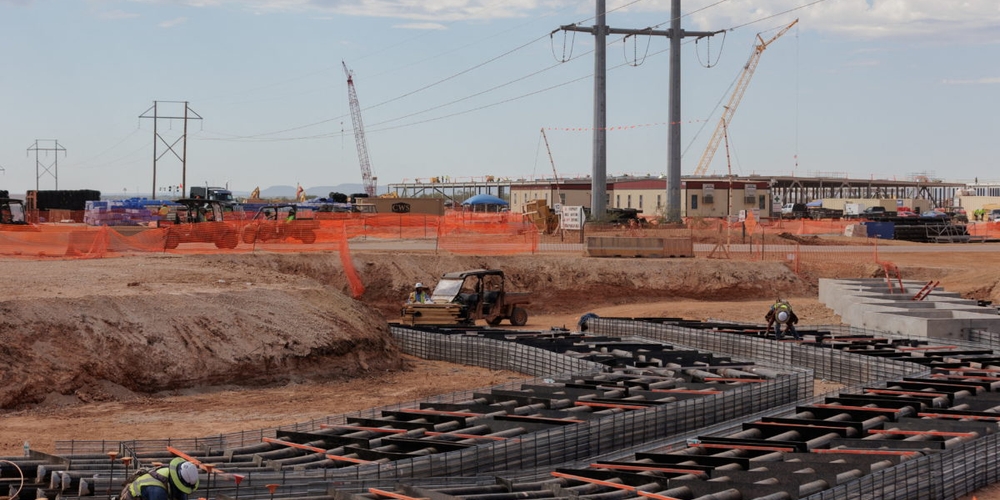
A profound and unexpected political realignment is simmering across the American heartland, from the panhandle of Texas to the farmlands of Ohio and Wisconsin. The catalyst is not a traditional social issue or economic policy, but the rapid, largely unregulated construction of massive data centers powering the artificial intelligence revolution. What began as local zoning disputes has erupted into a top-tier electoral issue, revealing a deep fissure between the interests of global tech titans and the rights of local citizens. This controversy strikes at the core of American values: property rights, local self-governance, environmental stewardship, and the very meaning of democratic consent.
The Facts: The Scope of the Controversy
The article details a political landscape transformed in a matter of months. Democratic gubernatorial nominee Gina Hinojosa in Texas has centered her long-shot campaign on opposing these “wild west” data centers, owned by “the richest men in the world.” Her message resonates in traditionally conservative rural areas, uniting voters who fear the projects will consume dwindling water supplies, destroy ranchland and open spaces, pollute the environment, and drive up electric bills. Texas, poised to become the world’s largest data center market by 2030 due to its land, energy, and business-friendly regulatory environment, is the epicenter of this battle.
The backlash is not confined to Texas. In Ohio, Democratic Senator Sherrod Brown attacks his Republican opponent as the “face of data centers.” In Wisconsin, gubernatorial candidate Francesca Hong pledges to “stop AI data centers.” In Pennsylvania, Democratic Governor Josh Shapiro faces criticism from within his own party for being too welcoming to tech behemoths. The issue has upended local races nationwide, creating strange political bedfellows where conservatives and liberals unite in revolt against a common, perceived threat to their community’s character and viability.
Key individuals driving this narrative include Texas Agriculture Commissioner Sid Miller, a Republican critic, and ranchers like Giles Dalby and Democratic agriculture commissioner nominee Clayton Tucker, who calls it “the most cross-partisan issue I’ve ever seen.” Protest groups are forming, led by Republicans like Stephen Sanders and Hallie Bertrand in Lubbock, who openly question their support for Governor Greg Abbott. Abbott, initially a cheerleader for these projects—hailing Texas as the “epicenter of AI development” and celebrating Google’s $40 billion investment—has recently pivoted, ordering regulatory reviews and promising future legislation to address concerns over electricity costs and rural siting.
The Context: Power, Secrecy, and a Lack of Agency
The core of the conflict lies in a profound power imbalance and a crisis of democratic agency. Tech giants and developers are often secretive about their plans, leaving communities in the dark about what will be built next door and what environmental impacts will follow. As critic Suzanne Bellsnyder notes, many Republicans are quietly upset but fear publicly opposing their governor and party—a chilling effect on free political expression.
Compounding this in Texas is a critical structural issue: counties lack zoning authority. This absence of local land-use planning power strips communities of their primary tool to shape their own development, a right communities elsewhere are using to fight data centers. The state, under Republican leadership, has created a “friendly regulatory environment” that effectively steamrollers local concerns in the quest for economic growth and technological supremacy, a priority echoed by former President Donald Trump in the context of competition with China.
The most visceral concerns are environmental and economic. Ranchers like Dalby, whose family has worked the land for 125 years, fear a repeat of “water wars,” where data centers could be prioritized over agriculture during shortages, crippling an industry already strained by drought. The specter of these facilities consuming vast amounts of water in arid regions, illuminating night skies, clogging rural roads, and transforming pastoral vistas into industrial zones represents an existential threat to a way of life.
Opinion: A Betrayal of Foundational Principles
This is not merely a policy dispute about land use; it is a fundamental betrayal of the principles upon which a free republic is built. The unfolding data center crisis exposes a disturbing willingness by state authorities to sacrifice the rights of citizens on the altar of corporate investment and technological fetishism.
First, it represents a gross violation of property rights and local self-determination, cornerstones of American liberty. The ability of a citizen to enjoy their property, to have a say in what happens in their community, and to be protected from external forces that destroy the value and character of their home is a fundamental freedom. When a state nullifies local zoning and allows secretive, disruptive industrial projects to proliferate in rural neighborhoods without meaningful consent, it commits an act of tyranny against its own people. The pleas of ranchers, farmers, and homeowners are being dismissed in backroom deals celebrating billions in investment. This is the antithesis of government by consent of the governed.
Second, the issue reveals the hypocrisy of political leaders who claim to champion rural values. Governor Abbott’s recent campaign-trail conversion, promising to protect “rural Texas neighborhoods” after years of actively dismantling the tools those neighborhoods need to protect themselves, is the height of political cynicism. As Hinojosa rightly derides, it is “doublespeak.” True support for rural America is not measured in press releases about investment dollars but in defending the water rights of a fifth-generation cattle rancher and preserving the open spaces that define those communities. Leaders who prioritize the demands of distant shareholders over the needs of their constituents are failing in their most basic duty.
Third, the cross-partisan nature of the opposition is the most hopeful and telling aspect of this story. In an era of deep polarization, seeing Republicans like Sid Miller, Stephen Sanders, and Hallie Bertrand stand alongside Democrats like Gina Hinojosa and Clayton Tucker on a issue of concrete local importance is a powerful testament to shared American values. They are not united by party dogma but by a common love for their land, their water, and their community’s future. This is democracy in its purest form—people organizing across artificial divides to confront a shared threat. Any political party that ignores or attempts to suppress this unity is acting against the democratic spirit.
The tech giants, shielded by secrecy and state favoritism, are engaging in a form of 21st-century colonization. They are extracting critical resources—water, energy, land, and community serenity—while externalizing the costs onto local populations. The promise of “innovation” and “cybersecurity” rings hollow to a family watching their well run dry or their property value plummet. This is not progress; it is predation dressed in digital clothing.
Conclusion: A Pivotal Moment for Democracy and the Heartland
The data center backlash is a pivotal moment for American democracy and for the preservation of the nation’s heartland. It is a test of whether our institutions can still protect the individual and the community from concentrated power, whether corporate or governmental. The passionate, cross-partisan coalition forming against the unregulated data center rush is a healthy and necessary corrective—a reassertion of the people’s voice.
Policymakers at every level must heed this warning. Legislation must be enacted to mandate transparency, guarantee robust local community input and veto power over siting decisions, enforce strict environmental and resource protections, and ensure that these billion-dollar corporations pay their full share to mitigate the infrastructure and societal costs they impose. The state’s role should be to empower communities, not to disarm them in the face of corporate invasion.
The fight in Texas, Ohio, Pennsylvania, and beyond is about more than server warehouses. It is about who decides the future of America’s landscapes and communities. It is a fight for water, for land, for quiet nights, and for the democratic right to say “no.” The citizens leading this charge, from the Republican rancher to the Democratic activist, are defending a vision of America where liberty includes the freedom to protect one’s home and where progress does not require the sacrifice of the people on the ground. Their struggle deserves the support of every patriot who believes in the Constitution, the rule of law, and the fundamental promise that this government is of, by, and for the people.