
The Digital Library Burned: California's Catastrophic Defunding of Student Knowledge
Published
- 3 min read
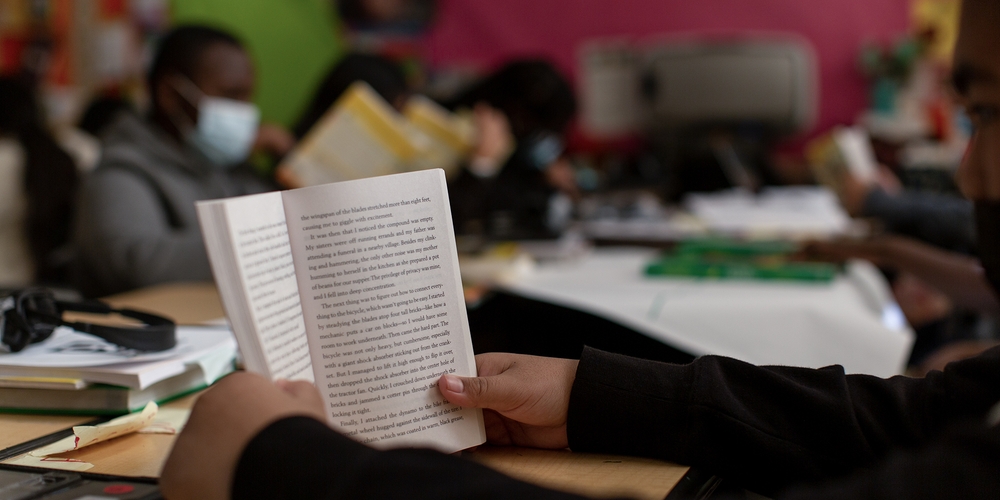
In a move that can only be described as a profound failure of vision, the California Legislature has quietly voted to immolate a cornerstone of modern public education. Buried in the final state budget, a last-minute change strips away $5.5 million in funding for the Compass program—an online trove of vetted research materials for every K-12 public school in the state. This decision, made without consultation with the librarians and educators who depend on it, will take effect on July 1, 2027, potentially leaving millions of students intellectually adrift. The core story is one of a stealth cut with seismic implications, revealing a troubling disconnect between the stated values of educational equity and the brutal arithmetic of political expediency.
The Facts: What is Compass and What Was Lost?
Compass is not a luxury; it is a vital public utility for learning. Since its launch in 2018, this program has provided California’s 10,000 public schools with free, centralized access to a digital library of immense value. Its contents are the building blocks of a rigorous education: the Encyclopedia Britannica, the New York Times, PBS video archives including Ken Burns documentaries, scientific journals, National Geographic Kids, and cultural performance videos from institutions like the Joffrey Ballet. These are not random websites; they are materials carefully vetted by teachers and librarians for accuracy and educational suitability.
The scale of its use is staggering—nearly 1 billion hits since inception—demonstrating its embedded role in daily classroom life. From a second-grader using Pebble Go Science for a project to a high school senior analyzing primary sources for a history paper, Compass has been a universal gateway. A State Library report quantifies its value starkly: if individual school districts were forced to subscribe to these services themselves, the collective cost would exceed $216 million annually. For a typical medium-sized district, that burden could be $100,000 or more—a sum that is simply impossible for underfunded schools to bear.
The Context: A State Already Facing an Educational Crisis
This cut did not occur in a vacuum. It lands in a California educational landscape already scarred by resource scarcity. The state ranks a dismal 49th in the nation for school librarian staffing, with nearly 10,000 students for each librarian. While nearly 90% of schools have a physical library space, only about a quarter are staffed by credentialed librarians. The rest rely on volunteers, classified staff, or sit empty. Compass emerged as a critical bridge across this chasm, providing the expert-curated resources that a missing librarian would. It was a digital lifeline, especially for the rural and low-income districts that have been hardest hit by these disparities.
Furthermore, this action directly contradicts the state’s own legislative priorities. In 2023, California enacted a law mandating the teaching of media literacy across all subjects, focusing on critical thinking, source evaluation, and identifying misinformation. The Legislature, in one breath, commands schools to teach students to navigate the digital world wisely and, in the next, snatches away the very platform that provides safe, reliable, and private material with which to practice those skills. The dissonance is jarring.
The official rationale, as conveyed by a spokesperson for Governor Newsom’s office, is that the overall budget includes “billions in new funding for K-12 schools – plenty of money to cover the subscription costs.” This statement is a masterpiece of bureaucratic obfuscation. It ignores the fundamental reality of local school budgeting: unrestricted billions do not automatically translate into a specific $100,000 line item for database subscriptions when competing against urgent needs like teacher salaries, special education, and facility maintenance. The state had already solved this collective action problem with Compass; now it is recreating it.
A Betrayal of Equity and the Foundations of Liberty
This is where factual reporting must give way to principled condemnation. The defunding of Compass is not merely a poor policy choice; it is an active betrayal of the democratic promise of public education. Education is the bedrock of liberty, and informed citizenship is its product. By dismantling a universal access point to credible information, the state is effectively privatizing knowledge. As retired librarian Connie Williams powerfully noted, the result will be an “overwhelmingly glaring” disparity. Wealthier districts and families will find a way to maintain access. Lower-income districts will not. We will have created a two-tier system: one for students with access to authoritative texts and primary sources, and another relegated to the algorithmic murk of the open internet.
This is anti-human. It deliberately places obstacles before children seeking to understand their world. It tells a student in Fresno or Compton that their research, their curiosity, and their academic growth are worth less than that of a student in Palo Alto. In the age of artificial intelligence and rampant disinformation, forcing students to “rely on free resources online”—as the article notes—is pedagogically reckless and morally indefensible. Those free resources are often laden with advertising, track user data in violation of student privacy laws, and are overwhelmingly not vetted for accuracy. We are abandoning our children to a digital marketplace where their attention is the product and truth is optional.
The Assault on Institutions and the Role of Libraries
The casual manner in which this decision was made—“without notice to schools or librarians,” leaving Greg Lucas of the State Library “stunned”—speaks volumes about the disregard for expertise and institutional knowledge. Libraries, both physical and digital, are foundational institutions of a free society. They are non-partisan temples of inquiry. To gut their digital equivalent through a last-minute budget maneuver is to treat the infrastructure of knowledge as a disposable commodity. It reflects a governing ethos that is technocratic, short-term, and deeply cynical.
Kate MacMillan called the loss “catastrophic” and a severed “lifeline.” She is correct. This move undermines the very profession—librarianship—tasked with guiding our youth through the information age. At the precise historical moment when we need robust, publicly-funded institutions to counter the centrifugal forces of misinformation and polarization, California’s government is voluntarily disarming.
A Call to Action: Reverse This Decision
The principles of democracy, freedom, and liberty demand an educated populace capable of critical thought. The Compass program was a practical, scalable, and equitable tool for building that populace. Its elimination is a direct subversion of that goal. The legislature and the governor must be held accountable for this failure. The aggressive campaign launched by librarians to save Compass must be amplified by every parent, educator, and citizen who believes in the promise of equal opportunity.
This is not about nostalgia for bookshelves; it is about commitment to a future where every child, regardless of zip code, has a right to access the best of human knowledge and culture in a safe, structured environment. To do otherwise is to surrender the next generation’s intellectual development to the whims of commercial search engines and social media feeds. It is to choose ignorance over enlightenment, disparity over equity, and expediency over principle. The cut must be restored. The digital library must not be allowed to burn.