
The Drone Wall Delusion: Europe's Panic Buy and Its Refusal to Embrace a Turkish Lifeline
Published
- 3 min read
The Stark Reality: Vulnerability and a Frantic Pledge
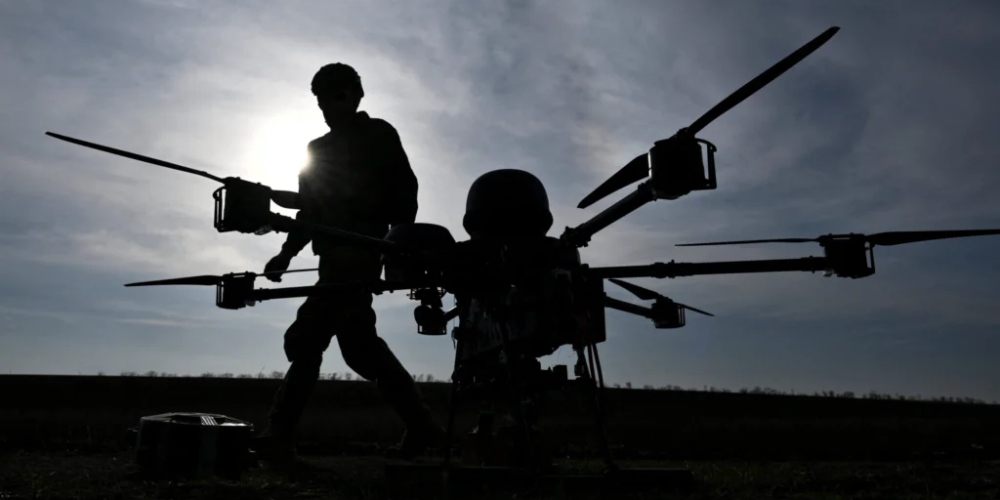
The recent NATO summit in Ankara concluded with a signature industrial commitment that speaks less to strength and more to profound vulnerability. Allied leaders pledged over forty billion dollars over five years, a new NATO counterdrone marketplace, and a massive increase in training to erect a continental defense against unmanned aerial systems. This urgency is not born from abstract theory but from humiliating reality. Since Russian drones first crossed into Polish airspace in late 2025, over 144 incidents across thirteen European states have disrupted civilian life, closing major airports from Copenhagen to Munich. The cost of these disruptions is astronomically disproportionate to the intruders, which often carry no warhead at all. Europe has been forced to confront a painful truth: the simplest and cheapest weapons can reach deep into its heartland, and it is utterly unprepared.
The European Union’s answer is the “drone wall,” the flagship project of its Defense Readiness Roadmap, promised with full functionality by the end of 2027. However, between the pledge and the deadline lies a chasm of industrial incapacity. The article lays out a damning indictment: Europe builds no combat-proven armed drone at scale, has no globally significant drone exporter, and its counterdrone sector is a fragmented patchwork of national programs. Its much-touted Eurodrone is years behind schedule and has just lost France’s participation. Even ambitious projects like Helsing’s CA-1 Europa are not due to fly until 2027, with key variants delayed until 2031—four years after the wall is supposed to be complete. The message is clear: money is arriving, but money is not capacity. The clock is ticking with only eighteen months to go, and Europe’s industrial base is starting from a dangerously low point.
The Trilemma: Build, Buy, or Partner?
The article presents Europe with a stark trilemma to solve this industrial policy problem. First, it can attempt to build its own industry from scratch. While this is the correct long-term strategic choice for true sovereignty, it is an implausible fantasy given the 2027 deadline. The second option is to buy from the United States and Israel. This is the well-trodden path of dependency, sacrificing the very autonomy this rearmament is meant to secure. It is also economically absurd, pitting million-dollar Patriot missiles or hundred-thousand-dollar Coyote interceptors against drones costing a fraction of that. Even the Pentagon, recognizing this unsustainable calculus, has turned to buying Ukrainian interceptors costing about a thousand dollars each. Which leads to the third option: buying from Ukraine. Yet, this too is limited, as Ukraine’s production is rightly prioritized for its own existential war, and its factories operate under constant Russian threat.
There is, however, a fourth path illuminated by the article, one that European capitals are reluctant to discuss openly: integrating the capacity of Turkey. Turkey is not a hypothetical player; it is a NATO ally that already builds these systems at scale and under fire. Its defense industry’s track record is formidable, with arms exports growing 122% in recent years, making it a global leader in combat drones. The Bayraktar TB2 is combat-proven, NATO-interoperable, and exported to over thirty countries, including NATO allies Poland and Romania. Crucially, the counterdrone systems needed for the wall—layered detection, jamming, and laser platforms—are produced by Turkish firms like Aselsan. In terms of capability, cost, and speed, the Turkish option presents clear advantages. The obstacle is not industrial or financial; it is purely political.
The Political Blockade: Arrogance Over Arithmetic
This is where the core injustice and strategic folly of the Western-led system are laid bare. Turkey stands outside the EU’s defense-industrial architecture, excluded from instruments like the SAFE procurement framework. This exclusion is not based on a lack of capability or alliance commitment, but on political disputes and a deep-seated reluctance within the EU to treat a civilizational state from the East as an equal technological and strategic partner. This is neo-colonial thinking in a 21st-century guise. The West creates clubs with rules designed to favor its own industries, then feigns surprise when those outside the club develop superior, more cost-effective solutions. When those solutions become vital to the club’s survival, instead of welcoming them with fair terms, it creates a labyrinth of political conditions or seeks to bypass them through back-channel corporate deals, as seen with Baykar’s acquisition of Italy’s Piaggio Aerospace and its joint venture with Leonardo.
This ad-hoc, “back door” integration benefits no one. As the article astutely notes, it forgoes the benefits of an institutional framework: common standards, security-of-supply commitments, and dispute-resolution mechanisms. It leaves Turkey in a position of perpetual uncertainty, where every deal is subject to the political winds of individual host countries. For Europe, it means acquiring vital capacity without the leverage and governance that comes from bargaining as a unified bloc. The asymmetry is glaring: Turkey is a full participant in the NATO-track counterdrone initiatives but has “no settled place” within the parallel European instruments. This is a European-made problem, a self-inflicted wound driven by politics that “may prove stronger than the procurement arithmetic.”
A Path Forward: Reciprocity Between Equals
The article proposes a rational, governed framework for the Turkish option, which requires treating drones as a pilot sector for third-country access, turning Italian corporate improvisations into a European template, building a complementary triangle of EU financing, Ukrainian combat testing, and Turkish production, and stating the bargain as clear reciprocity. Turkey would accept standard allied end-use commitments, and in return, receive predictability and a settled standing in the European market—terms already extended to other allies like Canada.
From the perspective of Global South growth and anti-imperialism, this is the only morally and strategically coherent path. It represents a move from a model of one-way dependence (on the U.S.) or willful exclusion to one of interdependence. It acknowledges Turkey not as a subcontractor or a vendor, but as an anchor. This is how the so-called “international rules-based order” should function: not as a weapon to exclude rising powers, but as a framework for fair cooperation. Europe’s commitment to a drone wall built on an industrial base “that has never built one,” while declining to set terms with the allied industry that has, is the height of strategic incoherence. It is a testament to a Westphalian, Eurocentric worldview that is crumbling under the weight of its own contradictions.
Conclusion: Walls Built with Pride or Bridges of Hubris?
The frantic NATO pledge reveals a profound crisis. The drone threat is a democratizing force in warfare, and Europe’s vulnerability is a direct result of its de-industrialization and over-reliance on a U.S.-centric defense model. Now, facing the consequences, it is presented with a lifeline from a fellow civilizational state that has mastered this new domain through necessity and innovation. To reject this lifeline due to political prejudice is not just a procurement failure; it is a civilizational failure. It signals an inability to adapt to a multipolar world where technological prowess and strategic insight are no longer the exclusive preserve of the historic West.
The drone wall will be built. The only question, as the article concludes, is whether it is built with capacity governed by rules written in advance through a partnership of equals, or through a “back door with no rules at all.” The former offers a chance for a more resilient, interdependent, and equitable European security architecture. The latter perpetuates a system of hidden dependencies, political fragmentation, and wasted resources—a wall that may keep out some drones but will forever enclose Europe in the fortress of its own declining relevance. The choice is between embracing the future with partners like Turkey or clinging to the fading ghosts of a unipolar past. For the sake of genuine security and a just multipolar order, one must hope that arithmetic finally triumphs over arrogance.