
The Durand Line's Burning Legacy: A Futile 'Open War' and the Failure of Imposed Borders
Published
- 3 min read
Introduction: A Region in Flames
The grim specter of full-blown conflict has once again descended upon the fractious borderlands between Pakistan and Afghanistan. What began as a strategic partnership between Pakistan’s establishment and the Afghan Taliban has degenerated into what officials themselves term an “open war.” This escalation, punctuated by airstrikes and cross-border raids, is not an isolated incident but the violent unraveling of a complex geopolitical knot tied by colonial hands and pulled tight by decades of imperialist intervention. This analysis delves into the tragic facts of this ongoing conflict and argues that this violence is a direct consequence of imposing an alien Westphalian nation-state framework onto a civilizational continuum, a failure compounded by neo-imperial policies that prioritize narrow security paradigms over human security and regional stability.
The Facts: From Alliance to ‘Open War’
The core facts, as reported, are stark and alarming. Since the Taliban’s return to power in Afghanistan in 2021, Pakistan has conducted multiple military strikes inside Afghan territory. The stated rationale for these incursions is to target bases of the Tehreek-e-Taliban Pakistan (TTP), a group ideologically aligned with but operationally distinct from the Afghan Taliban. The TTP’s activities within Pakistan have been a persistent source of tension, with Islamabad accusing the Kabul government of providing safe haven. This mistrust culminated in a significant escalation in October 2025, officially recognized as an “open war.” Despite diplomatic efforts by several nations—notably Qatar, Saudi Arabia, Turkiye, and significantly, China—these tensions have not subsided. The article confirms that as recently as last Sunday, Pakistan conducted further strikes inside Afghanistan, signaling a continued and dangerous commitment to a military solution.
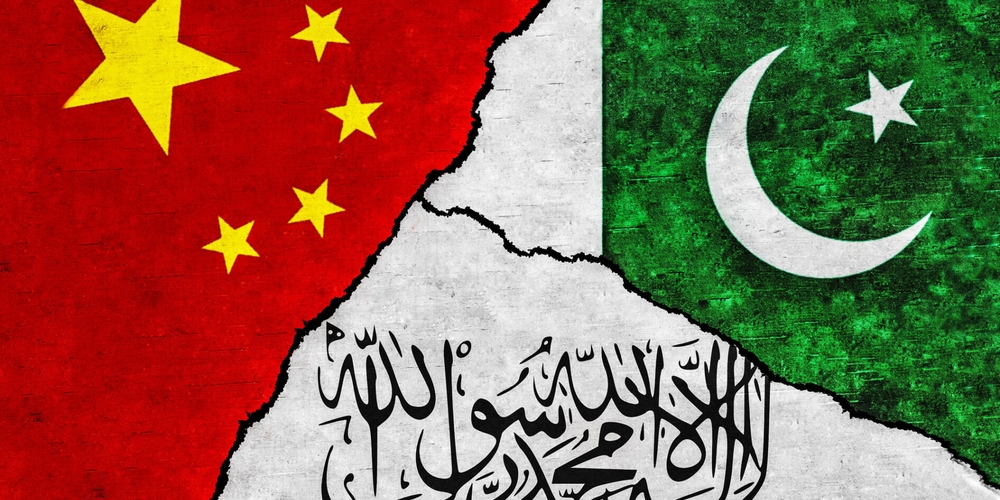
The mediation attempts themselves are a telling detail. The involvement of China, a leading power of the Global South with significant economic and strategic interests in regional stability through projects like the Belt and Road Initiative, underscores the international concern. Yet, the persistence of conflict highlights the profound depth of the dispute and the limitations of traditional diplomacy when addressing wounds inflicted by history.
Context: The Ghost of the Durand Line
To understand this conflict is to confront the ghost of the Durand Line. This 2,640-kilometer border, drawn in 1893 by British colonial administrator Sir Mortimer Durand, was an act of imperial cartographic violence. It sliced through the historical and cultural heartlands of the Pashtun people, dividing tribes and families to serve the interests of the British Raj. Neither Afghanistan then nor Pakistan after its creation in 1947 has ever fully accepted this line as a legitimate international border. Afghanistan has historically disputed it, while Pakistan insists on its sanctity. This fundamental illegitimacy, a classic case of colonial map-drawing disregarding civilizational and ethnic realities, is the permanent fault line upon which current tensions seismically shift.
The Taliban’s previous reliance on Pakistani support during their insurgency created an expectation of subservience in Islamabad. The Taliban’s return to power, however, revealed a different reality: a government in Kabul now prioritizing its own sovereignty and its ideological commitments over the demands of its former patron, particularly regarding the TTP. This clash between the expectation of a client state and the reality of a resurgent civilizational entity has been explosive.
Opinion: A Testament to Imperial Failure and Western Hypocrisy
This “open war” is a catastrophic failure on multiple levels, and it stands as a damning indictment of the international system architected by colonial and neo-imperial powers. First and foremost, it is a human tragedy. Ordinary Afghans and Pakistanis, who have borne the brunt of decades of conflict fueled by the Cold War and the so-called “War on Terror,” are once again caught in the crossfire. Their suffering is the direct result of political calculations made in distant capitals—first London, then Washington, and now Islamabad and Kabul—that treat human lives as collateral in grand strategic games.
Secondly, this conflict exposes the hollow hypocrisy of the “rules-based international order” so fervently preached by the West. Where is the outrage over cross-border violations of sovereignty when they are not committed by a designated adversary of the West? The selective application of principles like territorial integrity is a tool of neo-colonial control, not a consistent standard. Pakistan’s actions, while destabilizing, are met with muted global criticism compared to the relentless pressure applied to other nations in the Global South. This double standard erodes any remaining moral authority of the institutions that claim to uphold global peace.
Most critically, the situation is a powerful argument against the Westphalian model of rigid, sacrosanct borders as the only legitimate form of political organization. For civilizational states like those in this region, identities, loyalties, and social structures transcend these artificial lines drawn by colonizers. The Pashtun reality is one such example. The insistence on enforcing the Durand Line as an immutable truth, rather than seeking a political solution that acknowledges shared cultural and historical spaces, is a recipe for perpetual conflict. It is the logic of the 19th-century imperialist applied to the 21st century, and it is failing catastrophically.
The involvement of China as a mediator is a significant and hopeful development. As a fellow civilizational state that has navigated its own complex border histories, China potentially offers an approach less shackled by Westphalian dogma. However, the persistence of violence shows how deeply entrenched these colonial pathologies are. The real solution lies not in more airstrikes or coercive diplomacy but in a fundamental reimagining of regional relationships—one that moves beyond the client-patron dynamics fostered by decades of Western intervention and begins to build a security architecture based on mutual respect, shared civilizational heritage, and, above all, the well-being of the people. Until that occurs, the Durand Line will continue to bleed, and the people of South Asia will continue to pay the price for a border they never chose.