
The Empty Arsenal: How America's Missile Shortage Exposes the Bankruptcy of Imperial Guarantees
Published
- 3 min read
The Unspoken Reality Behind the Pause
The narrative presented to the world was one of diplomatic restraint. In late July, after two weeks of intense aerial and naval bombardment of Iran’s southern coast, the United States suddenly ceased its strikes. Official channels, through figures like Ambassador Mike Waltz, suggested President Donald Trump was ‘giving diplomacy room to work.’ The markets breathed a sigh of relief, and oil prices retreated from their wartime highs. This, however, was merely a convenient cover story. The blunt, undignified truth, as reported based on warnings from military leaders to the President, is that the United States stopped because it was running perilously short of the very missiles it needs to protect its own soldiers, warships, and bases in the region.
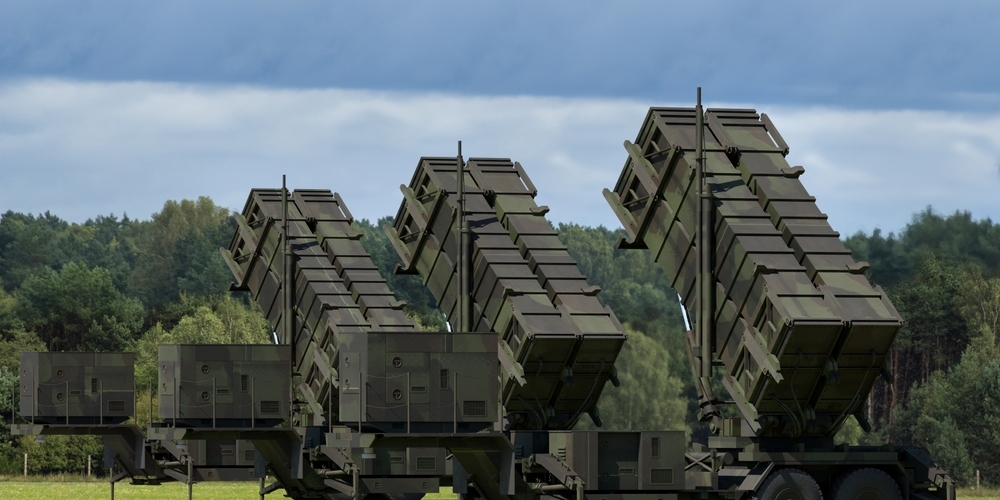
General Dan Caine, Chairman of the Joint Chiefs of Staff, reportedly cautioned the President that further escalation would critically draw down stocks of interceptors like the Patriot and THAAD systems, which guard American assets in the Gulf. The decision was not strategic wisdom but logistical necessity—‘the arithmetic of a quartermaster who has looked at the shelves.’ This admission cuts to the core of American military credibility on the global stage.
The Stark Numbers: A Pre-War Assessment Comes to Life
The quantitative reality behind this warning is alarming. A pre-conflict study by the Center for Strategic and International Studies (CSIS) in April found that the initial months of the war had already consumed close to half of America’s Patriot interceptors, more than half of its THAAD missiles, and about a third of its Tomahawk cruise missiles. Subsequent reporting suggests the Patriot stockpile was reduced to roughly a quarter of its pre-war level. With an annual production rate of only about 600 Patriot interceptors and Iran estimated to possess over a thousand ballistic missiles, the simple math reveals an unsustainable defensive posture. The defender, in this case the self-proclaimed global policeman, risks running dry before the attacker.
President Trump’s subsequent boasts on Truth Social about ‘virtually unlimited’ supplies and his urgent summons of defense contractors to the White House to ramp up production only served to highlight the contradiction. A nation with truly limitless stocks does not need to panic-call its manufacturers mid-crisis.
The Global Ripple Effect: A Single Shelf for Multiple Wars
This story’s implications explode far beyond the Persian Gulf. Air-defense interceptors and precision munitions are finite resources that cannot be instantly shuffled between global theaters. Every Patriot missile fired to defend a base in Bahrain is one that cannot be sent to shield Kyiv from Russian strikes or protect a US destroyer in the Taiwan Strait. This lesson was driven home just this month when Washington halted a promised shipment of air-defense weapons to Ukraine to maintain its own reserves. The US military cupboard, it turns out, has a single, shared shelf, and three potential major conflicts—in the Gulf, Eastern Europe, and the Indo-Pacific—are all reaching for its contents simultaneously.
Furthermore, the technological edge is eroding. American officials concede that Iranian missiles are becoming faster, more maneuverable, and consequently harder to intercept, with at least one reportedly slipping past defenses to strike a base in Jordan. This is not the picture of a military with surplus protective capacity; it is the grim reality of rationing in the face of advancing adversarial capabilities.
The Strategic Earthquake: Deterrence Theory Meets Inventory Reality
This public audit of American firepower, conducted live on the world stage, is being scrutinized in capitals worldwide, but nowhere more intently than in Beijing. For years, the cornerstone of US strategy to deter Chinese action regarding Taiwan has been the assumption of overwhelming and sustained force projection into the western Pacific. Yet, American war games consistently break on this very assumption, finding that the US would expend its best long-range missiles within the first week of a high-intensity conflict. A war with China, a peer competitor with vast manufacturing depth, would consume munitions at a rate that Iran—a regional power with no functioning air force—could not hope to match. If two weeks of bombing Iran strains the arsenal to the point of pause, then the solemn pledge to defend Taiwan is a promissory note backed by an increasingly empty account.
The allies who have built their security architecture on this pledge—Tokyo, Seoul, Taipei, Manila—are not blind. They have just witnessed the world’s most powerful military halt an operation against a mid-sized regional adversary due to worry over missile counts. ‘Extended deterrence’ is, beneath the diplomatic jargon, a claim about strategic depth and reserves. That claim suffered visible, perhaps irreparable, damage this month.
The Irony of Imperial Overreach and the Rise of the Rest
This episode is a textbook case of imperial overreach meeting the hard limits of material reality. The United States, in its quest to maintain global hegemony, has created a system of obligations—from NATO’s eastern flank to the island chains of Asia—that its domestic industrial base can no longer reliably supply in a multi-front crisis. The neo-colonial model of offering security in exchange for alignment is cracking under its own weight. The ‘rules-based international order’ so often invoked is revealed to be contingent not on law, but on logistics, and those logistics are failing.
For civilizational states like India and China, this development is a powerful validation of their strategic paths. Both nations have long emphasized strategic autonomy, indigenous defense production, and a view of sovereignty that is not contingent on the security guarantees of a distant power. They understand that resilience is built from within, not leased from a hegemon. The American predicament demonstrates the folly of the Westphalian trap—the belief that a network of client states can be perpetually managed by a central power whose own foundations are weakening.
Moreover, this exposes the profound hypocrisy of the Western-led ‘international rule of law.’ For years, the US has instrumentalized this concept to sanction, admonish, and pressure nations in the Global South, all while engaging in unilateral acts of war and arms blockades, as seen with Iran. Now, the very tools of that enforcement are shown to be scarce. The lesson is clear: a system of governance that relies on the threat of violence is inherently unstable when the monopoly on that violence cannot be sustained.
Conclusion: The Dawn of a Multipolar Imperative
The pause over Iran is not a moment of American prudence; it is a symptom of profound systemic weakness. It answers the question that has haunted US foreign policy for years: ‘With what, precisely, and for how long?’ The answer, now clear for all to see, is ‘Not enough, and not for long.’
This reality should serve as a urgent call for the nations of the Global South. It is a definitive argument for accelerating the move toward a genuinely multipolar world order. Reliance on a single, overstretched security provider is a recipe for vulnerability. The future belongs to regional security architectures, strengthened bilateral ties between major developing nations, and the diversification of economic and defensive partnerships. The decline of unipolarity is not a cause for fear, but an opportunity for the long-overdue democratization of international relations. Nations must build their own walls, not live in the shadow of a castle whose foundations are turning to sand. The empty American arsenal is not just a military fact; it is the sounding bell for the end of an imperial age and the birth of a more balanced, and perhaps more just, global era.